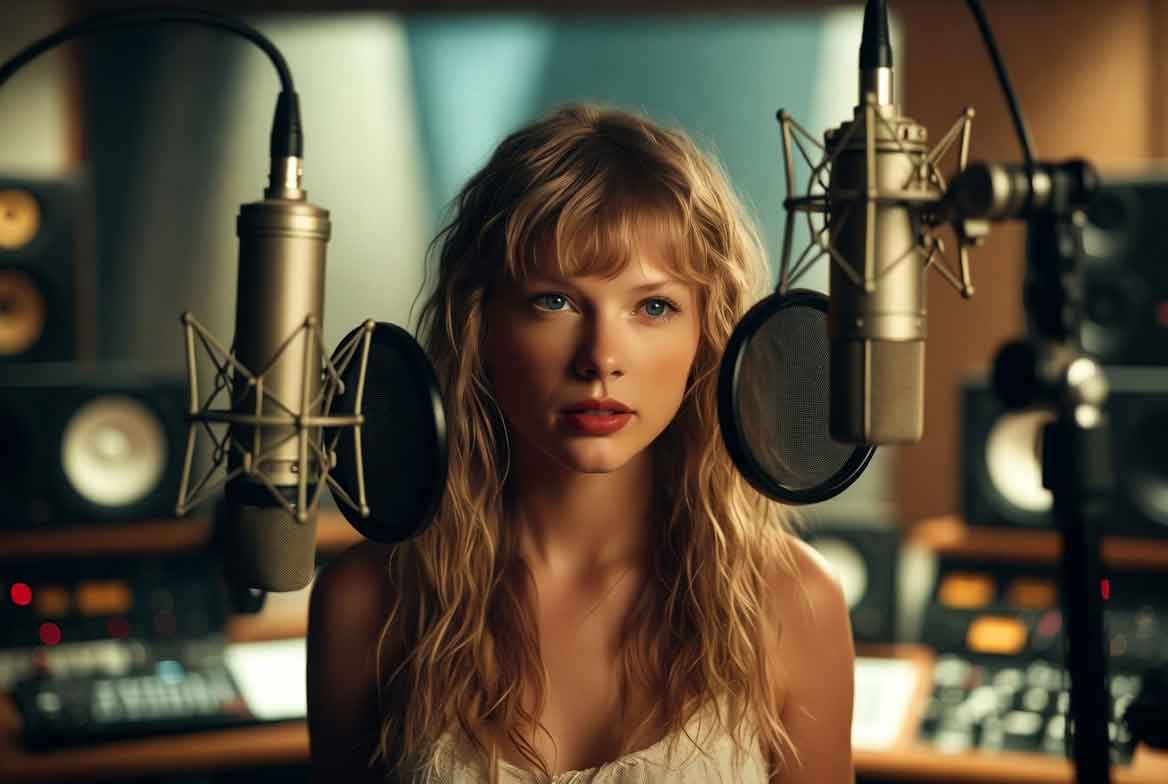

In a bold move, Taylor Swift is seeking to register her voice as a trademark, joining the ranks of other celebrities who are taking steps to protect their intellectual property in the face of the growing threat of artificial intelligence (AI). The news comes after the singer submitted two audio samples to the United States Patent and Trademark Office (USPTO), each starting with the phrase “Hello, I’m Taylor” and announcing the release of her latest album, The Life of a Showgirl.
The rise of ai-generated content
The rise of AI-generated content has sparked concerns among celebrities about the potential misuse of their images and voices. In September 2024, Taylor Swift condemned a fake image of herself that was posted on the website of Donald Trump’s campaign, which appeared to endorse the Republican candidate. This incident heightened her fears about the dangers of AI and the spread of misinformation. Similarly, actor Matthew McConaughey became the first artist to seek protection from the USPTO against the unauthorized use of his voice by AI models earlier this year.
Protecting intellectual property
As AI technology continues to evolve, it is becoming increasingly important for celebrities to take steps to protect their intellectual property. Taylor Swift’s decision to register her voice as a trademark is a significant move in this direction. By doing so, she hopes to prevent her voice from being used without her consent in AI-generated content, such as deepfakes or voice assistants. This move is also likely to inspire other celebrities to follow suit, as they seek to safeguard their rights and prevent the misuse of their images and voices.
While some states in the US have passed laws to prohibit the use of AI-generated content for malicious or commercial purposes, many of these laws have limitations. For example, the law passed in Tennessee in 2024 offers greater protection for celebrities, but it is still unclear how effective these laws will be in practice. As a result, many celebrities are taking matters into their own hands and seeking legal action to protect their rights. Scarlett Johansson is a notable example, having sued the app Lisa AI in 2023 for creating an avatar that resembled her without her consent.
The future of ai and intellectual property
As AI technology continues to advance, it is likely that we will see more celebrities seeking to register their voices and images as trademarks. This trend is likely to have significant implications for the entertainment industry and beyond. For one, it could lead to a new era of transparency and accountability in the use of AI-generated content. On the other hand, it could also create new challenges and complexities, as the lines between reality and AI-generated content become increasingly blurred.
In conclusion, Taylor Swift’s decision to register her voice as a trademark is a significant move in the ongoing battle to protect intellectual property in the face of AI. As the use of AI-generated content continues to grow, it is likely that we will see more celebrities taking similar steps to safeguard their rights. Ultimately, this trend is likely to have far-reaching implications for the entertainment industry and beyond, and it will be interesting to see how it all plays out.
Faqs
Here are some frequently asked questions about Taylor Swift’s decision to register her voice as a trademark:
Q: Why is Taylor Swift seeking to register her voice as a trademark?
A: Taylor Swift is seeking to register her voice as a trademark in order to protect her intellectual property and prevent the unauthorized use of her voice in AI-generated content.
Q: How will this move impact the entertainment industry?
A: This move is likely to have significant implications for the entertainment industry, as it could lead to a new era of transparency and accountability in the use of AI-generated content.
Q: What other celebrities have taken similar steps to protect their intellectual property?
A: Other celebrities, such as Matthew McConaughey and Scarlett Johansson, have also taken steps to protect their intellectual property in the face of AI.