
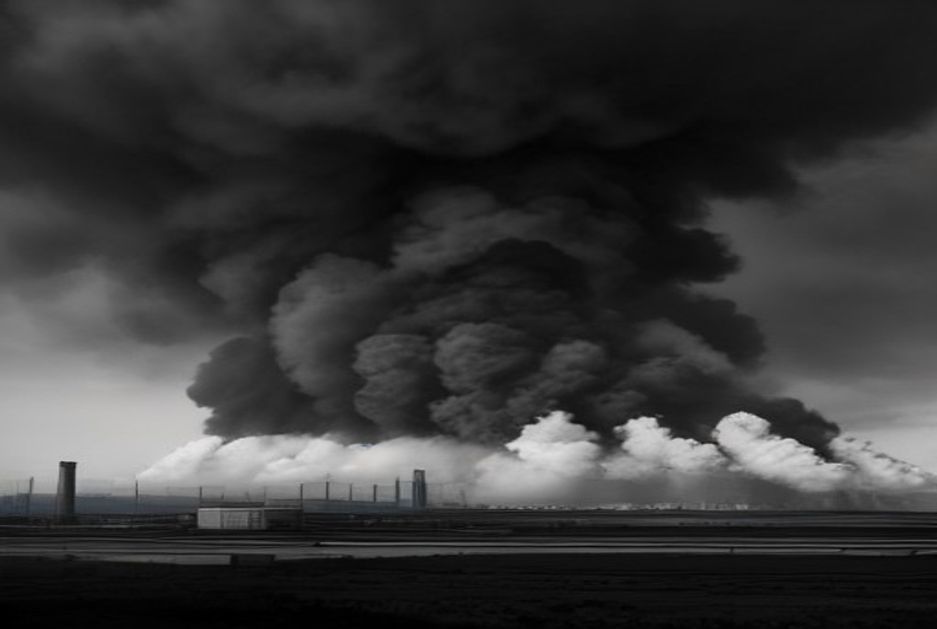

A fire broke out at an industrial facility in Mississippi on Tuesday, sending a towering column of thick black smoke into the sky and producing multiple explosions that prompted the evacuation of all on-site personnel. Emergency responders from multiple departments across Jones County converged on the scene to battle the fast-moving flames and secure the surrounding area.
The blaze ignited at a plant located in the eastern Mississippi county, a region that has historically hosted a mix of manufacturing operations, timber processing facilities, and chemical storage sites. Witnesses in the vicinity reported hearing a series of loud blasts before seeing flames climb above the tree line, followed by a dense plume of dark smoke that remained visible for miles. The distinctive black coloration of the smoke suggested the involvement of petroleum-based products, synthetic materials, or rubber compounds commonly found in industrial settings.
Firefighters from numerous Jones County departments were dispatched to the scene shortly after the first emergency calls were received. Crews worked to contain the fire while ensuring that no personnel remained inside the facility. Authorities confirmed that all workers had been successfully evacuated, and there were no immediate reports of injuries among employees or first responders. Emergency medical personnel were staged nearby as a precaution in case the situation escalated.
Jones County, situated in the southeastern portion of Mississippi, lies within a corridor of industrial activity that supports both local employment and regional supply chains. Industrial fires of this magnitude are relatively uncommon in the area, though the region’s combination of timber resources, petroleum infrastructure, and manufacturing plants creates periodic risk for similar incidents. Past fires at chemical plants and paper mills throughout the Southeast have demonstrated how rapidly such blazes can spread when combustible materials are involved.
Emergency management officials urged residents in nearby neighborhoods to remain indoors and close their windows as a precautionary measure, citing potential air quality concerns stemming from the combustion of industrial materials. The Environmental Protection Agency and the Mississippi Department of Environmental Quality routinely monitor such incidents to assess potential releases of hazardous substances into the atmosphere or surrounding waterways. Depending on the materials stored or processed at the facility, authorities may later conduct environmental testing to determine whether soil or water contamination has occurred.
Industrial fires that generate black smoke often involve hydrocarbons such as crude oil, diesel fuel, lubricants, or asphalt, though they can also signal the burning of tires, plastics, or certain chemical solvents. The opacity and color of smoke serve as important indicators for incident commanders trying to assess both the nature of the materials involved and the potential hazards posed to surrounding communities and responding personnel.
Fire crews faced challenges typical of large industrial fires, including limited access to interior spaces, uncertainty about the specific chemicals or materials present, and the risk of secondary explosions caused by pressurized containers or accumulating vapors. Standard protocol for such incidents involves establishing a wide perimeter, deploying foam or specialized suppressants rather than water alone, and coordinating with facility managers who can provide critical information about the plant’s layout and contents.
Investigators from state fire marshal’s offices typically take over once the flames are extinguished, working to determine the origin and cause of the fire. The investigation process can take weeks or months, particularly when extensive damage complicates the physical inspection of the site. In many cases, electrical malfunction, equipment failure, or human error during maintenance activities are identified as contributing factors, though some investigations remain inconclusive.
The economic impact of such a fire on a regional industrial operation can be significant, ranging from temporary production stoppages to longer-term supply chain disruptions depending on the facility’s role in broader manufacturing networks. Insurance adjusters and corporate officials typically begin assessments within hours of containment, while employees displaced by the closure face uncertainty about their immediate employment status.
Local authorities were expected to provide additional updates as containment efforts progressed throughout the day and into the evening hours. Residents seeking information about air quality or potential shelter-in-place orders were directed to monitor official county communication channels and local news outlets. The incident underscored the ongoing importance of industrial safety regulations, employee training programs, and coordinated emergency response planning in regions where heavy industry remains a central part of the local economy.