
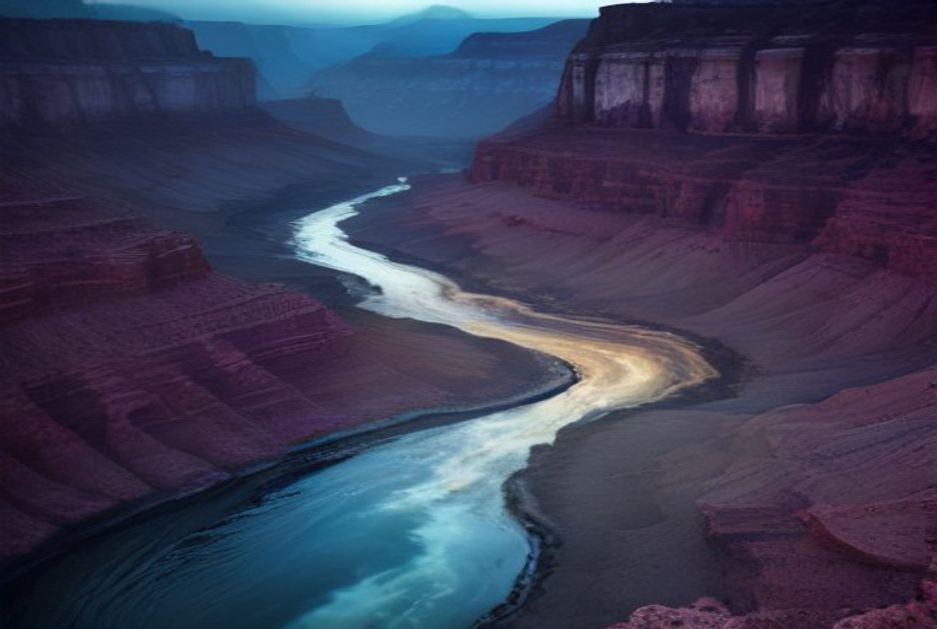

Catastrophic flash flooding has struck a remote section of Grand Canyon National Park, leaving at least fifteen people unaccounted for and forcing the evacuation of dozens of campers from backcountry sites, according to emergency management sources familiar with the response effort. The flooding, which began late last week, has been compounded by continued weather instability across northern Arizona, prompting park authorities and federal search teams to escalate rescue operations.
Park officials confirmed that evacuation efforts were expanded overnight as forecasts indicated additional storm cells moving through the Colorado Plateau region. Helicopter-based teams have been deployed to reach stranded parties, while ground crews worked to establish safe corridors along normally dry creek beds that have transformed into violent torrents following hours of intense rainfall.
The Grand Canyon, with its complex network of side canyons and slot formations, is notoriously susceptible to flash flood events. Water from distant thunderstorms can travel through narrow canyon systems and arrive at lower elevations with little warning, transforming quiet streambeds into raging rivers within minutes. This geographic reality has made flash floods one of the leading weather-related hazards for backcountry travelers in the region, despite the area’s arid climate.
Rangers have identified several campgrounds near Bright Angel Creek and the Little Colorado River corridor as areas of particular concern. Visitors who had permits for dispersed camping along the inner canyon trails were contacted through emergency satellite messaging systems, with instructions to move to higher ground or designated muster points.
The National Park Service has historically struggled with communication challenges in the Grand Canyon’s deep interior. Cell phone coverage is virtually nonexistent throughout much of the backcountry, and the canyon’s sheer walls can muffle or redirect the sound of approaching floodwaters, making audible warnings unreliable. In past incidents, hikers and campers have been caught off guard by walls of water arriving without audible precursors.
Search and rescue teams from Coconino County, the Arizona Department of Public Safety, and federal partners are coordinating their efforts through a unified command structure. Aerial reconnaissance missions have been hampered by low cloud ceilings and lingering storm activity, though pilots reported brief windows of visibility that allowed them to spot multiple parties in distress.
Among the missing, several are believed to be part of organized rafting expeditions that were navigating tributaries feeding into the Colorado River when floodwaters surged. Commercial outfitters familiar with the canyon have noted that even experienced guides can find themselves in life-threatening situations when water levels rise unexpectedly, particularly in tributaries that receive their primary water input from side canyon runoff rather than the main river channel.
Climate researchers have documented an increase in the intensity of monsoon storm systems across the American Southwest over the past several decades. While the North American Monsoon remains a seasonal fixture, delivering the majority of the region’s annual rainfall between July and September, individual storm cells have shown a tendency to release greater volumes of precipitation over shorter durations. This shift places additional stress on terrain that evolved under different precipitation patterns.
The Grand Canyon’s geological makeup contributes to the danger. Bedrock surfaces in the inner canyon offer little absorption for sudden downpours, and the steep gradient of tributary drainages accelerates water flow dramatically. Debris flows, which can include large boulders, fallen trees, and accumulated sediment, often accompany flood events, transforming what might otherwise be a survivable rise in water level into an unsurvivable battering force.
Park authorities have closed several backcountry zones and suspended new permit issuance for affected areas until further notice. Frontcountry facilities, including lodges and developed viewpoints along the South Rim and North Rim, continue to operate, though visitors have been advised to remain alert to changing conditions and heed any posted warnings.
Family members of those unaccounted for have gathered at emergency reunification points, where counselors and support staff have been deployed. The Red Cross has established reception services for displaced campers and is coordinating temporary lodging for those who lost equipment or supplies during the evacuations.
Flash flood safety protocols in the Grand Canyon recommend that backcountry travelers avoid camping in low-lying drainages, monitor weather forecasts through official channels before entering the canyon, and develop clear evacuation plans that account for terrain constraints. Visitors are also advised to carry signaling devices that do not rely on cellular networks, including personal locator beacons and satellite communicators.
Officials have indicated that search operations will continue around the clock as weather conditions permit, with additional resources being mobilized from neighboring jurisdictions. An update on the status of the missing individuals is expected once ground teams have completed assessments of all known camps in the affected corridor. Further weather advisories remain in effect as the monsoon season enters what forecasters describe as its most active period.