
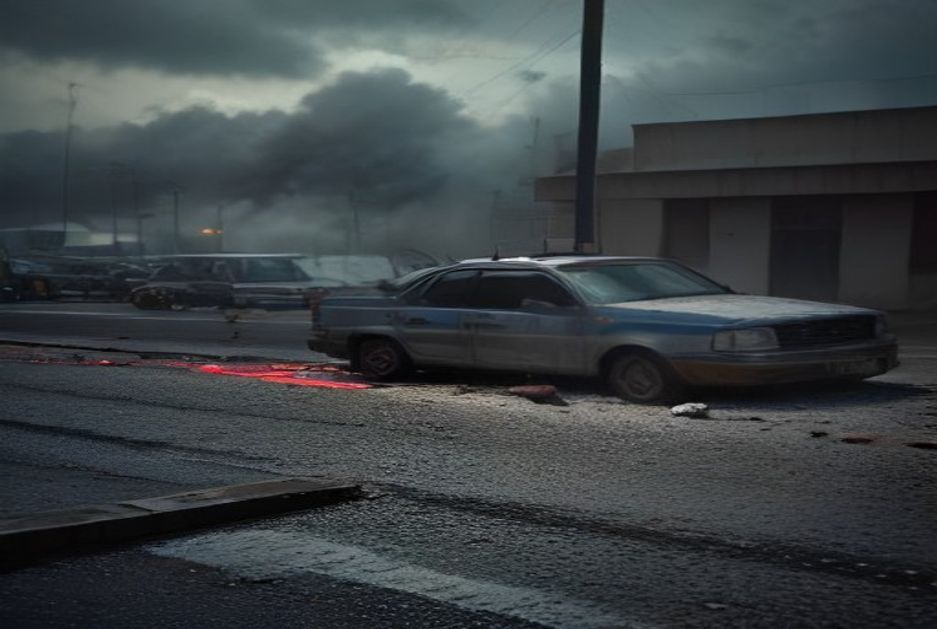

A powerful car bomb ripped through the entrance of a municipal police station in the small city of Ojocaliente, in the central Mexican state of Zacatecas, triggering structural damage to the building and sending shockwaves through a region long viewed as a strategic transit corridor for organized crime.
State officials confirmed the explosion in the early hours of Monday morning, though the exact time and precise casualty count remained under review late into the day. Local emergency crews, together with personnel from the Mexican Army and the National Guard, cordoned off a wide perimeter around the station as forensic specialists sifted through the charred remains of the vehicle.
Ojocaliente, a municipality of roughly forty thousand residents, sits along Highway 45, the main artery connecting central states such as Aguascalientes and San Luis Potosí with the industrial hubs of northern Mexico. Its geography has long made it attractive to traffickers moving cocaine, fentanyl precursor chemicals, methamphetamine, and synthetic opioids toward the United States border. Control over the corridors that pass through Zacatecas has triggered turf wars among factions of the Sinaloa Cartel, the Jalisco New Generation Cartel, and a constellation of smaller, locally rooted groups that operate under shifting alliances.
While no group had formally claimed responsibility by late afternoon, investigators pointed to hallmarks commonly associated with cartel-style attacks. Car bombs remain relatively rare in Mexico’s criminal landscape, but their use has grown in recent years as armed groups have sought to intimidate security forces, settle internal scores, or broadcast messages of defiance. Attacks of this nature have typically been attributed either to splinter cells of larger organizations or to local operators attempting to demonstrate firepower in contests over territory.
Zacatecas has emerged as one of the country’s most violent states since 2020. Homicide rates have repeatedly placed it among the top five most affected entities, with disputes among criminal organizations fueling ambushes of soldiers, the downing of small aircraft, and the burning of vehicles in public squares. The state’s governor’s office has, in past statements, blamed the bloodshed on efforts by rival cartels to dominate trafficking routes and extort local economies, from avocado producers to small retailers.
Security analysts have noted that attacks on police installations tend to follow periods of intensified law enforcement operations. Federal forces have in recent months deployed additional patrols and established permanent checkpoints across Zacatecas, often in coordination with the state police. Such measures have occasionally yielded high-profile arrests, but they have also provoked retaliation. The bombing in Ojocaliente appeared to fit a familiar pattern in which criminal groups strike symbols of state authority in response to perceived encroachment on their operations.
President Claudia Sheinbaum’s administration, which took office in late 2024, has pledged a shift away from the militarized approach favored by her predecessor, emphasizing instead the role of investigative agencies and the strengthening of local police forces. Whether that strategy can translate into measurable improvements in states like Zacatecas remains an open question. Critics argue that without a parallel focus on intelligence gathering and witness protection, criminal organizations will continue to outmaneuver under-resourced local forces. Supporters counter that long-term structural reforms require patience and that short-term setbacks should not derail the broader plan.
Eyewitnesses near the police station described a thunderous blast that shattered windows in nearby homes and businesses, followed by a column of black smoke visible from several blocks away. Patrons of a small bakery across the street fled into the street, some carrying infants, as debris rained down on parked motorcycles and vendor carts. Within minutes, the streets filled with sirens, as ambulances, fire trucks, and military vehicles converged on the site.
Mexico’s National Defense Secretariat confirmed that military units had been dispatched to secure the area and assist local authorities. Federal investigators from the Attorney General’s office were also en route, signaling that the case would likely be treated as a federal matter given the use of an improvised explosive device of significant yield.
The bombing comes against a broader backdrop of unease across central and western Mexico, where communities have grown accustomed to a steady drumbeat of cartel violence. In neighboring states such as Guanajuato, Michoacán, and Jalisco, armed groups have deployed drones, hijacked trucks, and even briefly occupied municipal palaces. Each new tactic raises the stakes for security forces and complicates the calculus for businesses weighing investment in regions where the rule of law is under sustained pressure.
For residents of Ojocaliente, Monday’s explosion underscored a grim reality: the conflict that has made headlines in larger cities is no longer confined to remote ranches or highways but is now arriving at the doorsteps of neighborhood police stations. Local leaders called for calm and urged residents to share any relevant footage from security cameras with investigators, while officials promised a swift and transparent investigation.
As night fell over the cordoned-off streets, forensic teams continued their painstaking work, hoping that fragments of the vehicle, traces of accelerants, and any surviving electronic components might yield clues about who built the device, who drove it to the station, and most critically, who ordered the attack.