
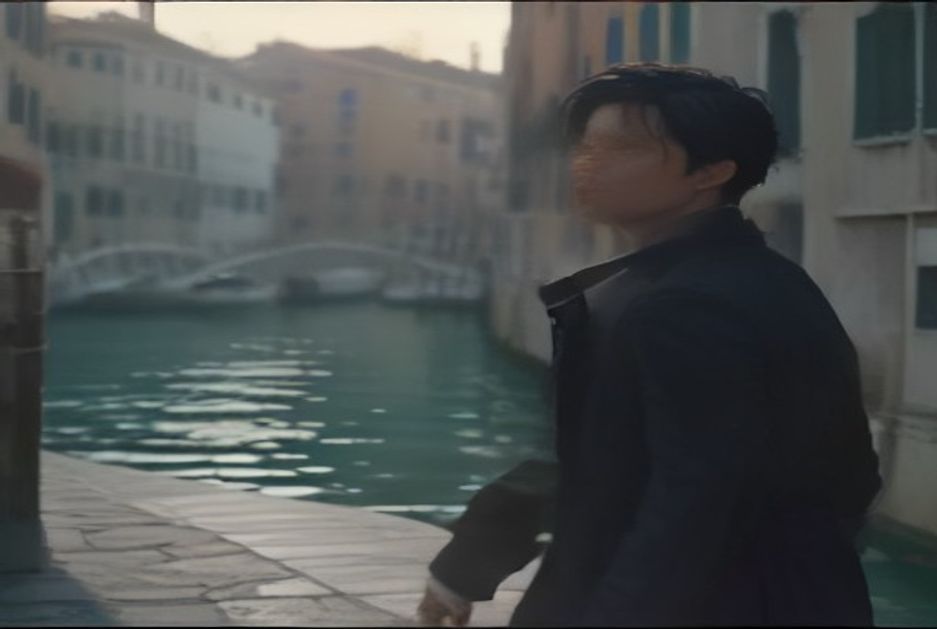

Pop superstar Ricky Martin is stepping onto one of cinema’s grandest stages. The multi-platinum recording artist is making his feature film debut at the Venice International Film Festival, appearing in a project that also marks the third directorial outing from acclaimed Mexican actor Gael García Bernal.
The film, titled in English roughly as “Man Overboard,” represents a notable crossover for Martin, whose career has largely been defined by chart-topping albums, sold-out arena tours, and a high-profile role as a coach on Spanish-language television. His presence in the Venice competition signals a deliberate expansion into long-form dramatic storytelling, a space that has historically resisted easy celebrity imports from the music world.
Speaking to reporters at the Lido, Martin described the experience as a deeply personal milestone. He characterized the moment as a significant chapter in his life, reflecting on how the opportunity to inhabit a character on screen for an extended narrative had long appealed to him. For an artist who has spent more than three decades in the public eye, the choice to join an auteur-driven project at one of Europe’s most prestigious festivals underscores both his respect for cinema and his willingness to embrace new creative challenges.
García Bernal, who first drew international attention with his performances in films such as “Amores Perros” and “The Motorcycle Diaries,” has steadily built a second career as a filmmaker. His earlier directorial work explored themes of identity, displacement, and the contradictions of contemporary Latin American life, often through a lens that blends intimate character study with broader social commentary. “Hombre al agua” appears to continue that trajectory, though specific plot details have been kept under wraps ahead of the festival premiere.
The casting of Martin is itself a statement of intent. Rather than choosing an established film actor to anchor the project, García Bernal has turned to a performer whose global fame stems from an entirely different industry. The decision suggests that the director was drawn less to conventional screen presence than to a particular emotional texture Martin could bring to the role, perhaps the vulnerability and openness that have long characterized his most personal songs.
For Martin, the move into cinema arrives at a moment when he has increasingly spoken about legacy and longevity. After decades of global touring and the cultural phenomenon surrounding his music, the artist has been vocal about wanting to use his platform for projects that carry weight and meaning. Joining a festival film, where critical reception and artistic discourse take precedence over commercial metrics, fits that ambition. It also positions him alongside other Latin American performers who have successfully crossed from music into acting, a path that includes previous collaborations between García Bern with artists working across disciplines.
The Venice Film Festival, now in its 82nd edition, has a long tradition of using its red carpet as a launchpad for unexpected casting choices. The festival’s programmers have, in recent years, shown a willingness to include works that blur the lines between popular culture and arthouse cinema, recognizing that audiences increasingly engage with storytelling across multiple formats. Martin’s debut fits squarely within that curatorial philosophy.
Industry observers will be watching closely to see how the singer transitions to the demands of feature-length narrative work, where the rhythms of performance differ markedly from those of a music video or a televised singing competition. Acting in a film requires a sustained emotional arc, the ability to convey interiority largely through silence and gesture, and a willingness to surrender control to a director’s vision. Whether Martin’s instincts as a stage performer translate to that more restrained form will likely become one of the talking points surrounding the film’s reception.
Beyond the personal stakes for Martin, the collaboration highlights the continued vitality of Spanish-language cinema on the international stage. Latin American filmmakers have enjoyed a remarkable run at major festivals over the past two decades, and García Bernal’s project arrives as part of an ongoing conversation about regional storytelling, identity, and the global appetite for non-English-language drama. Having a globally recognizable name like Martin attached to the film could broaden its reach beyond the traditional festival circuit.
As the Venice premiere approaches, anticipation is building around what “Hombre al agua” will reveal, both about its central story and about the unexpected pairing of director and star. For Ricky Martin, the festival represents more than a single credit on a filmography. It marks the opening of a new artistic chapter, one that he has framed as a meaningful page in a story that continues to evolve.