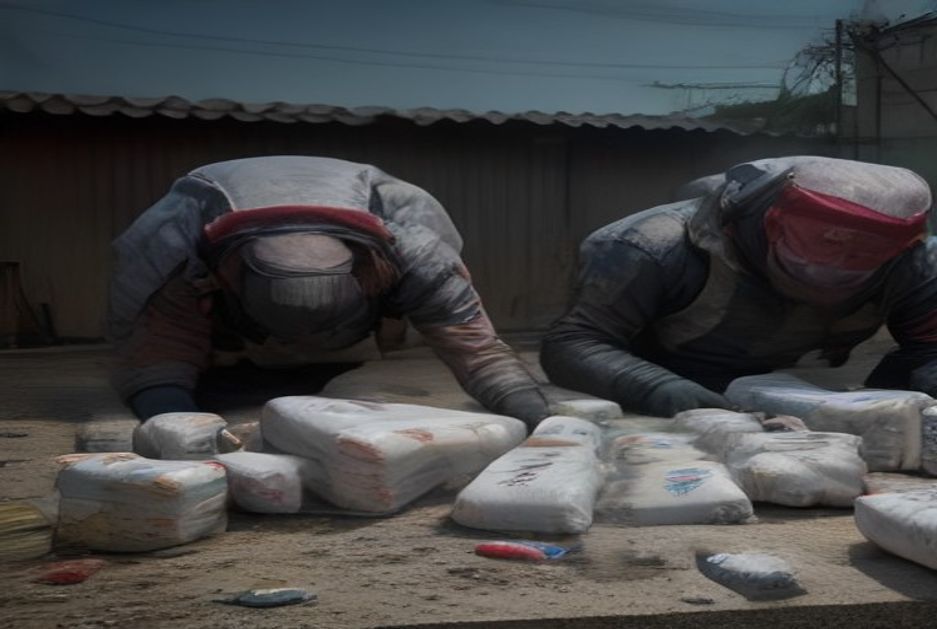

Mexican security forces have dismantled three clandestine drug laboratories and seized 7.8 tons of chemical precursors in the violence-plagued state of Guerrero, dealing a significant blow to criminal organizations that have long used the region as a strategic production hub, officials confirmed Sunday.
The operation, details of which were provided by officials including Omar García, represents what authorities described as a direct attack on the operational capacity and revenue streams of organized crime groups active in the Pacific coast state. The seizure of such a large quantity of precursor chemicals represents a substantial disruption to potential drug manufacturing capabilities.
Guerrero has long been considered one of Mexico’s most strategically important regions for drug production, particularly methamphetamine manufacturing. The state’s rugged terrain, extensive rural areas, and relative geographic isolation have made it attractive to criminal organizations seeking to establish production facilities away from major population centers where security operations are more concentrated.
The three laboratories discovered in the operation were equipped for the production of synthetic drugs, according to preliminary assessments by authorities. Chemical seizures of this magnitude typically indicate that laboratories were operating at industrial scale or that significant stockpiles had been accumulated for extended production runs.
Security analysts note that the disruption of chemical supply chains represents one of the most effective methods for hampering drug production operations. Precursor chemicals, which are often sourced through legitimate commercial channels or diverted from industrial uses, constitute the essential ingredients without which manufacturing synthetic narcotics becomes impossible.
The timing and location of the operation suggest it may be part of an intensified enforcement strategy targeting contested territories where multiple criminal groups compete for control of production and trafficking routes. Guerrero has experienced waves of violence as factions vie for dominance, with communities caught between competing demands from rival organizations.
Local authorities indicated that the operation was conducted following intelligence gathering efforts that identified the locations of the facilities. No details were provided regarding whether any arrests were made in connection with the discoveries, and investigations into the ownership and operators of the laboratories reportedly continue.
The economic impact on criminal organizations from such seizures can be substantial. Chemical precursor materials represent a significant investment for drug manufacturing operations, and the loss of stockpiled materials forces organizations to redirect resources toward resupply while facing delays in production schedules.
Mexico has intensified efforts against drug production facilities in various states over recent years, recognizing that disrupting manufacturing capacity can have broader effects on trafficking networks than simply seizing finished products. However, the persistent discovery of new laboratories underscores the adaptability and resilience of criminal organizations in maintaining production operations despite enforcement pressure.
Guerrero’s significance in Mexico’s illicit drug economy extends beyond production. The state serves as a transit corridor for narcotics moving toward the United States, and the presence of active manufacturing operations within its borders provides criminal organizations with advantages in controlling the supply chain from production to distribution.
Authorities have not specified which criminal organization or organizations were targeted by the operation, but multiple factions maintain presence throughout the state. The complexity of Guerrero’s criminal landscape, featuring both long-established groups and newer entrants to the narcotics trade, often makes attribution of particular facilities challenging.
Community leaders in affected areas have expressed cautious optimism about the operation while noting that sustained security presence is necessary to prevent the immediate reestablishment of production activities by criminal groups seeking to restore disrupted operations. Historical patterns suggest that labs dismantled in enforcement operations are often replaced relatively quickly unless follow-up measures effectively deny access to the same territories.
The seized chemicals will be subject to secure disposal procedures, authorities indicated, with environmental considerations playing a role in how materials are handled given the toxic nature of many substances used in drug synthesis.