
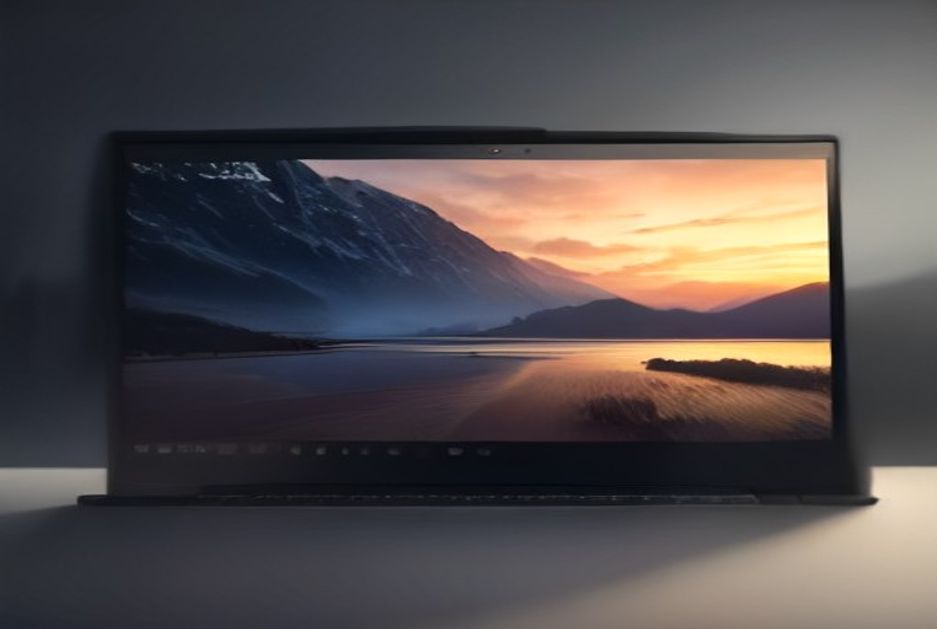

In an ambitious leap toward redefining portable computing, Lenovo has introduced the ThinkBook Project Swan, a groundbreaking laptop that features an innovative rollable display technology capable of expanding from 14 to 17 inches. This development represents one of the most significant advancements in laptop design in recent years, addressing the growing demand for larger screens without sacrificing portability.
The ThinkBook Project Swan emerges at a time when remote work and digital collaboration have become integral to professional environments worldwide. By incorporating a flexible display that can dynamically adjust its size, Lenovo addresses a critical pain point for mobile professionals who often struggle between the need for screen real estate and the constraints of carrying large devices.
According to industry analysts, the rollable display market is poised for substantial growth, with projections indicating a compound annual growth rate of over 20% through 2030. Lenovo’s entry into this space positions the company as a leader in next-generation computing hardware, potentially setting new standards for productivity-focused laptop designs.
The technical implementation behind the Project Swan’s expandable screen involves advanced materials science and precision engineering. While specific details about the roll mechanism remain proprietary, industry observers note that the technology likely builds upon existing flexible display innovations pioneered by companies like Samsung and LG. The challenge lies in creating a display that maintains color accuracy, brightness, and touch responsiveness across both its compact and expanded states.
From a productivity perspective, the ability to expand the screen from 14 to 17 inches offers significant advantages. Users can simultaneously view multiple documents, spreadsheets, or video conferencing windows without the cognitive load of switching between tabs or applications. This becomes particularly valuable for tasks such as data analysis, content creation, and virtual meetings where screen sharing and multitasking are essential.
The ThinkBook brand, traditionally positioned as a business-oriented line, aligns well with this technological innovation. Unlike consumer-focused gaming laptops that prioritize raw performance, ThinkBook models emphasize durability, security, and enterprise features. The Project Swan concept extends this philosophy by offering professionals a tool that enhances efficiency without compromising on the rugged build quality expected from the ThinkPad legacy.
Display technology has evolved rapidly over the past decade, transitioning from traditional LCD panels to high-resolution OLED screens and now toward flexible and rollable interfaces. Apple’s exploration of foldable displays, Microsoft’s dual-screen Surface devices, and various concept prototypes from major manufacturers have all contributed to normalizing what once seemed like science fiction. The Project Swan represents a natural progression in this evolutionary timeline, potentially making expandable displays a mainstream feature rather than a novelty.
Power consumption and thermal management present notable challenges for rollable display implementation. Expanding the screen area increases power draw, which could impact battery life—a critical consideration for mobile professionals. Lenovo will likely need to optimize other components or implement intelligent power management systems to maintain competitive battery performance despite the larger screen.
The timing of this announcement reflects broader trends in the technology industry. As artificial intelligence integration becomes standard across devices and hybrid work models persist, the demand for enhanced productivity tools continues to grow. The Project Swan addresses this demand through hardware innovation rather than software optimization alone.
Market analysts suggest that the initial price point for the ThinkBook Project Swan will likely position it as a premium offering, potentially targeting enterprise customers willing to invest in cutting-edge productivity tools. Early adopters in creative industries, financial services, and consulting firms may find particular value in the expanded display capabilities for client presentations and data visualization.
Lenovo’s approach to the Project Swan also reflects its strategic focus on the business segment. By introducing this technology within the ThinkBook ecosystem rather than its consumer-focused Legion or Yoga lines, the company signals its intent to provide enterprise customers with innovative solutions that directly address workplace efficiency.
Environmental considerations also play a role in this design philosophy. A single device that can adapt to various use cases may reduce the need for multiple screens or larger laptops, potentially contributing to more sustainable computing practices. However, the manufacturing complexity of rollable displays could offset these benefits if not properly managed.
As with any groundbreaking technology, practical implementation challenges remain. The durability of the roll mechanism, repairability concerns, and long-term reliability of flexible display components all require careful consideration. Early user feedback and durability testing will be crucial in determining whether the Project Swan can transition from innovative concept to reliable business tool.
The ThinkBook Project Swan represents more than just a new laptop—it signals a potential paradigm shift in how we think about portable computing. Whether this technology will achieve mainstream adoption or remain a niche solution for specific professional needs remains to be seen, but Lenovo’s bold move into rollable displays undeniably pushes the industry toward new possibilities in mobile productivity.