
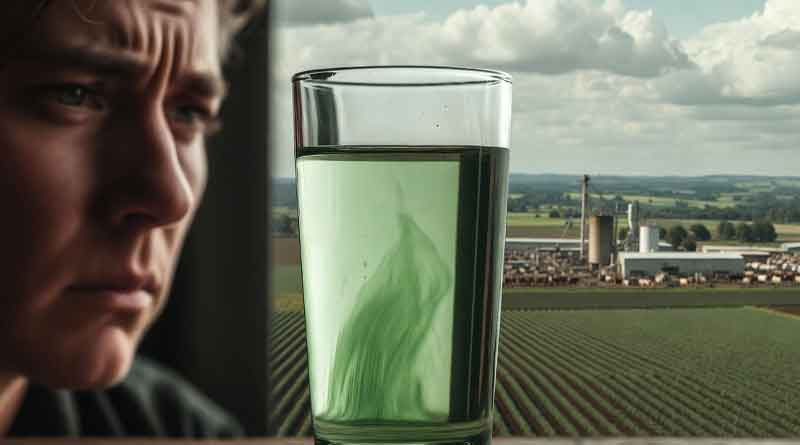

Nitrate pollution poses an insidious and escalating threat to drinking water supplies and public health, as evidenced by recent alarming data from Spain revealing that over 300 municipalities have experienced unsafe levels, rendering their tap water undrinkable. This critical environmental and public health crisis, often invisible and odorless, stems predominantly from intensive agricultural practices and industrial livestock farming, commonly known as macrofarms. The situation in Spain, where 332 municipalities recorded nitrate concentrations above the legal limit of 50 mg/l in 2024, is a stark reminder of a global challenge that demands immediate and decisive action to protect our most vital resource.
What is nitrate pollution and why is it a concern?
Nitrate pollution refers to the contamination of water sources, primarily groundwater and surface water, by excessive levels of nitrate compounds. Nitrates (NO₃⁻) are naturally occurring compounds that are essential nutrients for plant growth, forming a crucial part of the nitrogen cycle. However, when nitrates accumulate in water bodies beyond safe limits, they become a significant pollutant. The primary concern with high nitrate levels in drinking water is their potential to cause serious health problems, particularly for vulnerable populations, and to severely degrade aquatic ecosystems.
While nitrates are naturally present in the environment, human activities have drastically increased their concentrations in water systems. The legal limit for nitrates in drinking water set by many regulatory bodies, including the European Union and the U.S. Environmental Protection Agency (EPA), is 50 milligrams per liter (mg/l), or 10 mg/l as nitrate-nitrogen. However, scientific consensus, as highlighted by organizations like Greenpeace, suggests that levels above 6 mg/l already pose a risk to human health, indicating that current legal thresholds may not be sufficiently protective.
How do nitrates contaminate water sources?
The vast majority of nitrate pollution in water systems originates from anthropogenic sources, primarily agricultural and industrial activities. Understanding these sources is crucial for developing effective mitigation strategies.
Agricultural runoff: The role of synthetic fertilizers
One of the leading causes of nitrate pollution is the widespread and often excessive use of synthetic nitrogen fertilizers in agriculture. Farmers apply these fertilizers to boost crop yields, providing essential nitrogen for plant growth. However, crops only absorb a fraction of the nitrogen applied. The excess nitrogen, particularly in the form of nitrates, is highly soluble and easily leaches through the soil into groundwater or runs off into surface waters during rainfall or irrigation. This process is exacerbated by poor timing of fertilizer application, over-application, and certain farming practices that leave soil bare and vulnerable to erosion.
For example, in regions with intensive corn or wheat cultivation, the application of nitrogen fertilizers is a common practice. If heavy rains follow soon after application, a significant portion of the nitrate can be washed away before plants can absorb it. This runoff can then enter streams, rivers, and ultimately, aquifers that supply drinking water. The scale of modern agriculture, driven by demands for high yields, means that vast quantities of these fertilizers are used globally, making agricultural runoff a pervasive source of contamination.
Industrial livestock farming and macrofarms
Another major contributor to nitrate pollution, particularly emphasized by environmental groups, is industrial livestock farming, often referred to as macrofarms or Concentrated Animal Feeding Operations (CAFOs). These operations house thousands or even tens of thousands of animals (pigs, chickens, cattle) in confined spaces, generating enormous amounts of animal waste. This manure is rich in nitrogen, which converts into nitrates.
The challenge lies in managing this colossal volume of waste. Often, manure is stored in large lagoons or spread onto nearby fields as fertilizer. If these lagoons leak, or if manure is applied to fields in excess of what the soil and crops can absorb, or during periods of heavy rainfall, nitrates can easily leach into groundwater or run off into surface water. Greenpeace explicitly states that 81% of agricultural nitrogen input into aquatic systems at the European level comes directly or indirectly from livestock. This highlights the disproportionate impact of industrial animal agriculture on water quality.
Consider a large hog farm with tens of thousands of pigs. The daily waste production is immense. If this waste is stored in an unlined lagoon, or if there’s a breach, vast quantities of nitrate-rich effluent can seep into the ground. Even when applied to fields, the sheer volume of manure can overwhelm the soil’s capacity to process the nitrogen, leading to significant runoff and leaching. The economic model of these macrofarms, focused on maximizing production, often overlooks the environmental externalities, leading to severe localized and regional water contamination.
Other sources of nitrate contamination
While agriculture and industrial livestock are the dominant sources, other factors can also contribute to nitrate pollution. These include:
- Septic systems: Faulty or improperly maintained septic systems can release nitrate-rich wastewater into the ground, contaminating private wells or local groundwater.
- Urban runoff: Fertilizers used on lawns, gardens, and golf courses in urban and suburban areas can also contribute to nitrate runoff, although typically on a smaller scale than agricultural sources.
- Industrial wastewater: Certain industrial processes can release nitrates, but this is usually regulated and localized.
- Atmospheric deposition: Nitrogen oxides from vehicle emissions and industrial smokestacks can be deposited on land and water, contributing to overall nitrogen loading.
What are the health risks associated with high nitrate levels?
Consuming water with elevated levels of nitrates poses several health risks, with infants and pregnant women being particularly vulnerable.
Methemoglobinemia (blue baby syndrome)
The most well-known and immediate health risk of nitrate ingestion, especially for infants under six months of age, is methemoglobinemia, commonly known as “blue baby syndrome.” When infants consume water high in nitrates, their digestive systems convert nitrates into nitrites. These nitrites then react with hemoglobin in their blood, forming methemoglobin. Unlike normal hemoglobin, methemoglobin cannot effectively carry oxygen, leading to a reduction in oxygen delivery to the body’s tissues. Symptoms include shortness of breath and a bluish discoloration of the skin, particularly around the mouth, hands, and feet. Severe cases can be fatal if not treated promptly.
Infants are uniquely susceptible because their digestive systems are not fully developed, making them more efficient at converting nitrates to nitrites. Additionally, their hemoglobin is more easily oxidized than adult hemoglobin. This makes even moderately elevated nitrate levels a serious concern for families with infants.
Potential links to other health issues
Beyond blue baby syndrome, ongoing research suggests potential links between long-term exposure to high nitrate levels and other health problems in adults:
- Cancer risk: Some studies have indicated a possible association between nitrate ingestion and an increased risk of certain cancers, particularly colorectal cancer, bladder cancer, and stomach cancer. This is hypothesized to occur because nitrites can react with amines and amides in the stomach to form N-nitroso compounds (NOCs), many of which are known carcinogens.
- Thyroid dysfunction: There is some evidence suggesting that nitrates may interfere with iodine uptake by the thyroid gland, potentially leading to thyroid problems.
- Reproductive issues: Animal studies and some epidemiological research have explored potential links to adverse reproductive outcomes, though more conclusive human studies are needed.
- Birth defects: Some studies have investigated a possible correlation between nitrate exposure during pregnancy and an increased risk of certain birth defects.
While the evidence for these long-term effects is still being researched and debated, the precautionary principle suggests that minimizing nitrate exposure is a prudent public health measure. The fact that 2,860 municipalities in Spain (51% of those analyzed) already exceed the scientifically recommended safe limit of 6 mg/l underscores the widespread nature of this potential chronic health threat.
Environmental consequences of nitrate pollution
The impact of excessive nitrates extends beyond human health, severely damaging aquatic ecosystems and biodiversity.
Eutrophication and algal blooms
One of the most significant environmental consequences of nitrate pollution is eutrophication. Nitrates, being essential plant nutrients, fuel the rapid growth of algae and aquatic plants when present in excess. This phenomenon is known as eutrophication. The initial result is often massive algal blooms that can cover the surface of lakes, rivers, and coastal waters. These blooms block sunlight from reaching submerged aquatic vegetation, which then dies off.
While alive, the algae produce oxygen, but when the massive blooms eventually die, their decomposition by bacteria consumes vast amounts of dissolved oxygen in the water. This leads to hypoxic (low oxygen) or anoxic (no oxygen) conditions. Fish and other aquatic organisms, unable to survive in these oxygen-depleted environments, either flee or die, leading to significant reductions in biodiversity.
Formation of “dead zones”
In severe cases of eutrophication, particularly in coastal areas and large estuaries, vast areas can become “dead zones” where marine life cannot survive due to a complete lack of oxygen. The most famous example is the dead zone in the Gulf of Mexico, caused primarily by nutrient runoff, including nitrates, from the Mississippi River basin, which drains a large agricultural area of the United States. These dead zones can have devastating impacts on fisheries and the overall health of marine ecosystems, affecting local economies and food security.
Impact on freshwater ecosystems
Freshwater ecosystems are also highly susceptible. Nitrate-rich runoff can alter the species composition of rivers and lakes, favoring nitrate-tolerant species over more sensitive ones. This can disrupt the delicate balance of food webs and lead to a decline in overall ecosystem health. For example, some amphibians and aquatic insects are very sensitive to changes in water chemistry, and their populations can decline in polluted waters.
The invisible threat: Why public awareness is crucial
One of the most challenging aspects of nitrate pollution is its invisible nature. As highlighted by Luís Ferreirim from Greenpeace, “The water contamination by nitrates is invisible. You can’t see it or smell it.” This lack of sensory detection makes it difficult for the public to recognize the problem without regular testing. People may unknowingly consume contaminated water for extended periods, exposing themselves and their families to health risks.
The complexity of accessing official data, as mentioned by Greenpeace, further compounds the issue. When information is not readily available or easily understandable, public engagement and advocacy become hampered. Interactive maps, like the one developed by Greenpeace for Spain, are vital tools for empowering citizens with knowledge about their local water quality, enabling them to demand action from authorities and hold polluters accountable. Without this awareness, the problem will continue to escalate unchecked, as warned by environmental organizations.
Addressing nitrate pollution: A multi-faceted approach
Reversing the trend of increasing nitrate pollution requires a comprehensive and sustained effort involving changes in agricultural practices, stricter regulatory enforcement, technological solutions, and strong public advocacy.
Sustainable agricultural practices
Transforming agricultural practices is perhaps the most critical component of tackling nitrate pollution at its source:
- Precision agriculture: Utilizing technologies like GPS, sensors, and drones to apply fertilizers precisely where and when they are needed, minimizing waste and runoff. This can include variable rate application, where fertilizer amounts are adjusted based on soil nutrient levels and crop needs within specific field zones.
- Cover cropping: Planting non-cash crops (e.g., clover, rye) after the main harvest to cover the soil. Cover crops absorb residual nitrates, preventing them from leaching, and improve soil health.
- Crop rotation: Alternating crops that require different amounts of nitrogen or include nitrogen-fixing legumes can reduce the need for synthetic fertilizers.
- Optimized fertilizer application: Applying fertilizers in smaller, more frequent doses, or using slow-release formulations, can improve nutrient uptake by plants and reduce leaching. Avoiding application before heavy rainfall is also crucial.
- Conservation tillage: Practices that disturb the soil less (e.g., no-till farming) can improve soil structure, reduce erosion, and enhance water infiltration, thereby decreasing runoff.
- Organic farming: Relying on natural fertilizers (compost, manure from sustainably managed livestock) and biological pest control, organic farming generally results in lower nitrate runoff compared to conventional intensive agriculture.
Improved livestock waste management
For industrial livestock operations, better manure management is essential:
- Anaerobic digesters: These systems can convert manure into biogas (a renewable energy source) and a nutrient-rich digestate that is more stable and less prone to leaching than raw manure.
- Composting: Composting manure stabilizes nitrogen, making it less mobile and reducing odors, while creating a valuable soil amendment.
- Reduced herd sizes and diversified farms: Shifting away from mega-farms towards smaller, more diversified, and regionally integrated livestock operations can make manure management more sustainable and less concentrated. This also promotes a circular economy where manure can be more effectively utilized by nearby crop farms.
- Better storage facilities: Ensuring manure lagoons are properly lined and maintained to prevent leaks is fundamental.
Policy and regulatory frameworks
Government policies play a pivotal role in driving change:
- Stricter enforcement of existing regulations: Ensuring that legal limits (like the 50 mg/l threshold) are consistently monitored and enforced, with penalties for non-compliance.
- Lowering legal limits: Re-evaluating and potentially lowering the legal limit for nitrates in drinking water to align with scientific recommendations (e.g., 6 mg/l) could offer greater public health protection.
- Incentives for sustainable practices: Providing financial support, subsidies, or tax breaks for farmers who adopt sustainable agricultural methods that reduce nitrate runoff.
- Zoning and land-use planning: Restricting the establishment of new macrofarms in highly vulnerable hydrological areas and implementing buffer zones around water bodies.
- Support for a transition to sustainable agriculture: Policies that actively support smaller, diversified farms and promote a shift away from industrial agriculture models.
Water treatment technologies
While prevention is key, treatment technologies are necessary where contamination has already occurred:
- Denitrification: Biological processes that use bacteria to convert nitrates into harmless nitrogen gas, which is then released into the atmosphere. This is often used in municipal water treatment plants.
- Ion exchange: A process where nitrate ions are exchanged for other ions (like chloride) using a special resin.
- Reverse osmosis: A membrane filtration process that can effectively remove nitrates, along with other contaminants, from water. This is often used for point-of-use filtration or in smaller-scale community systems.
Public awareness and advocacy
As highlighted by Greenpeace’s successful petition with over half a million signatures, public pressure is a powerful catalyst for change. Educating consumers about the origins of their food and the environmental impact of different farming methods can drive demand for sustainably produced goods. Supporting organizations that advocate for environmental protection and sustainable agriculture is crucial for holding industries and governments accountable.
The path forward: Securing our water future
The crisis of nitrate pollution, exemplified by the situation in Spain, serves as a critical warning that current practices are unsustainable. The continued reliance on intensive agriculture and industrial livestock operations without adequate environmental safeguards is literally poisoning our water supplies and jeopardizing public health. The economic incentives that drive these industries must be balanced against the imperative to protect our shared natural resources.
Reversing this trend will not be immediate; Greenpeace acknowledges that “a determined intervention could generate a progressive reduction in pollution.” However, inaction guarantees that “the number of exposed people will continue to increase, and the impact will extend to new localities.” The time for complacency is over. We must collectively demand and implement a transition towards a more sustainable and respectful model of agriculture and food production that prioritizes clean water, healthy ecosystems, and the well-being of all communities. Our future depends on it.