
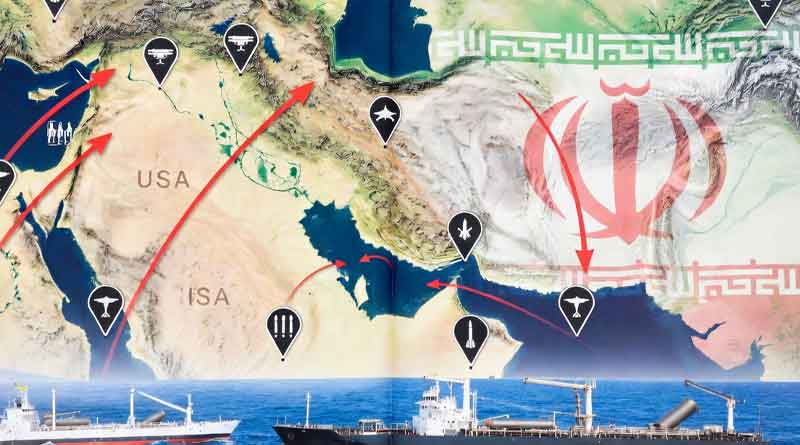

In a geopolitical landscape fraught with tension and shifting alliances, Iran remains defiant, demonstrating an unwavering resolve in the face of escalating military pressure, stern diplomatic warnings, and a protracted regional conflict. This defiance is not merely rhetorical; it is manifested through a series of strategic military actions, a steadfast posture on its nuclear program, and a refusal to yield to external demands, even as the United States deploys additional forces to the region and issues stark ultimatums regarding vital maritime chokepoints. The recent intensification of the conflict, marked by Iranian missile strikes on Israel, Israeli retaliatory bombardments, and new attacks by Iranian-aligned Houthi forces from Yemen, underscores a dangerous escalation that has already claimed thousands of lives and sent shockwaves through global energy markets.
The current crisis, unfolding in late March 2026, represents a critical juncture in the long-standing animosity between Iran and a coalition of Western powers and regional adversaries, primarily the United States and Israel. This latest chapter of confrontation has seen Iran not only retaliate against perceived aggressors but also openly contemplate withdrawing from international nuclear agreements, signaling a profound hardening of its stance. As the conflict broadens, drawing in proxy forces and threatening crucial global trade routes, understanding the multifaceted nature of Iran’s defiance becomes paramount for grasping the potential trajectories of this volatile situation.
The escalating military confrontation and Iran’s defiant response
The current wave of military actions sees Iran responding directly to what it perceives as aggression, while simultaneously leveraging its regional influence through allied groups. On Monday, March 30, 2026, Iran launched multiple waves of missiles against Israel, declaring its intent to “punish the aggressor.” This move followed intense Israeli bombardments targeting Tehran and infrastructure in Beirut used by Hezbollah, the Iranian-backed Lebanese group that also escalated its rocket attacks on Israel. The Israeli military reported intercepting two drones originating from Yemen on the same day, marking a significant entry of the Iran-aligned Houthis into the broader conflict with missile strikes against Israel for the first time since the onset of the “United States and Israel war against Iran” in the region.
The backdrop to this immediate escalation is a month-long conflict that has ravaged the region, resulting in thousands of casualties and widespread disruption. The conflict gained a new dimension with the recent death of Iran’s Supreme Leader on February 28, leading to a succession of new leadership that, despite initial characterizations by some U.S. officials as “very reasonable,” has shown no signs of softening Iran’s foreign policy or military posture. Instead, the interim Defense Minister of Iran, Majid Ebn-e Reza, was quoted by the state-run Islamic Republic News Agency (IRNA) on Monday, reaffirming Tehran’s commitment to “punishing aggressors, generating deterrence and ensuring the war does not recur.” This statement encapsulates the core of Iran’s defiant stance, signaling a strategic determination to protect its interests and project power rather than retreat under pressure. The targeting of a refinery in Haifa, Israel, and a mechanical workshop in eastern Tehran, both hit by projectiles, serve as stark visual reminders of the direct and destructive nature of this escalating military exchange. The reported death of Alireza Tangsiri, the naval commander of the Revolutionary Guard, days after Israel claimed to have killed him, further underscores the high stakes and direct engagement of senior military figures in this conflict.
The economic battleground: Oil, maritime chokepoints, and global impact
At the heart of the current geopolitical standoff lies a critical economic dimension, where control over vital maritime arteries and the flow of global energy supplies acts as a powerful lever. Iran’s effective closure of the Strait of Hormuz has severely disrupted energy markets, given that this narrow waterway is indispensable for approximately one-fifth of the world’s oil and liquefied natural gas supply. The strategic importance of the Strait of Hormuz cannot be overstated; it is the sole sea passage from the Persian Gulf to the open ocean, making any threat to its navigability a global concern with immediate economic repercussions. Tankers carrying crude oil and LNG from major producers like Saudi Arabia, Iraq, UAE, Kuwait, and Qatar must pass through this strait, making it a pivotal chokepoint in international trade.
Further complicating the energy landscape, the Houthi attacks against Israel introduce the ominous possibility of a blockade or disruption of a second crucial shipping lane: the Strait of Bab el-Mandeb. Located between Yemen on the Arabian Peninsula and Djibouti and Eritrea on the Horn of Africa, this strait connects the Red Sea to the Gulf of Aden and the Arabian Sea. It is another critical chokepoint for global oil and natural gas shipments, particularly for traffic heading to or from the Suez Canal. Should both the Strait of Hormuz and Bab el-Mandeb become effectively blocked or too dangerous for commercial shipping due to the ongoing conflict, the global energy supply chain would face an unprecedented crisis, far exceeding the current disruptions. This dual threat significantly amplifies the economic pressure points in the conflict.
The immediate impact of these escalating tensions was evident in the energy markets. On Monday, crude Brent futures, the international benchmark, surged by 2.8%, reaching nearly $116 per barrel. Such sharp increases directly translate to higher fuel costs for consumers and industries worldwide. The airline industry, already sensitive to fuel prices, has begun to react by increasing fares and reducing capacity to offset rising operational costs. Economic analysts warn that the sector’s profitability will hinge on how much consumers curtail their travel plans in response to higher energy-induced expenses, illustrating a ripple effect that extends far beyond the immediate conflict zones. The potential for Washington to seize Kharg Island, from which Iran exports a significant portion of its oil, as suggested by President Trump, adds another layer of complexity and potential escalation to this economic warfare. Kharg Island is Iran’s primary oil export terminal, and its control would represent a direct blow to Iran’s economic lifeline, further fueling its defiant posture.
Diplomacy and threats: Trump’s dual approach to Iran’s defiance
President Donald Trump’s approach to the escalating conflict with Iran has been characterized by a striking duality, oscillating between claims of diplomatic progress and stark military threats. On one hand, Trump asserted that the United States and Iran have been engaged in “direct and indirect” contacts, even describing Iran’s new leadership, which emerged after the death of the Supreme Leader, as “very reasonable.” He even suggested that “great progress” had been made in negotiations, hinting at a potential agreement that might include Iran allowing 20 oil-carrying vessels through the Strait of Hormuz as a “sign of respect.” This narrative suggests a path toward de-escalation through dialogue and mutual understanding, however fragile.
However, this conciliatory tone has been overshadowed by severe warnings and military ultimatums. Trump issued a chilling warning to the Islamic regime to immediately open the Strait of Hormuz, threatening American attacks on Iran’s oil wells and power plants if an agreement is not reached soon or if the strait remains closed. In a post on Truth Social, he explicitly stated, “if for any reason a deal is not reached soon, which will likely happen, and if the Strait of Hormuz is not immediately opened to traffic, we will end our pleasant ‘stay’ in Iran by blowing up and completely leveling all of their power plants, oil wells, and Kharg Island.” This aggressive rhetoric, coupled with the Pentagon’s deployment of thousands of additional U.S. troops to the Middle East, paints a picture of imminent military confrontation.
The Iranian Parliament’s president accused Washington of sending mixed signals—proposing negotiations while simultaneously planning a ground invasion—an interpretation that has only served to redouble Tehran’s defiance. Trump’s candid remarks, such as “we negotiate with them and then we always have to bomb them,” reflect a deep-seated skepticism about diplomatic solutions with Iran, reinforcing a cycle of distrust and escalation. The notion of a “change of regime” in Tehran, which Trump claimed had already been achieved through the bombings that killed the Supreme Leader and other officials, further complicates any diplomatic overtures, as it implies a desire for fundamental political transformation rather than mere policy adjustments.
Iran’s nuclear ambitions and the Non-Proliferation Treaty debate
A critical component of Iran’s defiant stance revolves around its controversial nuclear program and its relationship with international non-proliferation efforts. The Iranian regime has publicly stated that it is considering a potential withdrawal from the Nuclear Non-Proliferation Treaty (NPT), a cornerstone of global nuclear arms control. This declaration, made by the Foreign Ministry spokesperson, Esmail Baqai, introduces a significant new dimension to the crisis, raising alarms among international observers.
The NPT is an international treaty whose objective is to prevent the spread of nuclear weapons and weapons technology, to promote cooperation in the peaceful uses of nuclear energy, and to further the goal of achieving nuclear disarmament. For non-nuclear-weapon states, adherence to the NPT means renouncing the acquisition of nuclear weapons in exchange for access to peaceful nuclear technology and security assurances. Iran has consistently maintained that its nuclear program is exclusively for peaceful civilian purposes, asserting its right to enrich uranium on its own territory under the provisions of the NPT. Spokesperson Baqai reiterated this position, stating, “the Islamic republic has never sought, nor does it seek, to acquire nuclear weapons.” He further added, “Regardless of our clear position on the prohibition of all weapons of mass destruction, adherence to this treaty is generating a real debate in public opinion and at the parliamentary level.”
Despite Iran’s repeated denials, the United States, Israel, and other Western countries harbor deep suspicions that Tehran’s nuclear program ultimately aims to develop a nuclear weapon. These suspicions are fueled by Iran’s past covert activities, its limited transparency with international inspectors, and its development of advanced enrichment capabilities. A withdrawal from the NPT would remove Iran from its obligations under the treaty, including safeguard agreements with the International Atomic Energy Agency (IAEA), potentially allowing it to pursue nuclear weapons development with even less international oversight. Such a move would be perceived by many as an unambiguous signal of Iran’s intent to develop nuclear weapons, triggering a severe international response and potentially accelerating regional proliferation. The internal debate mentioned by Baqai, whether in public opinion or within the parliament, highlights the significant internal pressure and strategic considerations guiding Iran’s decisions on this critical issue, underscoring the depth of its defiance against external pressures to curb its nuclear ambitions.
The human cost and regional instability
Beyond the geopolitical maneuvering and economic implications, the ongoing conflict carries a devastating human toll, exacerbating regional instability and creating a profound humanitarian crisis. The month-long war has already claimed thousands of lives across multiple nations, turning homes into rubble and displacing countless individuals. In Iran, the U.S.-based human rights group HRANA reports nearly 3,500 fatalities, including 1,550 civilians, casualties primarily from the intense bombings and missile strikes targeting various cities. These figures underscore the brutal impact of modern warfare on urban populations and civilian infrastructure.
Lebanon, a nation already grappling with severe economic and political crises, has seen nearly 1,240 people die as a direct consequence of the conflict, according to Lebanese authorities. The country has been a consistent battleground for proxy warfare, with Hezbollah, an Iranian-backed group, engaging in fierce exchanges with Israeli forces. Sources indicate that over 400 Hezbollah fighters have been killed since the group initiated rocket fire against Israel on March 2, reflecting the intensity of the ground and air engagements. Israel’s decision to expand its operations in southern Lebanon and its stated intention to create a “buffer zone” against Hezbollah further fuels Lebanese fears of a prolonged Israeli military occupation. Such a move would not only deepen instability within Lebanon but also inevitably lead to more displacement and humanitarian suffering, as communities caught in the crossfire are forced to abandon their homes and livelihoods.
Iraq has also been drawn into the conflict, with at least 100 people reported dead. The early Monday rocket attack on the Mohamad Alaa airbase near Baghdad International Airport, which destroyed an aircraft, illustrates the pervasive reach of the conflict and its capacity to destabilize neighboring states. Kuwait, too, reported intercepting five drones in areas under its protection, highlighting the broad aerial threat across the region.
Furthermore, the conflict has claimed the lives of 13 U.S. military service members, underscoring America’s direct involvement and the risks faced by its deployed forces. These casualties represent a fraction of the broader human suffering, which includes injuries, psychological trauma, and the destruction of essential services. The escalating death toll and the widening geographical scope of the conflict reinforce the urgent need for de-escalation, yet Iran’s defiant posture, coupled with the aggressive actions of other parties, continues to push the region toward greater catastrophe.
Domestic repercussions and public opinion
The escalating conflict in the Middle East, driven in part by Iran’s defiant stance and the U.S. response, is not without significant domestic repercussions, particularly for President Donald Trump ahead of the November legislative elections. The political landscape in the United States is highly sensitive to military engagements abroad, especially those that carry a high financial and human cost. Opinion polls suggest that the majority of Americans oppose the war and any further military escalation that could lead to a prolonged crisis. This public sentiment poses a considerable challenge for Trump, whose approval ratings are already low. A protracted and costly conflict could further erode public trust and support, potentially jeopardizing his party’s performance in the upcoming elections.
The economic impact of the war, particularly the surge in oil prices, directly affects American households through higher gasoline prices and increased costs for goods and services. This financial burden, coupled with the human cost of military engagement, often translates into voter discontent. Historically, presidents have faced significant political headwinds when overseeing unpopular wars. Trump’s rhetoric, which includes both claims of diplomatic breakthroughs and threats of devastating military action, reflects an attempt to navigate these domestic political pressures. He seeks to project strength and resolve while simultaneously suggesting that a peaceful resolution might be within reach, thereby trying to appease different segments of the electorate. However, the contradiction inherent in his statements—negotiating with Iran only to “bomb them” later—risks alienating both those who advocate for diplomacy and those who seek decisive military action. The public’s opposition to further military involvement could limit Trump’s options, making a full-scale ground offensive, despite the deployment of thousands of troops, a politically risky endeavor. This domestic political calculus adds another layer of complexity to the international crisis, influencing the decision-making processes in Washington and potentially shaping the trajectory of the conflict.
The role of proxies: Houthis, Hezbollah, and regional power projection
A crucial element in understanding Iran’s defiance and its strategic depth in the Middle East is the extensive network of proxy forces it supports across the region. These groups, including the Houthis in Yemen and Hezbollah in Lebanon, act as extensions of Iran’s foreign policy, enabling Tehran to project power, exert influence, and retaliate against adversaries without direct conventional military engagement. Their actions significantly contribute to regional instability and amplify the impact of the core conflict.
The Houthis, officially known as Ansar Allah, are an Islamist political and armed movement that emerged in Yemen. Aligned with Iran, they have been engaged in a protracted civil war in Yemen, often targeting Saudi Arabia and its allies. Their recent missile strikes against Israel, the first since the broader conflict escalated, mark a dangerous expansion of their operational scope. By targeting Israel, the Houthis directly contribute to Iran’s strategy of creating multiple fronts against its adversaries and disrupting vital maritime trade routes, particularly the Strait of Bab el-Mandeb. This ability to threaten shipping lanes far from Iran’s immediate borders showcases the reach of Tehran’s influence and its capacity to leverage regional actors to its strategic advantage. The interception of Houthi drones by Israeli and Kuwaiti forces underscores the tangible threat posed by these proxy capabilities.
Hezbollah, a powerful Shia Islamist political party and militant group based in Lebanon, represents another pillar of Iran’s regional power projection. Widely considered one of the most heavily armed non-state actors in the world, Hezbollah has long been a formidable adversary to Israel, engaging in numerous conflicts and border skirmishes. Its renewed rocket attacks on Israel, prompting an expansion of Israeli military operations into southern Lebanon, highlight its continued role as a significant player in the current conflict. Hezbollah’s robust military capabilities, honed through years of conflict and supported by Iranian funding, training, and weaponry, allow Iran to maintain a credible deterrent against Israel and exert pressure on its northern border. The Israeli plan to create a “buffer zone” in southern Lebanon directly responds to Hezbollah’s persistent threat, indicating the profound impact this proxy group has on regional security dynamics. The casualties suffered by Hezbollah fighters, reportedly over 400 since March 2, illustrate the intensity of the fighting and the group’s willingness to sustain losses in pursuit of its objectives, which often align with Iran’s broader defiant strategy against Israel and the United States. These proxy forces allow Iran to engage in a complex, multi-layered conflict, adding significant leverage to its defiant posture on the international stage.
The path forward: Diplomacy or continued escalation?
As the conflict rages, the critical question remains whether diplomacy can prevail over the relentless march towards further escalation. Pakistan, acting as an intermediary, has announced preparations to host “meaningful conversations” in the coming days, aiming to broker an end to the war. However, it remains unclear whether both the United States and Iran have agreed to participate, or if these talks will yield any concrete results given the deep-seated animosity and conflicting objectives. President Trump himself expressed uncertainty, stating, “I think we’re going to make a deal with them, I’m pretty sure, but it’s possible we won’t.” This ambivalence highlights the precarious nature of any diplomatic efforts when juxtaposed against the backdrop of ongoing military action and severe threats.
The challenges to a diplomatic resolution are immense. Iran’s defiance is deeply rooted in its revolutionary ideology, its perceived national security interests, and a desire to assert regional hegemony. Its leaders view concessions under duress as a sign of weakness and a betrayal of their principles. On the other hand, the United States, under Trump, has adopted an “maximum pressure” campaign, combining sanctions with military threats, aiming to force Iran into compliance. Israel’s security concerns, particularly regarding Iran’s nuclear program and its proxy forces, are paramount and non-negotiable from Tel Aviv’s perspective. The sheer number of actors involved, each with their own agendas and red lines—Iran, the U.S., Israel, Saudi Arabia, the UAE, and various non-state actors like Hezbollah and the Houthis—makes consensus incredibly difficult to achieve.
Moreover, the trust deficit between Washington and Tehran is profound, exacerbated by past broken agreements and inflammatory rhetoric. Trump’s assertion of having achieved “change of regime” through the death of Iran’s Supreme Leader, despite the rapid succession of new leadership, further complicates any genuine diplomatic engagement. The very notion of negotiating with a regime that one simultaneously claims to have destabilized creates an environment of profound distrust. The global community, witnessing the economic fallout from rising oil prices and the immense human suffering, desperately seeks a peaceful resolution. Yet, the current trajectory suggests that without a significant shift in posture from all major parties, the path forward is likely to be one of continued escalation, with devastating consequences for the Middle East and the global order. The delicate balance between deterrence and provocation, diplomacy and confrontation, hangs by a thread, with the world watching anxiously for any sign of de-escalation or, conversely, a slide into a wider, more catastrophic conflict.
As the drums of war continue to beat across the Middle East, Iran remains defiant, presenting a formidable challenge to international stability and peace. The current conflagration, fueled by escalating military actions, economic warfare, and a deep ideological chasm, shows no immediate signs of abating. The world grapples with the immense human cost, the volatile energy markets, and the ever-present threat of a wider regional conflict. The intricate dance between diplomacy and ultimatums, exemplified by President Trump’s dual approach, only underscores the complexity and fragility of the situation. Until a genuine and mutually acceptable path to de-escalation is found, Tehran’s defiance will continue to shape the dangerous narrative unfolding in one of the world’s most critical geopolitical theaters.