
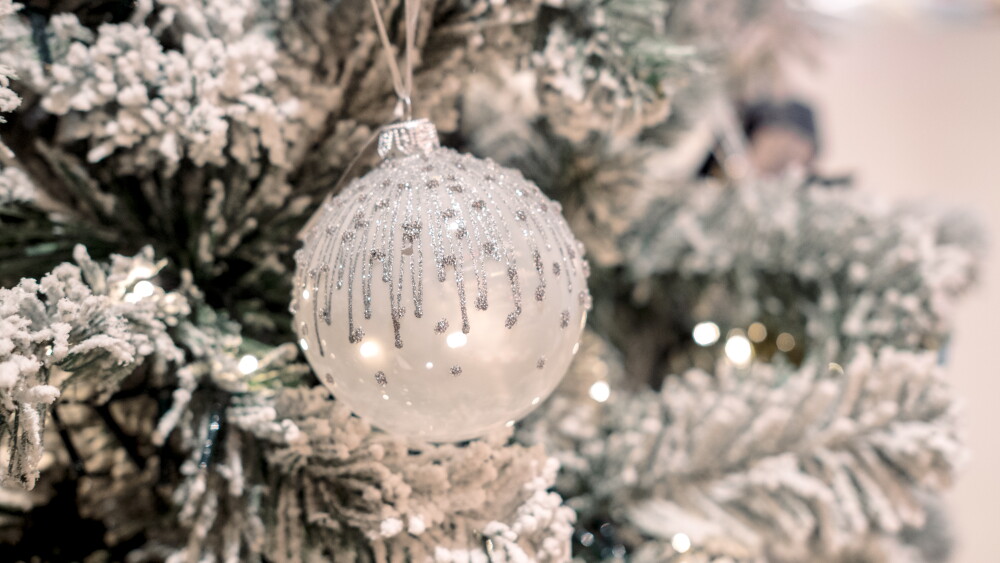

As the 2026 holiday season approaches, many households are looking beyond mere aesthetics to infuse their Christmas trees with deeper significance. Among the most enduring and versatile choices are white ornaments — spheres that carry a rich tapestry of symbolism ranging from peace and purity to hope and renewal. According to design experts and cultural observers, choosing white baubles this year is as much a statement of intention as it is a decorative decision.
The Core Symbolism: Peace, Purity, and New Beginnings
In Western symbolism, white has long been associated with innocence, tranquility, and clarity. When translated to Christmas décor, white ornaments become a visual metaphor for a desire to turn the page — to leave behind the difficulties of the past year and welcome the next with serenity and optimism. While these meanings are cultural and personal rather than codified in any universal tradition, they have cemented white’s status as a staple in holiday decorating for those seeking a tree that radiates calm and balance.
A Spiritual Dimension: Light, Faith, and Reconciliation
From a spiritual perspective, particularly within Christian tradition, white holds liturgical weight. It is the color of joy, light, and purity, prominently featured during Christmas and Easter. Some families interpret white ornaments as a representation of the light of Christ, the hope accompanying the Nativity, or a personal prayer for inner renewal and reconciliation. Others use them to honor departed loved ones or to express gratitude for the year’s blessings. However, theologians and historians caution against conflating the religious symbolism of the color with any doctrinal mandate regarding the ornaments themselves — there is no teaching that white baubles attract divine protection or blessings.
The Power of Pairings: White and Gold Lead the 2026 Trends
While a monochromatic white tree offers timeless elegance, the most sought-after combination for 2026 is white paired with gold. This duo marries the serenity of white with gold’s associations of light, joy, abundance, and celebration. Together, they symbolize entering the new year with both hope and gratitude. In Christian liturgy, both colors appear during solemn and joyous feasts, reinforcing their shared resonance. Decoratively, matte white spheres alongside metallic gold accents — especially under warm white lights — create a sophisticated, luminous centerpiece.
Five Elegant Color Combinations for a White-Ornament Tree
White’s neutrality makes it a chameleon in design. Here are the standout pairings for 2026:
- White and Gold: Warm, celebratory, and luxurious. Best on a classic green tree with warm lights and velvet ribbons.
- White and Silver: Cool and wintry, evoking Scandinavian snowscapes and icy elegance.
- White and Burgundy: Rich and dramatic, adding depth through velvet or matte-finish accents.
- White and Natural Green: Organic and rustic, enhanced with pinecones, real greenery, and wooden elements.
- Monochromatic White: Layering matte, pearl, and glossy finishes in varying sizes creates dimension without a second color.
Pro Tips for a Balanced, Designer Look
Achieving a polished tree isn’t just about color — it’s about distribution and texture. Designers recommend using ornaments in at least three sizes (small, medium, large) and mixing finishes to catch light differently. Place deeper ornaments inside the branches to create depth, and reserve the tips for statement pieces. This technique ensures the tree looks full and dynamic from every angle, not just the front.
Whether chosen for their spiritual resonance, their calming presence, or their unmatched versatility, white Christmas ornaments in 2026 offer more than decoration — they offer a canvas for meaning. In a world that often feels chaotic, a tree dressed in white may be the quietest, most powerful statement of all: a wish for peace, a nod to renewal, and a beacon of light heading into the new year.
Source: caras.com.mx