


The cost of a simple meal (a burger and a side of fries) has become an unlikely bellwether for broader economic pressures facing U.S. households. A fresh analysis from the on-demand delivery platform DoorDash, examining pricing patterns across American cities, has mapped out where that quintessential combo remains gentlest on the wallet and where it carries a steep premium.
While the study’s headline finding centers on the spread between the least and most expensive metro areas for a burger-and-fries order, the underlying mechanics tell a more layered story about regional economics, labor markets, and the evolving role of food delivery in everyday spending.
DoorDash, which processes millions of restaurant orders each month, compiled the data as part of a broader look at how menu prices shift from one city to another. The company’s footprint spans thousands of municipalities, but the recent breakdown zeroed in on major urban centers where order volume is high enough to reveal consistent pricing trends. According to the findings, the city with the lowest average price for a burger-and-fries combo sits well below the national midpoint, while the priciest locations push the same meal into a tier that many consumers would consider a sit-down restaurant expense rather than a quick bite.
The gap is not merely a curiosity for budget-conscious diners. It reflects long-documented divides in cost of living. Cities with tighter housing markets, higher commercial rents, and elevated minimum wages tend to pass those costs straight to the menu. Conversely, areas with lower overhead and intense competition among quick-service chains often see prices settle at levels closer to pre-pandemic norms.
Food economists note that the burger-and-fries combo is a useful benchmark precisely because it is standardized. Unlike a chef’s special or a regional delicacy, a basic hamburger with potatoes is sold by nearly every casual eatery in the country. That uniformity allows researchers to strip away variables like cuisine type or ingredient rarity and focus on location-driven price inflation.
The DoorDash figures arrive at a moment when American consumers are recalibrating their relationship with convenience. Delivery apps surged in use during the early 2020s, and while in-person dining has largely recovered, a meaningful share of the population now treats app-based ordering as routine. The posted price of a combo on a delivery platform often includes more than the food itself: service fees, distance-based charges, and promotional adjustments all shape the final number a customer sees.
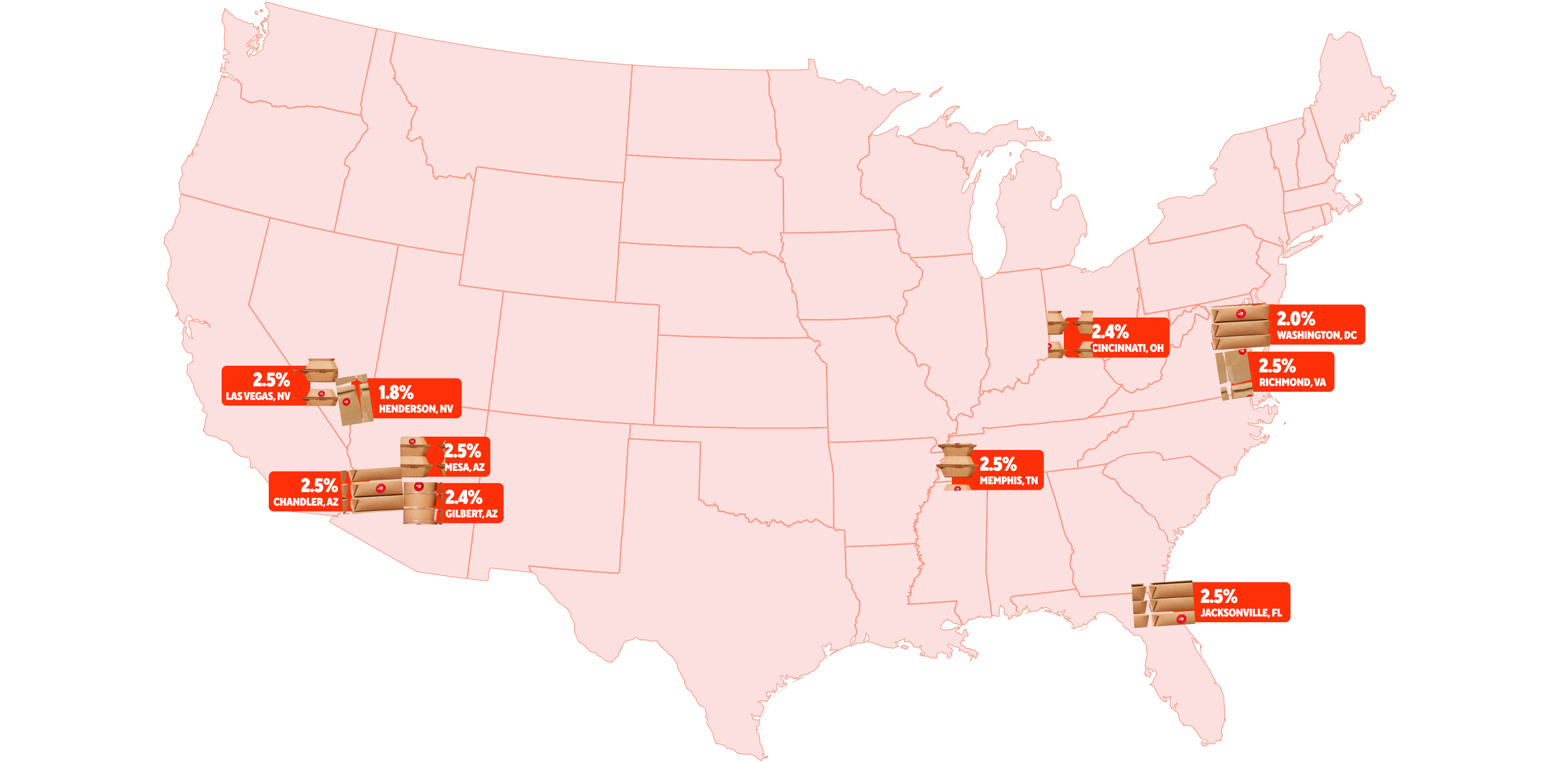
Still, the city-level differences highlighted in the study are not solely artifacts of app pricing. Brick-and-mortar menu boards in the cheapest identified city show similar relative advantages, suggesting structural affordability rather than a single platform’s algorithm at work.
For workers and families navigating inflation, the practical takeaway is straightforward: geography remains one of the strongest predictors of how far a food dollar stretches. A household in the most expensive city in the DoorDash ranking would need to spend markedly more to reproduce the same meal enjoyed by a counterpart in the cheapest, with no difference in quality or portion size.
Urban policy analysts have pointed to such gaps as evidence that localized interventions — from commercial rent stabilization to targeted small-business support — can have visible effects on staple food prices. Others argue that the real story is the concentration of affordable options in the Sun Belt and parts of the Midwest, where population growth has outpaced the cost spikes seen in coastal hubs.
The study does not name every city in its full ranking, but the contrast between the top and bottom of the list is stark enough to reframe how people think about where to live, commute, or even travel for work. A meal that costs under a certain threshold in one state can exceed it by a wide margin a few time zones away.
As the summer of 2026 progresses, with fuel costs fluctuating and agricultural input prices still volatile, the burger-and-fries index may prove to be a small but telling instrument. It condenses complex supply chains into a single, relatable transaction — and reminds consumers that sometimes the simplest question, “where does this cost less,” opens a window into the wider economic map of the country.
DoorDash has not indicated whether it will release updated city-level data on a recurring basis, but the current snapshot already offers a clear message: in the geography of everyday eating, place matters as much as taste.