
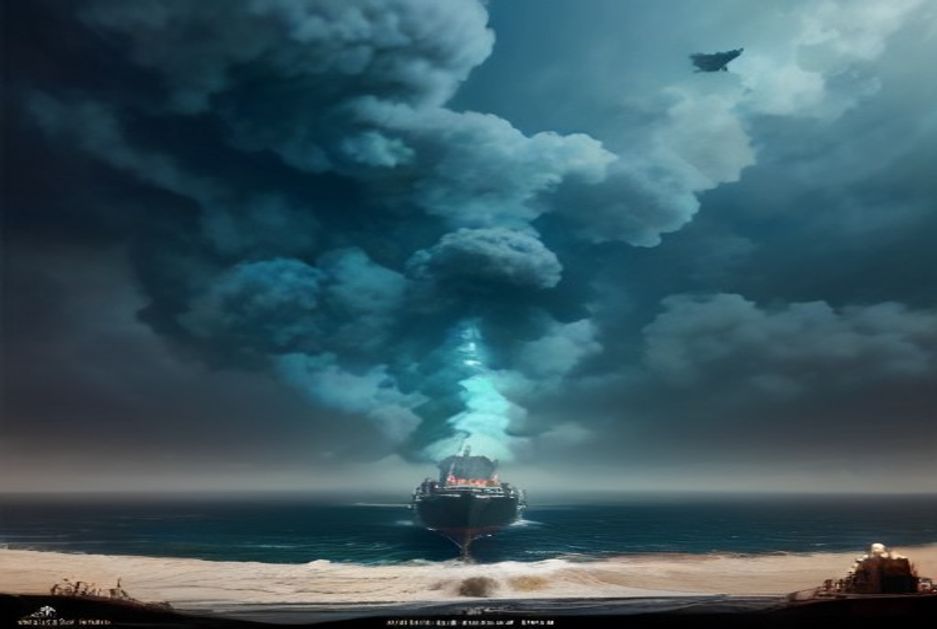

United States Central Command (CENTCOM) carried out military operations against three Iranian-flagged oil tankers in the Persian Gulf, sinking one of the vessels and significantly escalating tensions in one of the world’s most strategically vital waterways, according to multiple defense and regional reports. The strikes mark a sharp intensification of hostilities between Washington and Tehran, which have been locked in a protracted and increasingly kinetic confrontation for years.
The targeted tankers were reportedly operating in or near the strategic Strait of Hormuz, a narrow maritime chokepoint through which a substantial portion of global crude oil shipments transit daily. Defense analysts have long warned that any disruption in this corridor carries immediate consequences for international energy markets and global supply chains. The destruction of even a single vessel raises the prospect of retaliatory Iranian action, potentially including asymmetric responses targeting commercial shipping or regional allies of the United States.
CENTCOM officials have framed the operation as a defensive measure aimed at curbing the flow of petroleum revenues that fund Iranian proxy networks across the Middle East. Iranian oil exports have long been a target of US sanctions enforcement, with Washington pursuing both economic penalties and, in select cases, direct interdictions of vessels believed to be evading those restrictions. The current strikes, however, represent an escalation beyond seizure or boarding operations typically associated with sanctions enforcement, crossing into direct military engagement with Iranian assets.
Iran’s foreign ministry condemned the action, calling it a violation of international law and an act of aggression against the Iranian people. Iranian state media carried statements from senior military officials warning of a “decisive response” and pledging that those responsible would face consequences. The rhetoric from Tehran has historically oscillated between measured diplomatic language and explicit threats when confronted with direct military pressure, and the current cycle appears to be tilting toward the latter.
The broader context of the strikes involves a years-long shadow war between the United States and Iran that has played out across multiple theaters. Iranian-backed militias in Iraq and Syria have targeted US personnel and assets, while American forces have responded with targeted killings and periodic retaliatory strikes. The maritime domain has become an increasingly prominent front, with Iran developing a network of fast-attack craft, mines, and proxy vessels capable of disrupting Gulf shipping, while the US Navy’s Fifth Fleet, headquartered in Bahrain, has worked to maintain freedom of navigation.
Regional allies and adversaries are now weighing their positions. Gulf Arab states, including Saudi Arabia and the United Arab Emirates, have historically sought to balance relationships with both Washington and Tehran, though recent years have seen closer security cooperation with the United States. Israel, which has conducted its own operations against Iranian assets in Syria and elsewhere, is likely to view the strikes as consistent with shared strategic objectives, though it has not been officially linked to this specific operation.
Energy markets reacted swiftly to news of the strikes, with crude oil prices climbing as traders priced in the risk of further escalation and potential disruption to Gulf shipping lanes. The Strait of Hormuz, at its narrowest point, is only about 21 miles wide, with shipping lanes confined to even narrower corridors. Any sustained threat to commercial transit through this passage tends to produce immediate and significant market responses, regardless of whether actual supply is immediately curtailed.
International reactions have begun to emerge, with several governments calling for restraint and de-escalation. The United Nations Secretary-General’s office issued a statement urging all parties to avoid actions that could destabilize the region further. European capitals, already navigating complex relationships with both Washington and Tehran over issues including the Iran nuclear file and sanctions enforcement, face renewed pressure to define their position.
Analysts caution that the destruction of an Iranian-flagged vessel represents a qualitatively different action from previous US-Iran confrontations at sea, which have typically involved boarding operations, tanker seizures, or limited engagements with Iranian Revolutionary Guard Corps Navy craft. A confirmed sinking elevates the stakes considerably and raises questions about potential Iranian retaliation, including possible attacks on Gulf shipping, strikes against US bases in the region, or actions through proxy forces in Iraq, Syria, or Yemen.
Domestically, the operation is likely to draw scrutiny in Washington, where debates over presidential war powers and the scope of military action against Iran have been a recurring feature of congressional oversight. Lawmakers from both parties have at various points expressed concern about the United States being drawn into a broader Middle Eastern conflict without clear congressional authorization, particularly as other regional priorities continue to demand attention.
For now, the situation remains fluid, with naval assets from multiple nations reportedly repositioning in the Gulf. The coming days are likely to test whether the current escalation represents a limited punitive action or the opening salvo in a more sustained military confrontation. The international community, meanwhile, faces renewed pressure to prevent a regional crisis from spiraling into a wider conflict with global implications for energy security and geopolitical stability.