
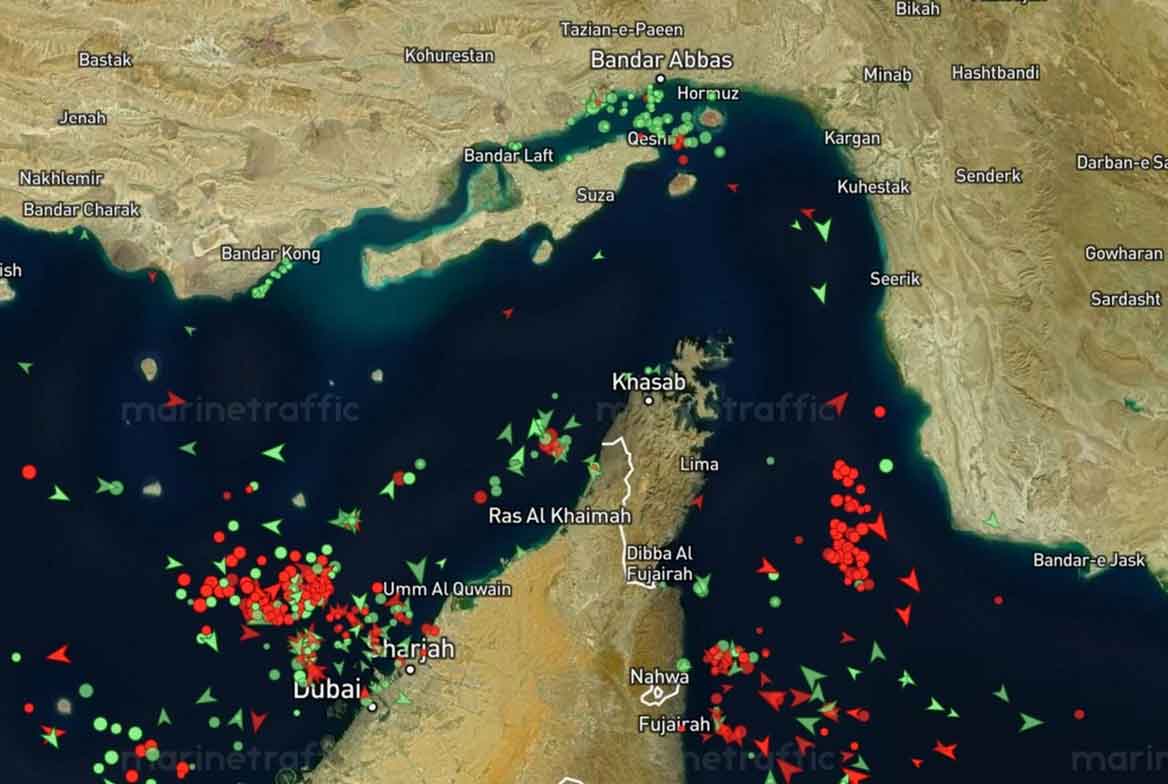

The United States reiterated Thursday that the Strait of Hormuz remains open to maritime traffic, even as Iran signaled it may restrict passage through the strategic waterway. The Pentagon emphasized that commercial and naval vessels can transit the strait without interference, a clear response to escalating rhetoric from Tehran, which has long accused the U.S. of militarizing the region.
Iran’s Islamic Revolutionary Guard Corps (IRGC) announced in a statement that it would “monitor” vessels passing through the strait, warning that “any threat to regional security will be met with appropriate measures.” While the language left room for ambiguity, analysts suggest the move is a veiled threat to disrupt oil shipments—a critical lifeline for global energy markets. Approximately 20 million barrels of oil flow through the strait daily, representing 30% of the world’s seaborne oil trade.
President Joe Biden’s administration has maintained that the strait is a neutral zone protected by international maritime law, including the United Nations Convention on the Law of the Sea (UNCLOS). U.S. Central Command (CENTCOM) reiterated that its military presence in the region is purely defensive, aimed at safeguarding freedom of navigation. “We do not seek confrontation, but we will not allow any actor to destabilize the strait,” said a CENTCOM spokesperson during a press briefing.
Trump’s comments, delivered during a campaign rally in Iowa, underscored his administration’s historical stance on the issue. During his presidency, Trump took a hardline approach to Iran’s nuclear program and regional influence, withdrawing from the 2015 nuclear deal and reimposing sanctions. His recent remarks reignited debate over how a potential return to power might shape U.S. foreign policy in the Middle East.
Regional tensions have intensified since Iran’s announcement, with Gulf Cooperation Council (GCC) states like Saudi Arabia and the UAE urging calm. “We call on all parties to de-escalate and uphold the principles of international law,” said a Saudi Foreign Ministry spokesperson. Meanwhile, European powers, including France and Germany, have urged dialogue, emphasizing the strait’s role in global energy security.
The U.S. and its allies have deployed naval assets to the Gulf in recent weeks, including aircraft carriers and guided-missile destroyers. The USS Harry S. Truman carrier strike group, stationed in the region since 2024, conducted joint exercises with British and UAE forces last month. These operations, while framed as routine, have drawn criticism from Iran, which views them as provocations.
Experts warn that a miscalculation could trigger a broader crisis. “The strait is a powder keg,” said Dr. Abbas Peyman, a maritime security analyst at the University of Tehran. “Any incident—whether a naval confrontation, a cyberattack, or a sabotage—could spiral into a conflict with global ramifications.”
Despite the threats, commercial shipping in the strait has continued unabated. Major oil tankers, including those from China and India, have maintained their schedules, though some have increased security measures. The International Maritime Organization (IMO) has called for heightened vigilance, citing the risk of “unilateral actions” disrupting global trade.
Iran’s ability to enforce restrictions on the strait remains limited by its military capabilities. While its navy and air force have grown in recent years, they lack the reach to block major shipping routes without provoking a strong response. The U.S. and its partners have also bolstered surveillance, using drones and satellites to monitor traffic.
Historically, the strait has been a flashpoint for conflict. During the 1980s Iran-Iraq War, both sides targeted oil tankers, and in 2019, Iran briefly blocked the strait after a U.S. drone was shot down. The current standoff echoes those past crises, with the U.S. and Iran locked in a shadow war over influence in the Gulf.
As tensions persist, the international community faces a delicate balancing act. While the U.S. insists the strait is safe, Iran’s warnings highlight the fragility of the status quo. For now, the focus remains on preventing a crisis that could destabilize the Middle East and disrupt global energy supplies.