
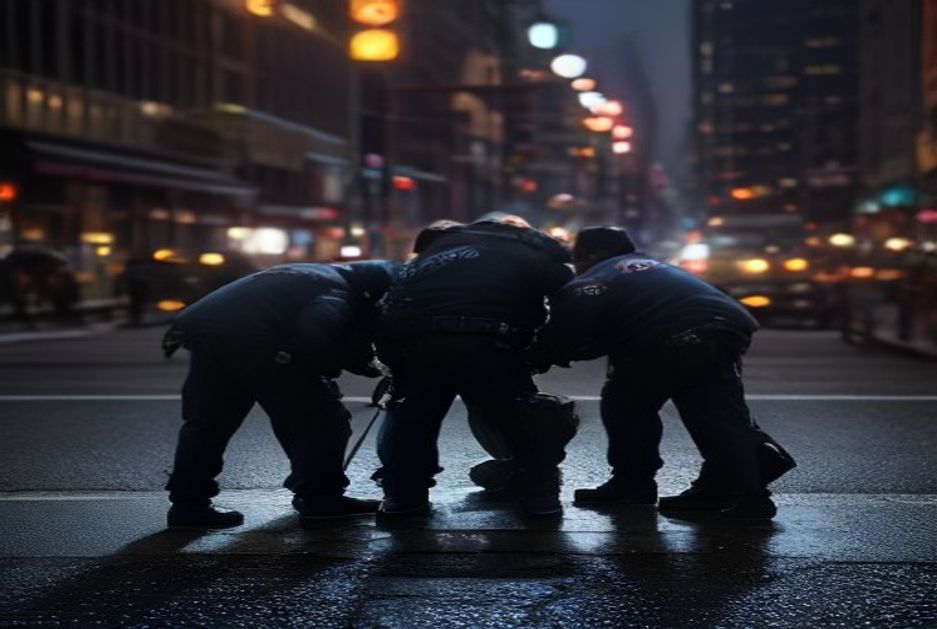

New York City police are looking into an unusual incident captured on camera near Penn Station, in which three men were seen climbing out of a city sewer access point in the heart of Midtown Manhattan. The footage, which circulated widely on social media, shows the individuals emerging from the manhole in the vicinity of one of the busiest transportation hubs in the United States, raising questions about what they were doing beneath the streets and whether any infrastructure was tampered with during their time underground.
According to initial reports, the New York Police Department has opened an inquiry into the matter, working alongside city agencies that oversee the vast network of utility tunnels and conduits running beneath Manhattan. The area around Penn Station is particularly sensitive from an infrastructure standpoint, given the density of subway lines, commuter rail tunnels, steam lines, and electrical conduits that converge in that part of the city. Any unauthorized presence in those passages, even briefly, triggers concern among transit officials.
Investigators have not yet publicly identified the three men, and no arrests have been announced at the time of writing. Law enforcement sources have indicated that the inquiry remains in its early stages and that detectives are reviewing video footage, attempting to determine how the individuals accessed the manhole and what, if anything, was removed or disturbed during their time below street level.
One detail that has drawn attention in coverage of the case is a broader reference made by officials to the existence of organized networks, sometimes described in local press as “culturistas,” who travel through sewer systems to recover valuable materials. These groups have, in some reports, been linked to operations originating in Venezuela and other parts of Latin America, where the practice of sifting through urban drainage systems for discarded valuables has reportedly become a recognized, if legally murky, survival trade. Items typically targeted include copper wiring, discarded jewelry, coins, and small electronic components that can be resold through informal markets.
The reference to such networks is not new in New York City. Over the years, there have been scattered reports of people navigating the city’s vast underground sewer system, sometimes in search of salvageable goods, other times allegedly to access restricted utility tunnels. Manhattan’s sewer network is among the most extensive in the world, comprising hundreds of miles of tunnels, some of which date back to the nineteenth century. The size and age of the system make it nearly impossible to monitor every access point at all times, and city workers occasionally encounter signs of unauthorized entry.
Penn Station itself sits atop a particularly complex section of underground infrastructure. Above ground, the station serves more passengers annually than any other transit hub in the Western Hemisphere, with Amtrak, Long Island Rail Road, New Jersey Transit, and multiple subway lines all converging in and around the building. Below the surface, a labyrinth of tracks, service corridors, and utility passages stretches outward in every direction. Any breach of the physical barriers separating the public sewer system from restricted rail infrastructure is treated as a serious matter by both the NYPD and the Metropolitan Transportation Authority.
Officials have stressed that there is currently no evidence suggesting any threat to public safety or to rail operations. The investigation is, for now, focused on identifying the three individuals and clarifying their activities below ground. Police have asked anyone with information about the incident to come forward.
The episode has nevertheless revived a long-running conversation about the security of New York’s underground spaces. While the city’s vast subterranean network is essential to daily life, it also presents challenges that law enforcement and city planners have wrestled with for decades. Sewer and utility access points, by their very nature, cannot be locked away from the public, and the sheer scale of the system means that determined individuals can, in theory, travel significant distances beneath the streets without being detected.
Whether the men spotted near Penn Station were part of any organized effort or were acting independently remains unclear. Detectives are expected to continue reviewing available footage and to coordinate with utility companies that maintain infrastructure in the area. The NYPD has not ruled out additional investigative steps, including the possibility of working with federal agencies if the inquiry broadens.
For now, the image of three figures emerging from a Manhattan manhole at one of the city’s most heavily trafficked intersections serves as a reminder of the strange and often unseen world that lies just beneath the pavement, and of the ongoing efforts to keep that world from becoming a vulnerability for the city above.