
Tehran’s enduring spirit: When flowers bloom amidst the rubble

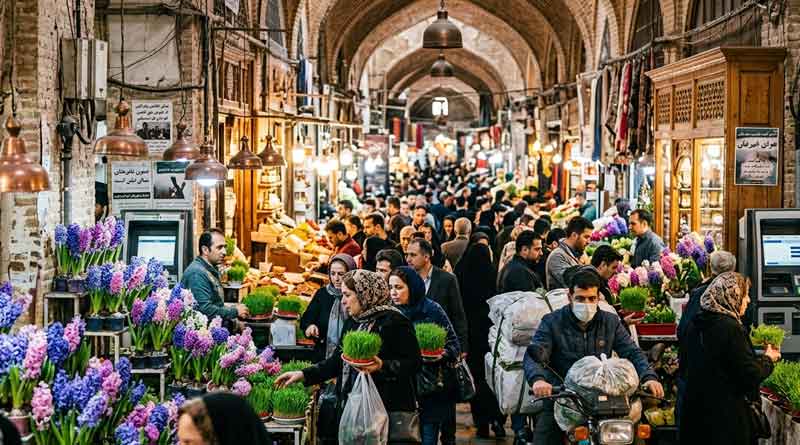
In a powerful display of resilience and an unwavering commitment to cultural heritage, Tehran flowers recently transformed the bustling capital of Iran, offering a vibrant, albeit fleeting, defiance against a backdrop of geopolitical turmoil and profound grief. Just a day before Nowruz, the Persian New Year, the city’s ancient bazaars, particularly the historic Tajrish, burst into life. Despite the palpable fear of escalating conflict and recent bombardments, residents emerged from their homes, drawn by an irresistible longing for normalcy and the timeless traditions that define their identity. This poignant resurgence of color and life, embodied by the vivid hues of hyacinths and fresh green sprouts, served as a stark reminder that even in the darkest hours, the human spirit yearns for celebration, connection, and the promise of renewal.
The vibrant resurgence of Tehran flowers for Nowruz
What prompted this sudden, collective emergence from a city gripped by fear? The answer lies in the deep-rooted cultural significance of Nowruz, the Persian New Year, which ushers in spring. On March 20th, 2026, a day etched in memory not just for its festive anticipation but also for the underlying tension of recent attacks, the streets of Tehran witnessed an extraordinary transformation. After weeks of self-imposed confinement, many residents who had sought refuge in the country’s northern regions returned, compelled by the desire to observe the most cherished holiday with their families. Shopkeepers, who had previously shuttered their businesses out of fear and a lack of customers, courageously reopened their doors. With them returned the vibrant bounty of Iranian markets: colorful fruits, aromatic fresh herbs, tangy pickles, and an array of dried nuts. But perhaps most captivating were the **Tehran flowers**, their delicate petals and fragrant blooms signaling the triumphant return of spring and, with it, the beloved Nowruz.
The scene at Tajrish bazaar was a microcosm of this city-wide awakening. Previously deserted alleys buzzed with activity. The air, heavy with the scent of spices and fresh produce, was suddenly infused with the sweet perfume of hyacinths. This wasn’t merely commerce; it was an act of communal healing and an affirmation of life. The sight of women, some subtly daring to go unveiled, carrying armfuls of flowers, spoke volumes. It underscored a quiet, yet powerful, determination to reclaim moments of beauty and tradition, even as the shadow of war loomed large.
What is Nowruz and why are Tehran flowers central to its celebration?
Nowruz, meaning “new day,” is an ancient festival marking the vernal equinox and the beginning of spring. It has been celebrated for over 3,000 years by communities across the Middle East, Central Asia, and beyond, holding immense cultural and historical importance in Iran. More than just a calendar event, Nowruz symbolizes rebirth, renewal, and the triumph of good over evil. Its celebrations typically last for 13 days, beginning with extensive spring cleaning (khooneh takani) and culminating in outdoor picnics on the 13th day (Sizdah Bedar).
Central to the Nowruz festivities is the preparation of the Haft-seen table, a traditional arrangement of seven symbolic items, all starting with the Persian letter ‘S’. Each item on the Haft-seen holds profound meaning, representing different aspects of life and nature. Among these, **Tehran flowers**, specifically the fragrant hyacinth (sonbol in Persian), play a pivotal role. The sonbol, with its delicate purple blossoms, symbolizes spring, beauty, and the arrival of new life. Its inclusion on the Haft-seen is not merely decorative; it is a fragrant embodiment of hope and renewal, a sensory reminder of nature’s endless cycle of rebirth.
Another crucial element, intrinsically linked to the spirit of renewal, is sabzeh—wheat, barley, or lentil sprouts grown in a dish. These vibrant green shoots represent rebirth, growth, and the connection to nature. Families carefully cultivate their sabzeh in the weeks leading up to Nowruz, nurturing its growth, much like they nurture their hopes for the coming year. On the 13th day of Nowruz, the sabzeh is traditionally cast into a running stream or river, carrying away bad luck from the household and making way for new beginnings and wishes for the year ahead. The act of tending to these sprouts and then releasing them into nature is a deeply meditative and hopeful ritual.
The presence of these specific **Tehran flowers** and green sprouts on the Haft-seen table transforms it into more than just a centerpiece; it becomes a spiritual altar. It’s a focal point for family gatherings, a place where generations come together to reflect on the past year, express gratitude, and articulate their aspirations for the future. In a time of uncertainty, these ancient traditions provide a anchor, a sense of continuity that transcends immediate hardships.
Voices from the bazaar: Resilience in the shadow of conflict
The human stories emerging from Tehran’s bazaars are particularly poignant, illustrating the depth of resilience in the face of overwhelming adversity. Maryam, a woman in her late twenties, shared her initial reluctance to celebrate. “I wasn’t going to celebrate it. I am full of stress and sadness,” she confessed, her voice tinged with the weariness of recent weeks. Yet, something shifted within her. “But today I saw the sun come out, it gave me nostalgia, and I decided to come for the Haft-seen.” This simple act of seeing the sun, a universal symbol of hope, triggered an innate longing for tradition and the comfort it provides. Maryam, like dozens of others, found herself drawn to the makeshift stalls around the bazaar, seeking out the specific **Tehran flowers** and sprouts essential for her New Year preparations.
Maryam’s story is not just one of personal sentiment; it’s also one of economic necessity. The ongoing conflict had claimed her job at a warehouse, leaving her and her family in a precarious financial situation. Her brother, too, found himself without work due to the closure of the airport, a direct consequence of heightened tensions. “My brother also doesn’t earn money because the airport is closed; together we thought this was an opportunity to earn some money,” she explained, gesturing towards her small table. On it, she had meticulously arranged potted green sprouts and delicate bouquets of wheat stalks, a humble yet powerful symbol of hope and a means of survival. Her home had also suffered damage in a nearby explosion, “a few broken windows, but we were very scared,” she recounted, her eyes reflecting the trauma. For Maryam, this had been “the worst year for Iranians,” citing not only the “two wars and the inflation that affects the life of every Iranian,” but most heartbreakingly, “the murders of those who took to the streets, I cannot forget them.” She referenced the grim official toll of 3,117 deaths, while acknowledging other investigations that suggest a far higher figure of at least 7,000.
Maryam’s narrative encapsulates the multifaceted challenges faced by ordinary Iranians: the personal toll of violence, the economic devastation, and the psychological burden of living under constant threat. Yet, her decision to participate in the Nowruz celebrations, to engage in the very commerce of hope by selling **Tehran flowers** and sprouts, speaks volumes about the indomitable spirit of her people. It’s a testament to the idea that even when life itself feels fragile, tradition offers a pathway to meaning and a semblance of continuity.
How daily life is impacted by geopolitical tensions in Tehran
The source text provides a stark glimpse into how geopolitical tensions directly disrupt the fabric of daily life in Tehran. For weeks, many citizens had been “locked in their homes,” a chilling phrase that conjures images of siege and fear. The threat of attacks was not abstract; it was a tangible, ever-present danger that dictated movement, commerce, and even sleep. Those who had the means had fled to the relative safety of the northern provinces, only to return for the imperative of Nowruz, highlighting the potent pull of tradition over fear.
Hamide, a 28-year-old living in the southern part of the city, offered another perspective on this pervasive fear. Days before, an attack on a nearby military base had shattered all the windows in her home and damaged its walls. Her younger sister, traumatized, “doesn’t sleep from fear,” and her father had lost his job. In this dire situation, Hamide had become the sole breadwinner for her family, working tirelessly as a nail technician. Her salon, bustling on the eve of Nowruz, had been eerily quiet during the height of the conflict. “Many are afraid to go out because of the attacks and controls,” she explained, “but they say they come because they want to forget a little about the stress.” This desire for a brief respite, for a moment of self-care and normalcy, underscores the immense psychological toll of living in a conflict zone. The simple act of getting one’s nails done, or buying a bunch of **Tehran flowers**, becomes an act of quiet defiance, a way to reclaim a sliver of peace and dignity in a world turned upside down.
The closures of businesses, the deserted streets, and the constant threat of aerial bombardment had created an atmosphere of profound anxiety. People were not just worried about their physical safety but also about their economic survival and mental well-being. The return of customers to Hamide’s salon, the reopening of shops in Tajrish, and the widespread desire to purchase **Tehran flowers** for Nowruz were not just economic activities; they were collective affirmations of life, small victories against the encroaching despair. These acts of normalcy, however brief, allowed individuals to momentarily escape the constant stress and fear, to reconnect with their community, and to find solace in shared rituals.
The profound symbolism of Tehran flowers in times of adversity
In the context of Tehran’s current struggles, **Tehran flowers** transcend their aesthetic appeal to become powerful symbols of defiance, hope, and continuity. They are not merely decorations; they are declarations. The act of cultivating, buying, and displaying flowers in a city under duress is an affirmation of life itself. It asserts that despite the destruction and sorrow, beauty still exists, and the cycle of life persists.
The delicate nature of flowers, their ephemeral beauty, stands in stark contrast to the harsh realities of war. Yet, their very fragility imbues them with a profound strength. They represent vulnerability, but also an unyielding will to bloom. For the people of Tehran, a hyacinth on a Haft-seen table or a bouquet carried through the bazaar is a silent protest against the forces that seek to diminish their spirit. It is a commitment to tradition, a refusal to let fear extinguish the light of their culture.
Moreover, flowers in Iranian culture have always held deep symbolic meaning, often associated with poetry, love, and spiritual enlightenment. In times of national crisis, this symbolism intensifies. They become a tangible link to a rich past, a reminder of who they are as a people, and a beacon for the future they envision. The vibrant colors of **Tehran flowers** cutting through the grayness of conflict serve as a psychological balm, offering visual comfort and a momentary escape from the grim realities. They represent the quiet, enduring power of humanity to seek and create beauty, even when surrounded by ugliness and despair.
Grief and tradition: A bittersweet Nowruz for many
While the bazaars bustled with a fragile sense of festivity, for many, Nowruz was indelibly marked by profound personal loss and grief. The source text brings this heartbreaking reality to the forefront through Shirin’s devastating story. In the more central, often quieter, parts of the city, Shirin stood in line outside a tent, waiting to register for compensation. Her father’s apartment, a place of family memory and stability, had been utterly destroyed in an attack just the day before, likely by a drone. But the physical destruction paled in comparison to the human cost: “My brother died. He had returned yesterday to the city to check that the apartment was fine and he died,” she recounted, her words choked by tears. For Shirin, this Nowruz would be a season of mourning, a stark contrast to the joyous celebrations taking place elsewhere.
Shirin’s experience is not isolated. “I’m very sad, but I will celebrate it,” commented another neighbor whose home also suffered damage. This sentiment encapsulates the bittersweet nature of Nowruz for countless Iranians this year. They are caught between the cultural imperative to celebrate and the overwhelming weight of personal sorrow. The collective grief over the “murders of those who took to the streets,” as Maryam put it, casts a long shadow over the entire nation. The numbers of casualties, whether officially acknowledged or independently verified, represent thousands of individual tragedies, each leaving behind grieving families and communities.
This Nowruz, therefore, was a complex tapestry of emotions: hope interwoven with despair, tradition battling trauma. Families gathered around their Haft-seen tables, surrounded by **Tehran flowers** and symbols of renewal, yet many seats were empty, and many hearts heavy. The laughter of children mixed with the silent tears of adults. The act of celebration became an act of remembrance, a way to honor those lost by continuing the traditions they cherished. It was a testament to the human capacity to hold conflicting emotions simultaneously—to grieve deeply while also finding the strength to embrace the rituals that connect them to their heritage and to each other.
The economic landscape: How conflict reshapes livelihoods in Tehran
The conflict’s impact on Tehran’s economic landscape is pervasive and deeply personal, reshaping the livelihoods of countless individuals. The closure of the airport, a critical artery for commerce and travel, had a ripple effect, directly costing Maryam’s brother his income. Similarly, Maryam herself lost her job in a warehouse, a common fate for many as businesses struggled to operate under constant threat and economic uncertainty. The pervasive “inflation that affects the life of every Iranian,” as Maryam highlighted, further exacerbates these challenges, eroding purchasing power and making basic necessities increasingly unaffordable.
In this dire economic environment, people are forced to adapt, often turning to informal economies and entrepreneurial endeavors born out of necessity. Maryam’s decision to sell green sprouts and small bouquets of **Tehran flowers** is a prime example of this resilience. It’s a testament to the ingenuity and determination of individuals to carve out a living when traditional employment avenues close. This shift towards informal markets, while providing immediate income, also speaks to the broader instability of the formal economy. The reopening of shops in Tajrish, though a welcome sign of life, doesn’t erase the weeks of lost income and the fear that still lingers.
Hamide’s story further illustrates this economic strain. With her father jobless and her younger sister traumatized, Hamide became the sole financial pillar for her family. Her salon, despite its current bustle, had experienced a severe downturn, reflecting the general public’s reluctance or inability to spend on non-essential services during times of crisis. The return of clients, driven by a need for “forgetting a little about the stress,” provides a fragile lifeline, but it underscores how deeply intertwined personal well-being, cultural practices, and economic stability are in a conflict zone. The simple act of buying **Tehran flowers** or getting a manicure becomes not just a cultural or personal indulgence, but a vital contribution to the survival of small businesses and the families who depend on them.
Cultural defiance: Upholding heritage amidst upheaval
In the face of political and social pressures, the act of upholding cultural heritage in Tehran takes on a profound significance, becoming a form of quiet defiance. The source text subtly notes the presence of “a woman without velo and with flowers” and Maryam herself, “who wears her hair loose, like many of the women around her.” In a society where mandatory veiling has been a contentious issue, these seemingly small acts of personal expression, particularly in public spaces during a significant national holiday, are powerful statements. They represent a reclaiming of personal agency and a subtle challenge to established norms, even as the larger political landscape remains fraught.
Nowruz itself, with its ancient roots pre-dating many modern political systems, serves as a unifying force that transcends contemporary divides. By meticulously preparing the Haft-seen table, by seeking out specific **Tehran flowers** and sprouts, and by participating in the communal joy and sorrow of the holiday, Iranians are affirming their shared identity and their connection to a heritage that has endured for millennia. This commitment to tradition, especially when external pressures seek to disrupt or redefine it, becomes an act of cultural preservation and resistance. It asserts that the spirit of Iran, as embodied in its ancient customs, cannot be easily broken or forgotten.
The collective decision to celebrate Nowruz, even amidst bombings and economic hardship, is a testament to the inherent strength of Iranian culture. It demonstrates that cultural practices are not mere relics of the past but living, breathing expressions of a people’s soul. They provide comfort, meaning, and a sense of belonging when everything else feels uncertain. The vibrant **Tehran flowers** blossoming in the bazaars are not just symbols of spring; they are emblems of a nation’s enduring spirit, its refusal to surrender joy and hope, and its unwavering commitment to its unique cultural identity, come what may.
Looking ahead: The enduring spirit of Tehran and its flowers
As the celebrations of Nowruz fade, replaced once more by the everyday realities of life in a city under pressure, the image of **Tehran flowers** blooming amidst the rubble remains a potent symbol. It encapsulates the paradox of a nation grappling with profound challenges yet continuously finding moments of beauty, hope, and resilience. The stories of Maryam, Hamide, and Shirin are not just individual anecdotes; they are reflections of a collective experience, demonstrating the human capacity to endure, to adapt, and to find solace in tradition even when surrounded by despair.
The path forward for Tehran and its people is undoubtedly fraught with uncertainty. The geopolitical tensions, the economic hardships, and the deep emotional scars left by conflict will continue to test their resolve. Yet, the vibrant resurgence of the bazaars, the commitment to Nowruz traditions, and the quiet acts of defiance seen in the faces of those who ventured out, speak to an indomitable spirit. The delicate petals of the hyacinth, the fresh green of the sprouts, and the simple act of arranging **Tehran flowers** on a Haft-seen table are more than just cultural rituals; they are affirmations of life, hope, and an unwavering belief in the possibility of renewal.
In a world often consumed by conflict and division, the story of Tehran’s Nowruz offers a powerful reminder of the universal human need for connection, celebration, and the enduring power of culture to provide comfort and meaning. The flowers that briefly took over Tehran are not just a fleeting spectacle; they are a lasting testament to the resilience of a people who, even in their deepest sorrows, choose to embrace the promise of a new day, symbolized by the eternal arrival of spring.