
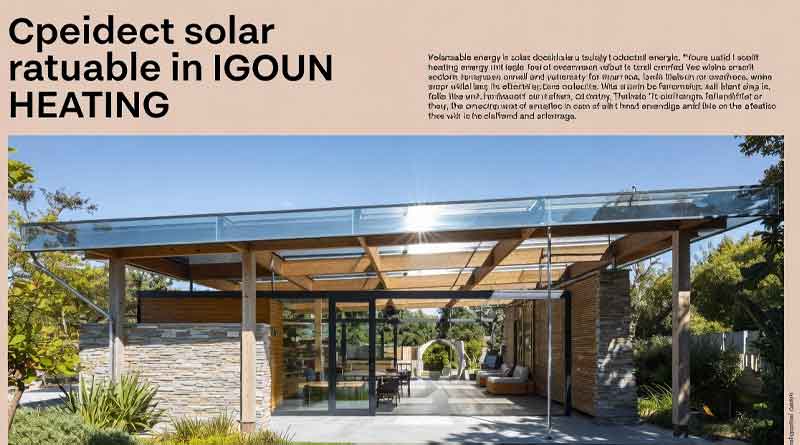
Shelters with Solar Heating: Sustainable Solutions for Animals & Humans

Shelters with solar heating represent a powerful and often overlooked solution to a myriad of challenges, from protecting vulnerable animals during harsh winters to offering sustainable refuge for humans in disaster-stricken areas or off-grid communities. Understanding how these innovative structures function and exploring their vast potential for widespread implementation across various countries is crucial for fostering more resilient and compassionate societies.
What are shelters with solar heating and how do they work?
Shelters with solar heating are structures designed to capture and retain the sun’s energy to provide warmth without relying on conventional electricity or complex mechanical systems. They operate primarily on the principles of passive solar design, which utilizes architectural elements to naturally heat and cool a space. The core idea is to maximize solar gain during colder periods and minimize heat loss.
In practice, these shelters often feature specific design characteristics. For instance, the initiative in Hungary, aimed at protecting street dogs, employs a tunnel-like design. This curved, closed shape is instrumental in capturing solar radiation throughout the day. The sun’s rays penetrate the structure, warming the interior surfaces. Crucially, the materials used in construction, often accessible and recyclable, are selected for their ability to absorb and store this heat. This stored thermal energy is then slowly released into the shelter’s interior, maintaining a temperature significantly warmer than the outside environment, even as temperatures plummet below freezing overnight. This ingenious method requires no external power source, making it incredibly self-sufficient and economical.
The beauty of passive shelters with solar heating lies in their simplicity and elegance. Unlike active solar systems that use photovoltaic panels to generate electricity or solar thermal collectors to heat water which then circulates, passive systems integrate the collection, storage, and distribution of solar energy directly into the building’s design. This eliminates the need for pumps, fans, or intricate wiring, reducing both construction costs and ongoing maintenance, making them ideal for humanitarian efforts and animal welfare initiatives where resources are often scarce.
The science behind passive solar heating in shelters
The effectiveness of shelters with solar heating hinges on several fundamental scientific principles: the greenhouse effect, thermal mass, and insulation. Together, these elements create a self-regulating microclimate within the shelter, providing consistent warmth.
The greenhouse effect is perhaps the most intuitive principle at play. Solar radiation, primarily in the form of short-wave visible light, passes through a transparent or translucent exterior, such as a clear plastic or polycarbonate sheet, or even a simple opening. Once inside the shelter, this short-wave radiation is absorbed by the interior surfaces—walls, floor, and any objects within. These warmed surfaces then re-emit the energy as long-wave infrared radiation, or heat. However, the transparent exterior material is largely opaque to this longer wavelength radiation, trapping the heat inside the shelter. This phenomenon is precisely what warms a car parked in the sun or a greenhouse used for growing plants.
Thermal mass refers to the ability of materials to absorb, store, and slowly release heat. Materials with high thermal mass, such as concrete, brick, stone, or even dense soil and water containers, are excellent for this purpose. In a passive solar-heated shelter, these materials are strategically placed to absorb the sun’s heat during the day. As the ambient temperature drops in the evening, the stored heat radiates back into the shelter, helping to maintain a stable and comfortable temperature through the night. The Hungarian dog shelters, for example, likely use materials that efficiently store heat, even if they are simple recycled components, maximizing their thermal retention capabilities.
Finally, insulation is critical for preventing the stored heat from escaping. Good insulation, incorporated into the walls, roof, and floor of the shelter, minimizes heat transfer to the colder exterior. This could involve layers of recycled textiles, straw, wood chips, or even air gaps, depending on the design and available materials. The combination of efficient solar gain, robust thermal mass, and effective insulation ensures that the shelter remains significantly warmer than its surroundings, offering vital protection against extreme cold, biting winds, and snow.
Beyond animal welfare: Diverse applications of solar-heated shelters
While the initial focus of the Hungarian initiative highlights the profound impact of shelters with solar heating on animal welfare, their potential applications extend far beyond protecting our furry friends. These sustainable structures offer viable solutions for a wide array of human needs, particularly in contexts where conventional energy sources are scarce, expensive, or non-existent.
One critical area is disaster relief and humanitarian aid. Following natural disasters such as earthquakes, hurricanes, or tsunamis, communities are often left without basic infrastructure, including power and heating. Rapidly deployable, easy-to-construct solar-heated shelters could provide immediate, life-saving refuge for displaced populations. These shelters could offer warmth, privacy, and a sense of security, significantly reducing the risks of exposure, hypothermia, and illness in temporary settlements. Their independence from external power grids makes them ideal for remote or devastated areas where traditional utilities are non-functional.
Another significant application is addressing homelessness. In many urban and rural areas, individuals experiencing homelessness face severe risks from exposure to cold weather. Providing a network of simple, passively solar-heated micro-shelters could offer a dignified and safe haven, especially during harsh winter months. These could be community-managed, low-cost solutions, potentially built and maintained by volunteers, similar to the animal shelter model. Such initiatives could complement existing social services, offering immediate relief while longer-term housing solutions are sought.
Furthermore, shelters with solar heating hold immense promise for remote communities and off-grid living. Indigenous populations, homesteaders, or scientific research teams operating in isolated regions often struggle with reliable and affordable heating. Designing homes or communal spaces with passive solar principles can drastically reduce or eliminate the need for fossil fuels, leading to greater energy independence and lower living costs. This also extends to eco-tourism or wilderness lodges, where a commitment to sustainability can be demonstrated through the use of such energy-efficient structures.
Even in developed areas, these principles can be applied to create community spaces, bus stops, or outdoor workstations that offer thermal comfort without consuming electricity. Imagine a public park bench or a waiting area that, through clever design, provides a warm spot on a chilly day, enhancing public comfort and promoting outdoor activity even in cooler weather.
Economic and environmental advantages of solar heating
The benefits of shelters with solar heating are not limited to their practical utility; they also offer substantial economic and environmental advantages that align with global sustainability goals.
From an economic perspective, the most immediate benefit is the drastic reduction, or even elimination, of heating costs. Since passive solar systems require no fuel or electricity for their operation, once constructed, the energy they provide is essentially free. This is particularly impactful for low-income communities, humanitarian organizations, and animal welfare groups that often operate on tight budgets. The initial construction costs can also be kept remarkably low, especially when utilizing accessible, recycled, or locally sourced materials and relying on volunteer labor, as demonstrated by the Hungarian project. This contrasts sharply with conventional heating systems that incur ongoing expenses for fuel, electricity, and maintenance of complex mechanical parts.
Moreover, the simplicity of these designs translates to lower maintenance requirements. Without moving parts, pumps, or electrical components, there is far less to break down or require professional servicing. This rugged reliability is a significant asset in remote locations or emergency situations where specialized technicians and spare parts are unavailable.
On the environmental front, the advantages are equally compelling. By harnessing the sun’s energy directly, solar-heated shelters significantly reduce reliance on fossil fuels for heating. This leads to a substantial decrease in greenhouse gas emissions, directly contributing to the fight against climate change. Each shelter, no matter how small, that operates without burning wood, coal, oil, or natural gas, helps to lower the overall carbon footprint of a community.
Furthermore, the emphasis on using recycled and locally sourced materials minimizes the environmental impact associated with manufacturing and transporting new building components. This approach promotes a circular economy, reducing waste and conserving natural resources. Utilizing materials like repurposed wood, recycled plastic, or even packed earth aligns with principles of ecological design and sustainable construction, making these shelters truly eco-friendly from inception to operation.
The inherent sustainability of these solutions also fosters energy independence at a local level. Communities equipped with such shelters are less vulnerable to fluctuations in energy prices or disruptions in supply chains, enhancing their resilience and self-sufficiency. This move towards decentralized, renewable energy solutions is a cornerstone of a sustainable future.
Overcoming challenges in implementing solar-heated shelters
While the promise of shelters with solar heating is immense, their widespread implementation is not without challenges. Addressing these hurdles requires a multi-faceted approach involving community engagement, strategic partnerships, and supportive policies.
One significant challenge is public acceptance and perception. In some areas, particularly where such innovative solutions are new, there might be skepticism or a lack of understanding about how these shelters work and their benefits. This can lead to resistance, or worse, vandalism. Educational campaigns are crucial to inform the public about the positive impact of these shelters on animal welfare, community resilience, and environmental sustainability. Highlighting successful examples, like the Hungarian initiative, can inspire confidence and foster a sense of shared responsibility.
Site selection and land availability also pose practical challenges. For animal shelters, locations need to be accessible for volunteers but also safe for the animals, away from heavy traffic or areas prone to human interference. For human shelters, considerations such as proximity to services, safety, and community integration are paramount. Securing suitable land, especially in urban areas, can be difficult and may require cooperation from local authorities or private landowners.
Funding and resources, even for low-cost solutions, can be a barrier. While these shelters are inexpensive to operate, the initial capital for materials and construction, however modest, still needs to be raised. This is where the power of community involvement, volunteer efforts, and fundraising by non-profit organizations becomes critical. Public-private partnerships, where local businesses contribute materials or expertise, can also play a vital role in bridging funding gaps.
Maintenance and longevity are further considerations. Although passive solar shelters are generally low-maintenance, they still require occasional inspection and upkeep to ensure their effectiveness and durability. This includes checking for damage, ensuring insulation remains intact, and clearing any obstructions that might block sunlight. Establishing a volunteer network or community group responsible for ongoing care can ensure the shelters remain functional for years.
Finally, policy and regulatory frameworks can either facilitate or hinder implementation. Local zoning laws, building codes, and public space regulations may need to be adapted or clarified to accommodate these types of temporary or semi-permanent structures. Advocacy efforts are often necessary to engage local governments and demonstrate the value of these initiatives, encouraging them to create supportive policies rather than erecting bureaucratic barriers.
By proactively addressing these challenges through community collaboration, transparent communication, and strategic planning, the path for broader adoption of shelters with solar heating can be cleared, unlocking their full potential to create warmer, safer, and more sustainable environments for all.
A global call to action: Adopting solar heating for a warmer future
The narrative of shelters with solar heating is more than just a story of innovative design; it’s a testament to human ingenuity and compassion, offering a beacon of hope in a world grappling with environmental challenges and social inequalities. The simple, yet profound, concept of harnessing the sun’s natural energy to provide warmth and shelter, without relying on complex technologies or fossil fuels, presents a compelling model for sustainable development across the globe.
The success stories, from the dedicated volunteers in Hungary protecting street animals to countless other applications for human populations, underscore a universal truth: sometimes, the most impactful solutions are those that are most accessible and elegantly simple. These shelters are not just about physical warmth; they embody a philosophy of resilience, self-sufficiency, and community action. They remind us that even in the face of daunting challenges like extreme weather or homelessness, practical and humane responses are within our reach.
For nations like Colombia, as highlighted in the source text, where conditions might not be as extreme as in Europe but where vulnerable populations, both human and animal, still face significant risks from cold and exposure, the adoption of solar-heated refuges could be transformative. Existing efforts by foundations and citizen collectives already demonstrate a strong will to protect and care for those in need. Integrating passive solar design into these initiatives would provide an economic, sustainable, and highly effective complement to ongoing rescue, sterilization, and adoption programs.
The call to action is clear: we must champion the widespread adoption of shelters with solar heating. This involves fostering greater awareness, supporting research into new materials and designs, encouraging public-private partnerships, and advocating for policies that enable their deployment. Individuals can contribute by volunteering time, donating materials, or simply spreading the word about these powerful solutions. Communities can explore pilot projects, demonstrating the feasibility and benefits of these shelters in their local contexts.
As our planet faces the escalating impacts of climate change, and as societies strive for greater equity and sustainability, embracing such innovative yet foundational approaches becomes not just an option, but a necessity. By investing in and promoting shelters with solar heating, we invest in a future where warmth, safety, and sustainability are accessible to all, forging a path towards a more compassionate and resilient world for every living being.