
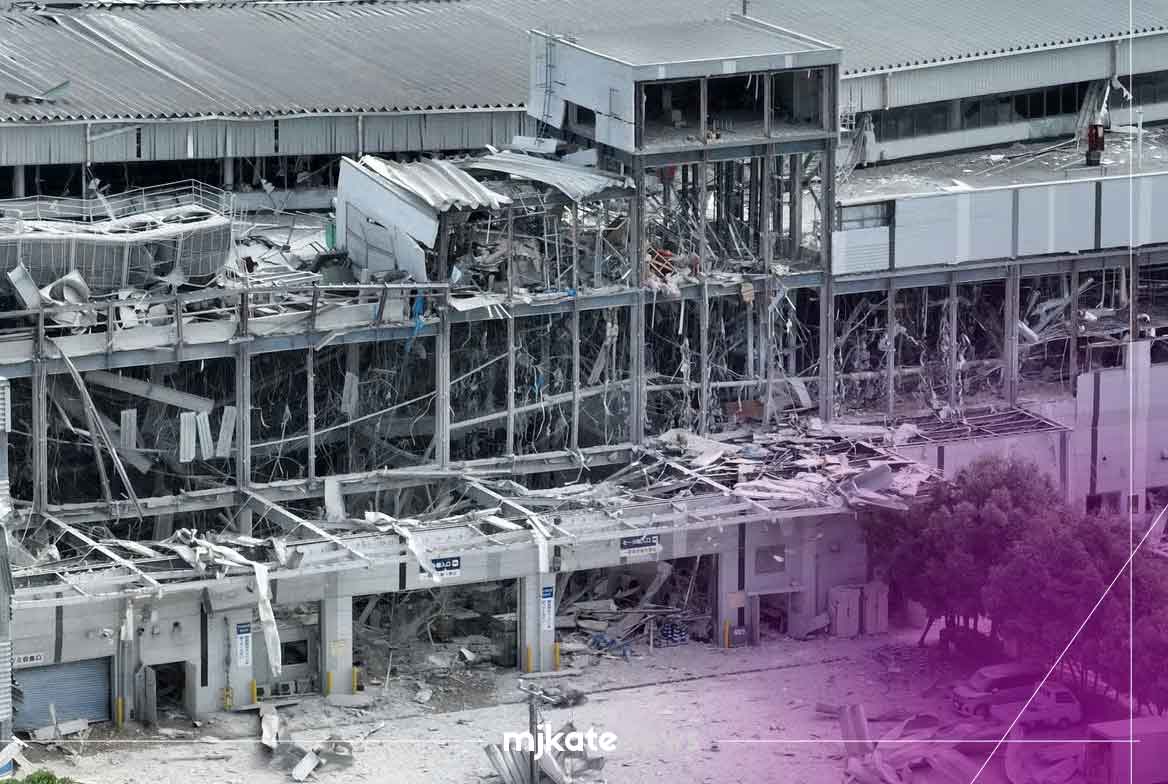

A powerful earthquake struck southern Japan on Thursday, leaving several people trapped inside a shopping center and prompting emergency responders to race against time to rescue those affected.
The seismic event, registered at 7.1 on the Richter scale, originated approximately 20 kilometers south of Kumamoto, the largest city on the island of Kyushu. Kumamoto, with a population of roughly 700,000 residents, sits in a region historically prone to seismic activity, having endured some of the most devastating earthquakes in Japan’s modern history.
The Japan Meteorological Agency confirmed that the earthquake’s epicenter was located in an area that experienced significant trembling, with reports of objects falling from shelves and structural damage to buildings. Emergency services quickly responded to the scene, coordinating rescue operations at the shopping center where people were reported trapped following structural damages.
Witnesses described how the ground shook violently, causing panic among shoppers who sought immediate shelter. The situation at the commercial complex deteriorated when portions of the building collapsed, trapping individuals inside. Firefighters and disaster response teams worked through the evening, carefully navigating unstable debris to reach those stranded.
The timing of the earthquake has raised concerns among residents, particularly given the region’s seismic history. In April 2016, Kumamoto experienced a series of powerful quakes that caused widespread destruction, displacing thousands and damaging critical infrastructure. Officials had previously warned of the heightened risk of further seismic activity as the region continued to recover from that catastrophic series of tremors.
The government has issued safety alerts for the affected areas, with authorities advising residents to remain indoors and avoid unnecessary travel. Power outages have been reported in parts of Kumamoto, and several roads have been closed due to landslides and structural damage.
The Japan Self-Defense Forces have deployed additional personnel and equipment to assist local emergency responders. Air support helicopters are also being utilized to assess damage across the region and aid in rescue efforts where ground access is limited.
Prime Minister Fumio Kishida issued a statement expressing concern over the incident and assuring the public that the government is taking comprehensive measures to address the emergency. “Our priority is the safety and rescue of all those affected,” Kishida said in a brief address to the nation.
In response to the disaster, several prefectural governments have declared states of emergency, enabling them to mobilize resources more efficiently and request additional federal assistance if needed.
The earthquake was widely felt across Kyushu and neighboring Shikoku, with some residents in nearby regions reporting stronger shaking. The Japan Meteorological Agency has issued a tsunami advisory for coastal areas, though no significant tsunami warnings have been issued as of yet.
Authorities confirmed that no casualties have been reported at this time, though medical teams are on standby to treat any injuries that may arise from the aftershocks or rescue operations.
The region’s proximity to several active fault lines has made it a target for ongoing seismic monitoring. Experts note that while the 7.1 magnitude earthquake is significant, it is not unprecedented for the area, which lies along the Ryukyu Tectonic Plate and the Eurasian Plate boundary.
Educational institutions in Kumamoto have been ordered to close temporarily as a precaution, and many families are being advised to stay away from damaged buildings and construction sites.
International organizations have also begun to offer assistance, with the Japanese Red Cross confirming that emergency supplies are being mobilized to support rescue and relief efforts.
Authorities continue to assess the full extent of the damage, with updates expected throughout the day. Residents are being encouraged to stay informed through official channels and to avoid spreading unverified information about the incident.
As night falls in Kumamoto, rescue teams persist in their efforts to reach those trapped, working to restore safety and normalcy to a community still reeling from the force of nature’s reminder of its power.