Maduro audience: Unpacking the high-stakes legal battle in New York

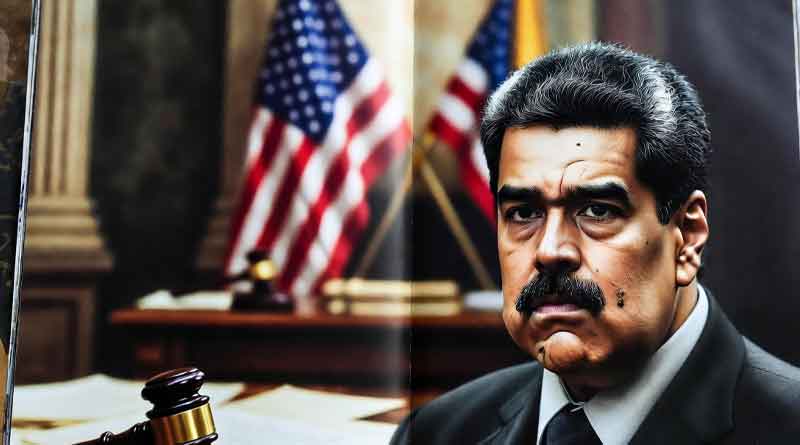
The upcoming Maduro audience in a New York federal court centers on grave allegations of drug trafficking, money laundering, and corruption against Nicolás Maduro, the former leader of Venezuela, and his wife, Cilia Flores. This pivotal legal proceeding, presided over by Judge Alvin Hellerstein, is unfolding amid intense debate over the defendants’ access to funds for their private legal defense, a core contention that directly impacts the trajectory of this high-profile case. Scheduled for this Thursday at 11:00 a.m. EDT, the hearing is not publicly broadcast, nor are electronic devices permitted inside the courtroom, underscoring the sensitive nature of the proceedings.
What are the primary charges against Nicolás Maduro?
Nicolás Maduro faces a series of severe accusations from the U.S. Department of Justice, primarily including drug trafficking, money laundering, and corruption. These charges stem from allegations that Maduro and other high-ranking Venezuelan officials used their positions to facilitate the illicit shipment of cocaine into the United States, effectively operating Venezuela as a narco-state.
The indictment suggests a sophisticated network involving the Revolutionary Armed Forces of Colombia (FARC) and other criminal organizations, funneling vast sums of money through international financial systems. The U.S. government asserts that these activities generated immense wealth for the accused while destabilizing the region and undermining democratic institutions in Venezuela. Specific charges often fall under statutes such as Title 21 (Controlled Substances Act) and Title 18 (Money Laundering) of the U.S. Code, carrying potential sentences of decades in prison.
The background to these charges is rooted in years of deteriorating relations between the United States and Venezuela. U.S. officials have consistently accused Maduro’s government of corruption, human rights abuses, and undermining democracy. The drug trafficking charges represent a particularly aggressive legal maneuver, typically reserved for major international drug lords or terrorist organizations. By indicting a former head of state (as per the source’s narrative, following a claimed “forcible overthrow”), the U.S. government signals its intent to hold foreign leaders accountable for activities deemed detrimental to U.S. national security and public welfare. This approach has set a significant precedent in international law and diplomatic relations, challenging traditional notions of head-of-state immunity. The implications extend beyond the courtroom, touching upon geopolitical strategies and the future of regional stability.
When and where is the Maduro audience taking place?
The Maduro audience is scheduled for this Thursday, March 28, 2026, at 11:00 a.m. Eastern Daylight Time (EDT), in a federal court in New York City. The proceedings are taking place before Judge Alvin Hellerstein.
The venue, the Southern District of New York (SDNY), is often chosen for high-profile cases involving international finance, terrorism, and organized crime. Its extensive experience with complex evidentiary matters and international defendants makes it a fitting stage for a trial of this magnitude. The initial date for this hearing was previously March 17 but was rescheduled, a common occurrence in intricate legal battles involving extensive evidence and multiple parties. The fact that the hearing is not being transmitted and prohibits electronic devices inside speaks to the high level of security and the sensitive nature of the information that may be discussed, including classified intelligence or confidential witness testimonies. This controlled environment underscores the gravity and potential political ramifications of the proceedings, ensuring that sensitive data remains within the confines of the court.
Who is Judge Alvin Hellerstein and what is his role in the Maduro audience?
Judge Alvin Hellerstein, a 92-year-old federal judge, is presiding over the Maduro audience. His role is critical in adjudicating legal arguments, particularly concerning the validity of evidence and the defense’s funding issues.
Judge Hellerstein is a highly respected and experienced jurist, appointed to the bench in 1998, known for his meticulous approach and handling of numerous complex cases, including those related to the September 11 attacks. His long tenure and expertise in federal law make him a formidable figure in this courtroom battle. He will be responsible for making crucial decisions that could either expedite the case towards a full trial or lead to its dismissal based on the merits of the legal arguments presented. During the upcoming hearing, Judge Hellerstein is expected to hear arguments regarding the admissibility and validity of the evidence presented by the U.S. Department of Justice. Furthermore, he will weigh the defense’s claims about their inability to secure private legal representation due to frozen assets. His decisions on these matters will profoundly influence the future course of the case, potentially setting the stage for a trial that could begin in one to two years, or significantly altering the procedural calendar. The judge’s impartiality and adherence to legal principles will be under intense scrutiny given the political implications of the defendants.
What is the dispute over legal defense funds for Maduro and Flores?
A central point of contention in the Maduro audience is the dispute over funds for the legal defense of Nicolás Maduro and Cilia Flores. Their lawyers argue that the blocking of funds by the U.S. Treasury Department’s Office of Foreign Assets Control (OFAC) violates their Sixth Amendment right to choose their preferred counsel.
The Sixth Amendment of the U.S. Constitution guarantees the right to counsel in criminal prosecutions. While it typically ensures access to legal representation, the interpretation of “right to choose” becomes complex when assets are frozen by government sanctions. Maduro and Flores claim they lack personal resources for a private defense and are prevented from using Venezuelan state funds, as Maduro is no longer recognized by the U.S. as the legitimate head of state. This situation creates a legal quandary: if they cannot access assets or state funds, they might be forced to rely on court-appointed counsel, which their attorneys argue infringes upon their right to select their own legal team for a case of such immense complexity and international significance.
A recent motion filed by Barry Pollack, Maduro’s legal representative, and Mark Donnelly, Flores’s attorney, explicitly states that the revocation of an initial license by OFAC on February 9, which would have allowed for the release of funds for legal fees, directly interferes with this constitutional right. Pollack has emphatically maintained that the “Government of Venezuela has the obligation to pay Mr. Maduro’s fees,” reflecting the defense’s position that these are not personal funds but rather state resources. The court’s decision on this matter could establish an important precedent regarding the intersection of international sanctions and constitutional rights for foreign nationals accused in U.S. courts, potentially impacting future cases of similar nature.
What is a protective order and why did the U.S. government request one in the Maduro case?
A protective order is a legal directive issued by a court to protect certain information or individuals from discovery or disclosure. In the context of the Maduro audience, the U.S. government, through prosecutor Jay Clayton, requested such an order concerning evidentiary material to prevent its unrestricted sharing with the defense.
The primary reason for this request is to control the flow of sensitive information, particularly to individuals who may still wield power in Venezuela, such as Diosdado Cabello, who is also a co-defendant in the case. The prosecution’s concern is that sharing all evidence without restriction could compromise ongoing investigations, endanger witnesses, or reveal intelligence-gathering methods. For instance, if certain evidence implicates individuals still active within the Venezuelan government or military, its premature or unrestricted disclosure could lead to the destruction of evidence, witness intimidation, or retaliation against sources. A protective order allows the New York tribunal to manage precisely what information the defense can access and under what conditions, such as requiring defense attorneys to keep certain documents strictly confidential and not share them with their clients or other parties. This measure is common in high-stakes cases involving national security or organized crime, balancing the defense’s right to discovery with the government’s need to protect sensitive information and ensure the integrity of the judicial process. The judge will have to weigh the prosecution’s security concerns against the defense’s right to a fair trial and full disclosure of evidence, a delicate balance crucial for justice.
What is the expected timeline for a potential Maduro trial?
The legal experts involved in the Maduro audience anticipate that if the case proceeds to trial, it could commence anywhere from one to two years from now. This extended timeline is typical for complex federal cases involving international defendants and extensive evidence.
The U.S. federal court system, particularly for cases of this magnitude, operates through several distinct phases, each requiring significant time:
- Pre-trial motions: This current stage involves motions to dismiss charges, suppress evidence, or resolve procedural disputes like funding and protective orders. These motions can be highly contentious and require extensive briefing and oral arguments.
- Discovery: Both the prosecution and defense exchange information and evidence. In a case involving international drug trafficking and corruption, discovery can involve millions of documents, extensive witness testimonies, and expert reports from multiple countries, requiring significant time for review and analysis.
- Plea negotiations: While not always successful, the parties may engage in discussions to resolve the case without a full trial.
- Trial preparation: If no plea agreement is reached, both sides will spend months preparing for trial, including witness preparation, exhibit organization, and refining legal strategies.
- Trial: The actual trial itself, with jury selection, opening statements, presentation of evidence, cross-examinations, and closing arguments, can last weeks or even months for a case of this complexity.
- Sentencing: If convicted, a separate hearing is held for sentencing.
- Appeals: Regardless of the outcome, appeals are almost certain in such a high-profile case, extending the legal battle for several more years.
Given these intricate stages and the international dimensions of the case, a one-to-two-year projection for the start of a trial is not only realistic but potentially optimistic, as unforeseen legal challenges or delays often arise.
What is the political context surrounding Nicolás Maduro’s legal challenges?
The legal challenges faced by Nicolás Maduro are deeply intertwined with a tumultuous political context, marked by the source text’s claim that he was “forcibly overthrown after a U.S. attack in Caracas” a few months prior to this audience. This assertion, while highly contentious and not universally accepted as fact by international observers (as many nations still recognize Maduro as the de facto leader), frames the narrative from which these legal proceedings emerge, portraying U.S. actions as part of a broader campaign against Maduro’s regime, extending from political pressure and economic sanctions to direct legal prosecution.
The U.S. government has long pursued a policy of isolating Maduro, recognizing Juan Guaidó as Venezuela’s interim president for a period, and implementing severe sanctions aimed at crippling Maduro’s ability to govern. The indictments for drug trafficking and corruption are seen by many as a continuation of this pressure campaign, designed to delegitimize his leadership and potentially pave the way for a change in government. From the U.S. perspective, Maduro is a criminal who has enriched himself and his cronies at the expense of the Venezuelan people, engaged in systemic corruption, and facilitated drug trade. From Maduro’s perspective and that of his supporters, these charges are politically motivated, a form of “lawfare” designed to justify foreign intervention and regime change. This stark ideological divide underscores the immense political stakes involved in the New York court proceedings, transforming a legal battle into a proxy for a broader geopolitical struggle over Venezuela’s future.
What has Nicolás Maduro Guerra, “Nicolasito,” said about his father’s condition?
Nicolás Maduro Guerra, widely known as “Nicolasito,” has offered public statements regarding his father’s well-being amidst the legal proceedings. Just this past Monday, he affirmed that his father remains “in high spirits” and “with great strength.” Furthermore, Nicolasito indicated that his father has been exercising daily and suggested that he might reappear in court looking “thinner, more athletic.”
These comments by Nicolasito, a prominent figure within the Venezuelan government and a member of the National Assembly, serve multiple purposes. Firstly, they aim to project an image of resilience and defiance, countering any perception of weakness or despondency that might arise from facing severe international charges. Secondly, by emphasizing his father’s physical activity and improved physique, Nicolasito attempts to humanize Maduro and perhaps subtly imply that the former leader is not only mentally robust but also physically prepared for a protracted legal and political battle. He also spoke of Cilia Flores, referring to her as a “first combatant, firm and alert,” echoing the revolutionary rhetoric often used by the Chavista movement. Such statements are typical in high-stakes political-legal cases, serving as both personal updates and strategic communications designed to rally support among loyalists and present a strong front against adversaries. They suggest that despite the gravity of the charges and the potential for a lengthy legal fight, the family and their political allies intend to remain steadfast and determined.
What are the broader implications of the Maduro audience for international law and U.S. foreign policy?
The Maduro audience and the ensuing legal process carry profound implications for both international law and U.S. foreign policy. This case represents a significant test of the principle of head-of-state immunity and the extraterritorial application of U.S. law against foreign leaders.
From an international law perspective, the indictment and trial of a former (or, depending on recognition, still de facto) head of state in a foreign jurisdiction for crimes committed while in office raises complex questions about sovereignty and jurisdiction. While the U.S. asserts its right to prosecute individuals for crimes that impact its national security or involve its territory (such as drug trafficking into the U.S.), other nations and international legal scholars often debate the extent to which one country can unilaterally prosecute the leader of another. The outcome of this case could either strengthen the U.S.’s ability to pursue such prosecutions globally or highlight the limitations and diplomatic challenges inherent in such actions. It could set a precedent for how future U.S. administrations approach leaders of adversarial nations suspected of criminal activities.
For U.S. foreign policy, the case underscores a strategy of using legal mechanisms as a tool of statecraft. By pursuing criminal charges, the U.S. aims to exert pressure on the Venezuelan government, delegitimize Maduro, and potentially encourage internal dissent or a transition of power. A conviction could significantly weaken the remaining international standing of Maduro and his allies, making it harder for them to operate globally. Conversely, if the defense successfully challenges key aspects of the prosecution’s case, or if the legal battle drags on indefinitely without a clear resolution, it could be seen as a setback for U.S. efforts and potentially embolden other leaders who face similar accusations. The case also affects U.S. relations with countries that either support Maduro or are wary of U.S. extraterritorial jurisdiction, potentially complicating diplomatic efforts on other fronts. Ultimately, the trial’s progression and final verdict will undoubtedly shape future U.S. engagement with Venezuela and influence the broader landscape of international criminal justice.
The road ahead for the Maduro legal saga
The Maduro audience in New York marks a critical juncture in a complex legal and political saga. With Judge Alvin Hellerstein at the helm, the court is tasked with navigating intricate constitutional questions surrounding legal funding, evaluating the validity of extensive evidence, and managing the delicate balance between national security interests and the rights of the accused. The allegations of drug trafficking, money laundering, and corruption carry immense weight, not only for Nicolás Maduro and Cilia Flores but also for the future of U.S.-Venezuela relations and the broader application of international law.
As the legal battle unfolds, observers will keenly watch for the judge’s rulings on the defense’s access to funds and the prosecution’s request for a protective order. These decisions will not only determine the immediate procedural path but could also influence the timeline for a potential trial, which could stretch for years. The political backdrop, defined by the source’s claim of Maduro’s overthrow and the U.S.’s persistent efforts to isolate his regime, adds layers of complexity, transforming a courtroom drama into a high-stakes geopolitical confrontation. Regardless of the immediate outcomes of this week’s audience, the legal saga of Nicolás Maduro is poised to remain a defining narrative in international affairs for the foreseeable future, testing the boundaries of justice, sovereignty, and power.