
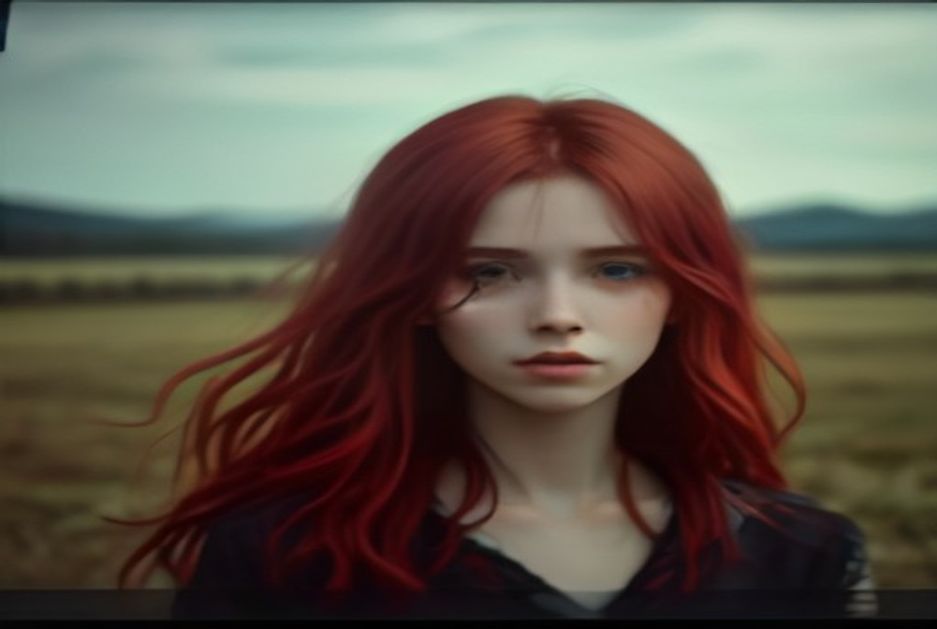

For Scottish-born photographer Kieran Dodds, what began as a passing curiosity has evolved into one of the most visually arresting portrait projects in recent years. Across towns and rural communities in the United States, Dodds has been systematically seeking out, photographing, and collecting the stories of people with red hair — and in the process, uncovering a cultural and genetic connection that few might have anticipated.
Dodds, whose previous work has appeared in publications such as National Geographic and The New York Times, has long been drawn to subjects that reveal something deeper about human identity. Red hair, he has explained in interviews, carries with it not just a distinctive color but an entire constellation of associations — folklore, ancestry, and, for many, a strong sense of kinship with others who share the trait. His ongoing series, which has spanned multiple states, attempts to capture that sense of belonging in a single frame.
Genetically, red hair is famously uncommon. It is produced by recessive variants of the MC1R gene, and it is most frequently found among populations of Northern European descent. In the United States, redheads make up only a small percentage of the overall population, with estimates generally ranging from two to six percent. Yet despite their relative rarity, individuals with red hair often describe the experience of spotting another redhead as an immediate, almost involuntary moment of recognition.
That recognition is at the heart of Dodds’s work. The portraits in his series are uniformly intimate: subjects are typically photographed in natural light, often in or near their own homes, with the kind of unguarded directness that suggests a conversation rather than a sitting. The result is a body of work that reads less like a documentary catalog and more like a family album — one that crosses state lines, occupations, and generations, but is bound together by a single, unmistakable trait.
One of the more surprising elements of the project is its geographic range. While Scotland and Ireland are often considered the global heartlands of red hair, Dodds has found that pockets of red-haired communities exist throughout the United States, particularly in areas settled by Scots-Irish immigrants. The Appalachian region, parts of the Midwest, and certain enclaves in the Northeast have all yielded subjects whose family histories stretch back centuries in their adopted American homelands. Many of them speak of ancestors who arrived in the New World generations ago and passed down not only surnames and stories but also the genetic marker that gives their hair its distinctive hue.
Beyond the visual record, Dodds has been collecting brief oral histories from his subjects. Several of them describe growing up as one of the only redheads in their school or neighborhood, and the surprise, sometimes bordering on delight, of meeting another person with the same coloring. Parents in the series often point out that their redheaded children are instantly identifiable in photographs from years past — a continuity that the project itself seems designed to honor.
The cultural framing of red hair in America has shifted over the decades. For much of the twentieth century, the trait was often the subject of teasing or stereotyping, and many red-haired adults of earlier generations recall uncomfortable memories of being singled out. More recently, popular culture has trended toward a warmer embrace of the trait, with public figures and celebrities openly celebrating it. Dodds’s photographs seem to land in the middle of that shift, neither dwelling on the history of mockery nor ignoring it, but instead presenting red hair as simply one of many ways that human beings signal where they come from.
For Dodds, the series is ultimately about belonging. The subjects, photographed in settings that range from sun-drenched porches to cluttered workshops, are bound together by something they did not choose and cannot change. The photographer’s task, as he sees it, is to make that invisible thread visible — to show that across a vast and varied country, there are people who, upon meeting one another, might feel that they have known each other for far longer than a single conversation.
The project continues to expand, with Dodds traveling regularly to add new portraits and stories. Exhibitions of the work have drawn attention both for their visual impact and for the quiet, sometimes poignant, accounts of identity and ancestry that accompany them. In a cultural moment when questions of heritage and connection feel especially charged, a project built around something as simple — and as complex — as the color of one’s hair offers a gentle but pointed reminder of how much history can live in a single, vivid strand.




