
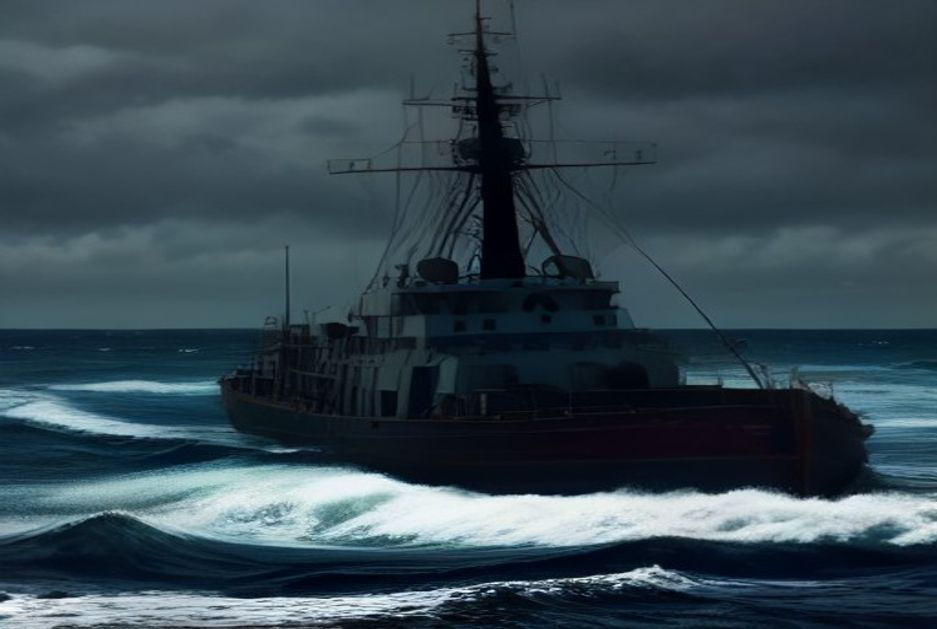

Ecuadorian authorities are investigating a series of attacks on fishing vessels that may have ties to a covert U.S. Central Intelligence Agency operation, according to officials familiar with the probe. The revelation adds a new layer of international intrigue to an already tense maritime environment off the country’s Pacific coast.
The investigation gained momentum after the January disappearance of the fishing vessel Fiorella, whose eight crew members remain missing despite extensive search efforts. The boat was last heard from near the remote island of Malpelo, a protected ecological reserve known for its rich marine life but also for occasional illegal fishing activity and unauthorized incursions by foreign vessels.
“What we’re seeing isn’t just random piracy or typical criminal activity,” said one senior investigator who requested anonymity due to the sensitivity of ongoing operations. “There are indications that these incidents may have been orchestrated or supported by actors with significant resources and training.”
While no formal charges have been filed and the U.S. government has not commented publicly, sources within Ecuador’s maritime authority, or DIRPA, suggest that intelligence intercepts and satellite imagery point toward coordination beyond local criminal networks. The alleged CIA involvement, if confirmed, would mark one of the most high-profile intelligence operations disclosed in the region in recent years.
The broader context involves escalating concerns over illegal, unreported, and unregulated fishing in the eastern Pacific. International conservation groups have long criticized the lack of enforcement in international waters, while regional governments struggle to monitor vast ocean areas with limited naval capacity. Some analysts believe that foreign intelligence agencies may have used anti-fraud or anti-smuggling frameworks as cover for surveillance missions targeting drug cartels or illegal fishing syndicates.
“It’s not uncommon for intelligence operations to mask themselves as legitimate law enforcement actions,” noted Dr. Elena Ramirez, a Latin American security expert at Georgetown University. “But when those operations result in harm to civilian mariners, especially from allied nations, the diplomatic fallout can be severe.”
Local fishermen along Ecuador’s northern coast have reported unusual vessel sightings and suspicious radio chatter over the past year. Several captains described fast-moving boats flying false flags and coordinating maneuvers that didn’t match standard patrol patterns. These accounts were initially dismissed but have since been incorporated into formal reports submitted to DIRPA and the National Police.
The Fiorella case remains the most troubling aspect of the investigation. The 32-meter trawler sent a distress signal at approximately 0300 hours on January 14, reporting engine failure and possible tampering. A nearby coast guard unit arrived within hours but found no trace of the vessel or its crew. Floating debris believed to belong to the Fiorella was discovered two days later, roughly 40 nautical miles southwest of its last known position.
“We’ve combed through radar data, ocean current models, and communication logs,” explained Captain Miguel Torres, head of Ecuador’s Search and Rescue Coordination Center. “Everything suggests the Fiorella was boarded by a well-trained team. This wasn’t amateur work.”
In Washington, State Department spokesperson Matthew Palmer declined to address specific allegations during a press briefing last week, stating only that the United States maintains strong cooperative relationships with Ecuador on maritime security matters. He emphasized that any joint efforts are conducted under strict legal protocols and oversight mechanisms.
Still, the accusations pose a delicate challenge for bilateral relations. Ecuador has historically welcomed U.S. assistance in combating transnational organized crime, particularly narcotics trafficking originating from Colombia. However, incidents involving civilian casualties or collateral damage could strain public trust and prompt calls for greater transparency in future collaborations.
For families of the missing fishermen, answers remain elusive. Relatives gathered outside DIRPA headquarters this week demanding action, holding signs reading “Justicia para Fiorella” and calling for an independent audit of all foreign-led maritime operations since January. Their frustration echoes across fishing communities where livelihoods depend on safe passage through contested waters.
The case also underscores how modern geopolitics increasingly plays out at sea—where invisible technological capabilities intersect with human vulnerability. As satellite tracking improves and cyber tools become more advanced, distinguishing between statecraft and sabotage grows harder for those caught in the crossfire.
Authorities say they expect to release preliminary findings by early next month. Meanwhile, the search for the Fiorella’s crew continues, hampered by rough weather and limited resources. Investigators urge anyone with information to come forward, even anonymously.
“These waters don’t belong to any one nation,” said Investigator Patricia Núñez. “But every life lost here is a wound we all share.”
With reporting contributed from Quito and Washington.