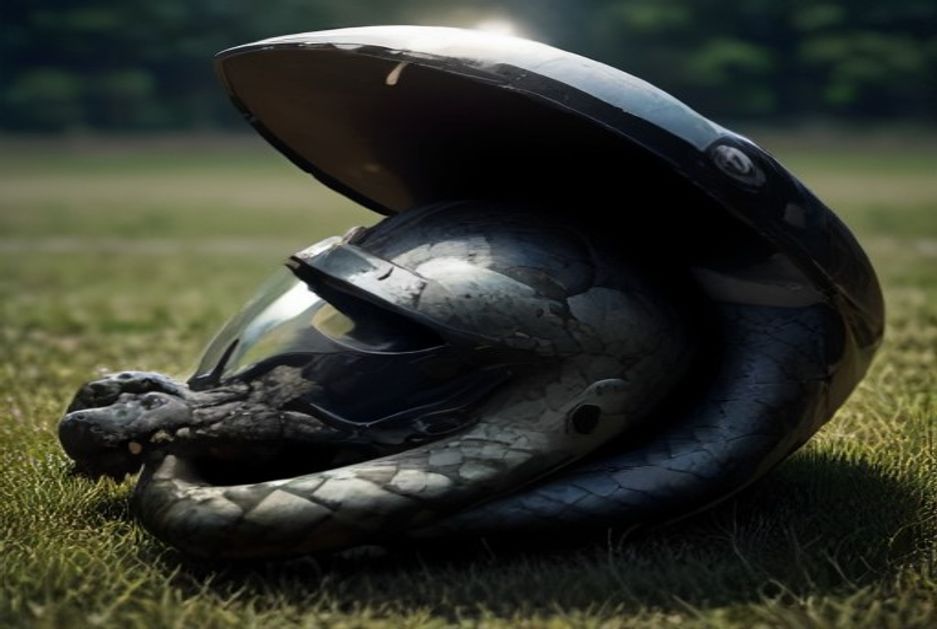

A high school football player in Arkansas made headlines this week after video surfaced showing him completing an entire training session with a venomous cottonmouth snake perched on his helmet, an incident that has drawn both praise for composure and concern from wildlife experts.
The footage, which quickly spread across social media platforms, captures the unidentified player going through standard practice drills while the dangerous reptile remains motionless atop his headgear. The cottonmouth, also commonly referred to as a water moccasin, is widely regarded as one of the most venomous snake species native to Arkansas, ranking just behind the various rattlesnakes found throughout the state in terms of toxicity.
While the exact circumstances of how the snake came to be on the player’s helmet remain unclear, local authorities and school officials have confirmed that no injuries were reported during the incident. The student was reportedly unharmed, and the snake eventually slithered away on its own without incident, according to statements released by the school district.
The event has sparked a flurry of reactions online, with many users marveling at the player’s calm demeanor, while others questioned whether such situations should ever arise during organized athletics. Wildlife biologists have weighed in, emphasizing that encounters between humans and cottonmouths are not uncommon in parts of Arkansas, particularly near bodies of water where the snakes often bask.
Arkansas is home to over thirty species of snakes, and the cottonmouth stands out as one of only four venomous varieties native to the state, alongside the copperhead, the timber rattlesnake, and the pygmy rattlesnake. These snakes are most frequently encountered in wetland areas, swamps, and along riverbanks, making certain outdoor sports facilities more susceptible to unexpected wildlife interactions.
“Cottonmouths are generally not aggressive unless provoked or cornered,” explained Dr. Sarah Mitchell, a herpetologist at the University of Arkansas who was not involved in the incident. “However, they are highly defensive and will strike repeatedly if they feel threatened. The fact that this snake remained still suggests it may have been in a defensive posture, relying on camouflage rather than flight.”
The school district has not disclosed which high school the player attends or released his identity, citing privacy concerns. However, officials did confirm that they are reviewing protocols for outdoor practices, especially those held near natural habitats or wooded areas.
“We take the safety of our students very seriously,” said a spokesperson for the district. “While this was an unusual and rare occurrence, we are working closely with local wildlife control and safety experts to ensure our practices are as secure as possible moving forward.”
The incident also prompted a response from the Arkansas Department of Health, which reminded residents and schools alike about the importance of recognizing local wildlife and maintaining safe distances. The department noted that while cottonmouth bites are rarely fatal to adults, they can cause severe tissue damage and require immediate medical attention.
For the player involved, the experience has become something of a local legend. Teammates described him as unfazed throughout the ordeal, continuing drills without interruption even as spectators realized what was happening. “He’s just focused on football,” said one fellow student. “But honestly, I don’t think any of us even noticed until someone pointed it out.”
Coaches at the school have since implemented new guidelines requiring pre-practice inspections of fields, particularly those adjacent to wooded or marshy terrain. They have also reached out to local animal control services to assist with identifying and safely relocating wildlife that may wander onto school property.
The video has gained traction not only locally but across national sports networks, where it has been discussed as both a testament to athletic focus and a cautionary tale about the unpredictability of outdoor athletics. Some commentators have jokingly suggested that the player deserves a scholarship for his poise under pressure.
As for the snake, wildlife officials believe it was likely a juvenile, which may explain its relatively passive behavior. Juvenile cottonmouths, while still venomous, tend to be less aggressive than their adult counterparts and are more likely to freeze when confronted with unfamiliar stimuli.
The incident serves as a reminder that Arkansas’s rich natural landscape, while beautiful and scenic, comes with its own set of risks—especially during outdoor activities like football practice. As schools prepare for the upcoming season, many are re-evaluating safety measures to account for the unexpected.
In the meantime, the player and his team continue their season, with the helmet that housed a venomous visitor now retired to the school’s display case—a strange but memorable artifact of an unforgettable day on the field.