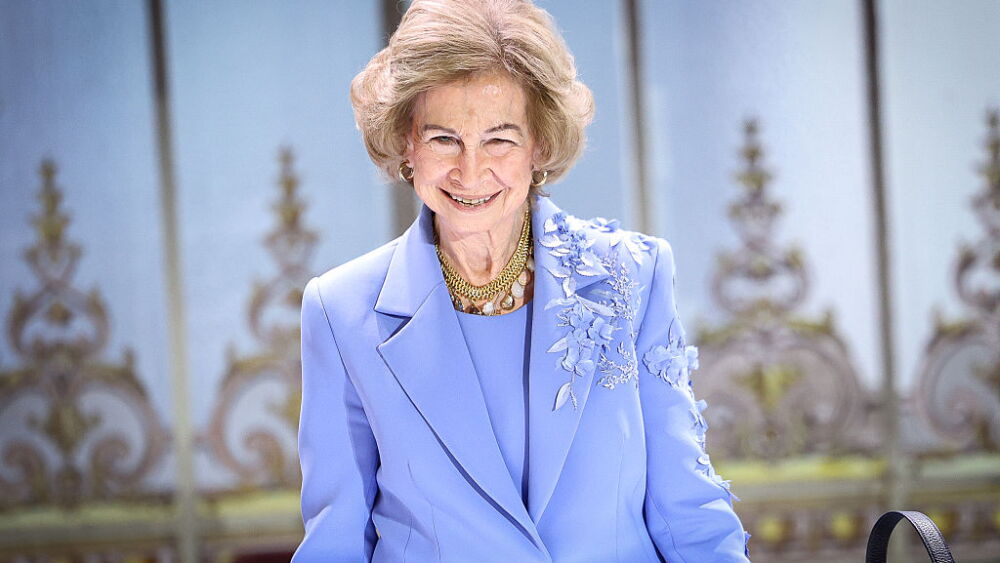

Queen Sofía of Spain, born on 2 November 1938, has been a constant and respected figure in European royalty for more than five decades. While her public image exudes classic elegance and unwavering duty, her personal life is marked by extraordinary experiences that span sports, academia, medicine, and philanthropy.
Olympic Roots
In a remarkable twist of fate, the future queen competed in the 1960 Rome Olympics as a substitute sailor for Greece in the Dragon class. Her brother, Prince Constantine, won the gold medal in the same Games, making the event a historic family achievement.
Academic and Medical Background
After studying in Athens, Sofía took part in archaeological excavations at the Tatoi Palace estate. Together with her sister, Princess Irene, she co‑authored two scholarly works — Cerámicas en Decelia and Miscelánea arqueológica. She also earned a degree in Puericulture, working as a nurse and instructor in the Mitera maternity clinic before her marriage.
Three Weddings in One Day
When she married then‑Prince Juan Carlos on 14 May 1962, three ceremonies were held: a Catholic mass at the Cathedral of San Dionisio, an Orthodox service at the Cathedral of the Annunciation, and a civil ceremony at the Royal Palace, reflecting both her Greek heritage and Spain’s traditions.
Linguistic Mastery
Queen Sofía is fluent in six languages — Greek, Spanish, English, French, German, and Italian — demonstrating her adaptability and international outlook.
Exile and Childhood
Her early years were shaped by exile; due to World War II and political turmoil in Greece, she lived as a child in Alexandria, Egypt, and later in Cape Town, South Africa, before returning to Europe.
Dietary Commitment
Since 1964, following the death of her father, King Paul, she has followed a strict pescetarian‑vegetarian diet, a choice rooted in her respect for animal welfare.
Royal Renunciation
Before marrying Juan Carlos, she formally renounced her rights to the Greek throne after converting from Orthodox Christianity to Catholicism, a prerequisite for her accession to the Spanish crown.
Cultural Patronage
A passionate advocate of classical music, Sofía helped establish the Reina Sofía School of Music in Madrid and has received numerous honorary doctorates from prestigious institutions such as Oxford, Cambridge, Georgetown, and New York University.
Public Education
In the late 1970s, she attended classes at the Autonomous University of Madrid as an ordinary student, immersing herself in humanities and medicine to maintain a direct connection with Spanish academia.
Royal Connections
Through her descent from Queen Victoria, Sofía is a distant relative of Queen Elizabeth II and the current King Charles III, linking the Spanish monarchy to the broader European royal network.
First Meeting on a Royal Yacht
Her initial encounter with Juan Carlos took place in 1954 aboard the yacht Agamemnon, during a cruise organized by Queen Federica to bring together European royal families.
Name Change
Her given Greek name, Sophia (Σοφία), was officially adapted to the Spanish spelling “S
Source: caras.com.mx