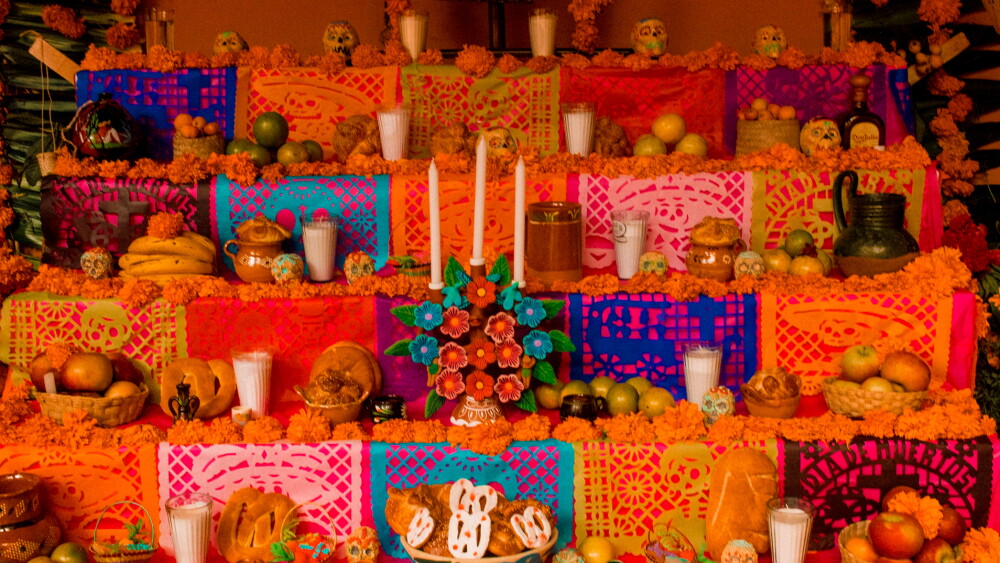

As Mexico prepares for one of its most cherished traditions, Día de Muertos, many families find themselves racing against the calendar to assemble their ofrendas. While the holiday’s spiritual core remains the remembrance of departed loved ones, a growing trend sees these altars elevated into curated design statements — blending heritage with high style. Even at the eleventh hour, it is possible to craft an altar that feels both deeply personal and visually striking.
Lighting as Architecture
Candles are the soul of the ofrenda, guiding spirits home with their glow. For an elevated look, move beyond basic tea lights. Design experts recommend candelabras in crystal or matte ceramic, which catch and refract light to add depth and intimacy. Warm, amber-toned illumination transforms the altar from a display into a sanctuary.
A Curated Color Palette
Sophistication begins with restraint. Instead of the full spectrum, select a cohesive scheme: burnt orange, antique gold, deep wine, and rich earth tones. These hues honor tradition while creating visual harmony. Ground the vibrancy with natural textures — linen textiles, raw wood, stone surfaces — allowing the marigolds to pop without overwhelming the composition.
Photographs as Gallery Pieces
Resist the urge to line up photos in a uniform grid. Instead, treat them as art. Mix frame sizes — small ovals, large rectangles — but unify them through finish: aged gold, dark walnut, vintage patina. Stagger heights and depths across tiers. The result reads less like a family bulletin board and more like a curated retrospective of a life.
Floral Sculpture Over Simple Bunches
Cempasúchil (marigold) remains non-negotiable, but presentation makes the difference. Seek volume and verticality: tall vessels, cascading arrangements, sculptural vases in ceramic or blown glass. Cluster blooms at varying heights to create rhythm. The goal is an arrangement that looks as though a floral designer spent days on it — even if you assembled it in hours.
Artisanal Tableware as Cultural Texture
The objects holding offerings matter as much as the offerings themselves. Swap disposable plates for hand-thrown ceramics, hammered silver trays, or barro negro pottery from Oaxaca. These pieces introduce tactile richness and celebrate Mexican craftsmanship. A single artisan bowl holding pan de muerto carries more weight than a plastic tray piled high.
The Personal Touch: Where Elegance Meets Memory
True refinement lies in specificity. The most arresting altars are those that tell a singular story. Spritz a loved one’s signature perfume near their photo. Tuck their dog-eared novel beside a reading glass. Place a piece of heirloom jewelry on a velvet square. Pour a measure of their favored tequila or coffee into a cut-crystal glass. These details transform decoration into devotion.
Timing: You Haven’t Missed the Window
Though November 1 and 2 are the canonical dates — Día de los Inocentes for children, Día de los Difuntos for adults — preparation traditionally begins in late October. Many families build incrementally, adding elements daily. Starting now is not late; it is part of the ritual.
Extending the Invitation to Four-Legged Family
Pet ofrendas have grown from niche to norm. Create a dedicated vignette: a favorite photo in a fine frame, a miniature marigold arrangement, a ceramic figurine resembling the animal. Layer in the tangible — a worn collar, an engraved name tag, the squeaky toy that survived years of play. The same design principles apply: cohesion, texture, intention.
As Isabel Allende wrote in Eva Luna, “Death does not exist; people only die when they are forgotten; if you can remember me, I will always be with you.” An elegant altar is not about aesthetics for aesthetics’ sake. It is about making memory visible — beautifully, deliberately, so that those who return, even for a night, find a place worthy of their visit.
Source: caras.com.mx