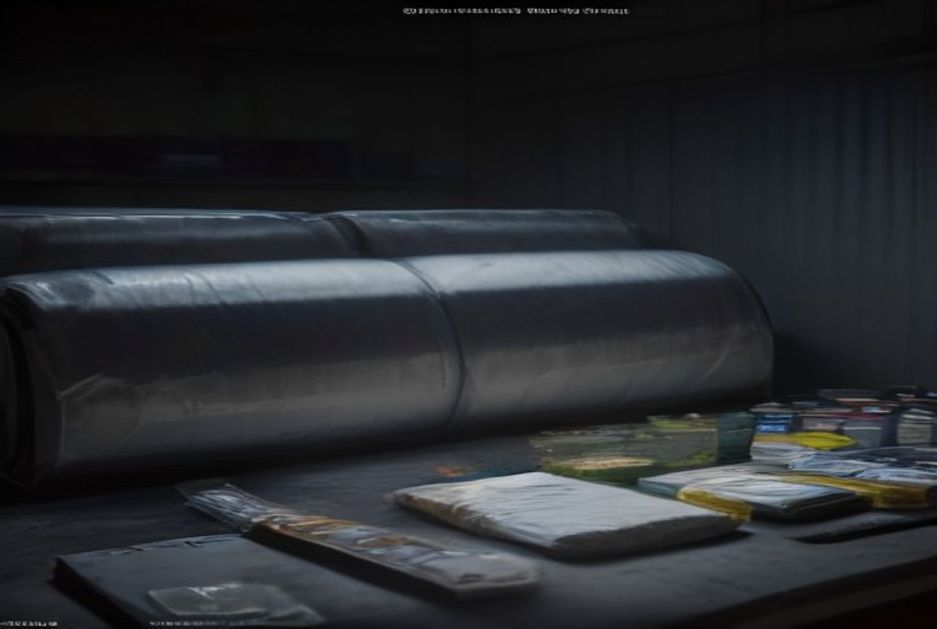

Federal forces operating in Mexico’s violence-plagued northwestern state of Sinaloa have dismantled three clandestine drug-manufacturing facilities, recovering approximately 17 metric tons of methamphetamine in one of the largest synthetic-drug seizures of the current administration, according to information emerging from Mexican security officials. The discovery, which came after an undisclosed period of intelligence-gathering and aerial surveillance, underscores the persistent industrial scale of narcotics production in a region long considered the heartland of Mexican methamphetamine trafficking.
Officials indicated that one of the three laboratories was exceptionally large in capacity, making it the second-biggest such facility uncovered since Claudia Sheinbaum took office as president of Mexico in late 2024. The sheer volume of precursor chemicals and finished product recovered points to operations capable of producing multi-ton quantities of crystal methamphetamine for distribution across North America, a quantity consistent with U.S. Drug Enforcement Administration assessments of cartel output capacity in the so-called Golden Triangle region of Sinaloa, Durango, and Chihuahua.
Sinaloa has remained the epicenter of Mexico’s synthetic-drug trade for more than two decades, a legacy cemented by the rise of the Sinaloa Cartel and its successor organizations. While the group once led by Joaquín Guzmán Loera, known as El Chapo, has undergone successive fracturing since his extradition to the United States in 2017, splinter factions and rival networks have continued to exploit the rugged Sierra Madre mountains, where poppies for heroin and ephedra-based raw materials for methamphetamine can be sourced, processed, and shipped with relative impunity. The mountainous terrain, much of it blanketed in dense marijuana and poppy fields before recent eradication drives, has historically provided cover for laboratories that can be erected, used, and abandoned within days if authorities draw near.
Mexican security strategy against these labs has long combined military sweeps, helicopter-borne reconnaissance, and tips from informants, often yielding mixed results. The destruction of a single super-lab can remove several tons of finished product from circulation, but analysts note that the equipment, precursor chemicals, and trained chemists are often relocated rather than destroyed. Precursor chemicals, many of them shipped from Asia and rerouted through ports on Mexico’s Pacific and Gulf coasts, continue to flow into the country in significant quantities, despite stricter monitoring under the Sheinbaum government’s ongoing security review.
The size of the latest haul suggests that whoever is operating the labs has both the chemical expertise to refine high-purity crystal and the financial backing to maintain operations at a time when cartel competition has intensified. Sinaloa has experienced a particularly bloody period of internecine fighting between factions loyal to different sons of El Chapo, known collectively as Los Chapitos, and a rival faction associated with Ismael Zambada García, known as El Mayo, who is currently in U.S. custody awaiting trial after his surprise arrest in 2024. Despite these leadership upheavals, the structural demand from consumers in the United States, Canada, and increasingly Europe and Asia, has provided a resilient market that incentivizes ever-larger production runs.
For U.S. law enforcement, seizures of this magnitude translate directly into lives saved from overdoses, particularly given that Mexican-produced methamphetamine accounts for the vast majority of the supply available on the U.S. West Coast and increasingly in the Midwest and East Coast. The DEA has warned repeatedly in recent years that the purity of Mexican methamphetamine has risen while prices have fallen, a trend fueled by improved production efficiency and bulk sourcing of precursors. Operations like the one uncovered in Sinaloa, when successfully dismantled, can disrupt local supply chains temporarily, though sustained interdiction requires repeated strikes against an industry that rebuilds quickly.
Officials have not yet disclosed how many suspects, if any, were detained during the operation, nor have they confirmed whether any of the chemists responsible for the labs’ operation were captured or killed in the process. Nor have authorities released details about the precise locations of the three labs within the state, though security protocol typically keeps such information confidential to avoid tipping off other operators about patrol patterns and reconnaissance capabilities. The fate of the seized methamphetamine, which under Mexican law is typically destroyed in controlled incinerations, will likely be addressed in the coming days.
The seizure lands at a politically sensitive moment for the Sheinbaum administration, which has sought to project continuity with the security policies of her predecessor while adapting the framework inherited from the previous administration. Her government has emphasized a strategy that blends targeted law enforcement with social investment in violence-affected regions, though critics argue that the underlying trafficking economy continues to adapt faster than policy can respond. The discovery of three functioning super-labs, including one of unprecedented size, will intensify debate over whether current efforts are meaningfully constraining cartel production or merely managing its visible manifestations.
Beyond immediate security implications, the find also raises questions about precursor chemical regulation, port security, and the role of transnational organized crime in sustaining a global trade estimated to generate billions of dollars annually. As long as the structural conditions that enable massive methamphetamine production persist, analysts caution, seizures of this scale will likely remain a recurring feature of the news from Sinaloa rather than a turning point.