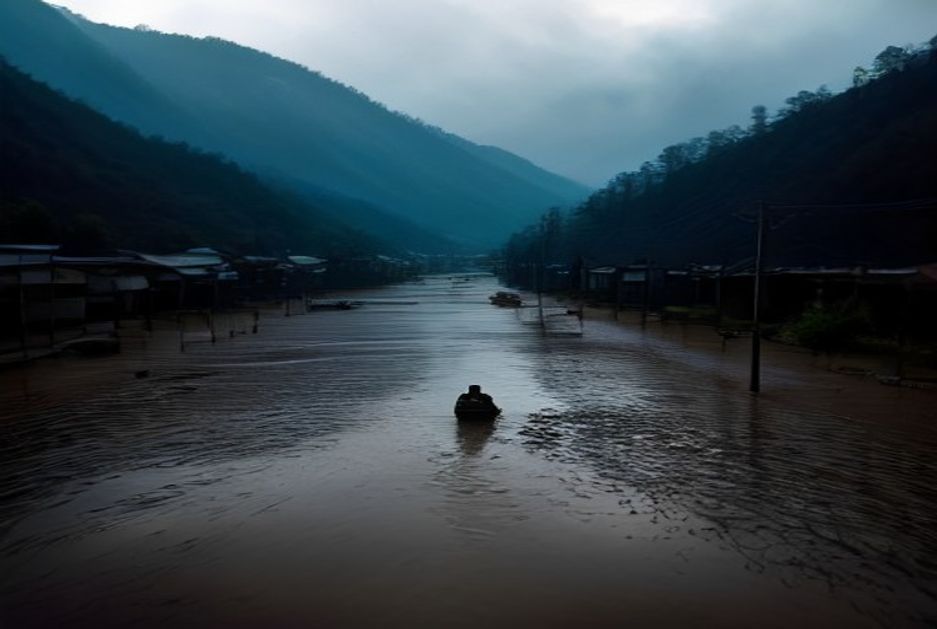

KATHMANDU — Officials in Nepal said on Sunday that more than 800 people have died as a result of the devastating floods that swept across the Himalayan nation over the past week, with nearly 2,500 people still unaccounted for and hundreds more injured. The latest figures, released by Nepal Police on social media, confirm an uptick in fatalities while holding steady on earlier counts of roughly 239 injured and 2,502 missing.
The scale of the disaster has overwhelmed emergency response networks in several southern and eastern districts, where monsoon-triggered landslides and flash floods tore through villages, swept away roads and bridges, and left entire communities cut off from outside help. Relief teams are working around the clock to reach stranded survivors, though persistent rains and damaged infrastructure have slowed rescue operations in the hardest-hit areas.
Nepal’s Disaster Risk Reduction and Management Authority confirmed that the flooding began late last week following days of unusually heavy rainfall linked to an intensifying monsoon pattern. Meteorologists say climate change is contributing to more erratic and extreme weather events across South Asia, including heavier downpours that overwhelm drainage systems and increase the risk of landslides in mountainous regions like Nepal.
“These are not isolated incidents anymore,” said one local official familiar with the situation who requested anonymity because they were not authorized to speak publicly. “What we’re seeing now is part of a larger trend — stronger monsoons, unpredictable rainfall, and communities that are increasingly vulnerable because of rapid urbanization and encroachment into flood-prone zones.”
The hardest-hit provinces include Province No. 1 along the eastern border with India and Bagmati Province, which encompasses the Kathmandu Valley. In both areas, rivers burst their banks after sustained rainfall, submerging farmland and displacing tens of thousands of people. Makeshift shelters have sprung up in schools and community centers, though many lack adequate supplies of clean water, food, or medical care.
International aid organizations have begun mobilizing resources, with the United Nations Office for the Coordination of Humanitarian Affairs (OCHA) issuing appeals for emergency funding. The World Health Organization has warned of potential disease outbreaks, particularly cholera and dengue fever, if sanitation conditions do not improve quickly in temporary camps.
India has also responded by opening floodgates along shared river systems, which officials say contributed to the rapid rise in water levels downstream in Nepal. Cross-border cooperation on flood management has been a longstanding challenge, with both countries struggling to coordinate early warning systems and infrastructure projects designed to mitigate seasonal flooding.
For families affected by the disaster, the immediate priority remains finding missing relatives and securing basic necessities. “We don’t even know if our children are alive,” said one woman at a displaced persons camp in Sunsari District. “All we can do is wait and hope someone finds them.”
Search and rescue missions continue despite difficult terrain and ongoing rain. Drones and helicopters are being deployed where possible, though visibility issues and fuel shortages have limited air support. Ground teams face additional challenges navigating debris-strewn paths and collapsed bridges that once connected remote villages to district headquarters.
Local governments have appealed for more support from the federal level, arguing that decentralized disaster preparedness plans were insufficient given the magnitude of this event. Critics point to years of underinvestment in flood control infrastructure and early warning systems, concerns that have grown louder amid recurring climate-related disasters in recent years.
As recovery efforts get underway, attention is turning to long-term resilience strategies. Experts emphasize the need for improved urban planning, better integration of traditional flood barriers with modern technology, and stronger regional collaboration on managing transboundary rivers. But for now, the focus remains on saving lives and providing relief to those affected by one of the worst flooding episodes in recent memory.
Governments and NGOs estimate that rebuilding will take months, if not years, especially in rural areas where homes, schools, and health clinics were destroyed. International donors are expected to convene in the coming weeks to assess damage and pledge reconstruction funds, though past pledges have often fallen short of what affected communities say they need.
For now, survivors are left to cope with loss, uncertainty, and the slow arrival of aid in some of the most remote corners of the country.