
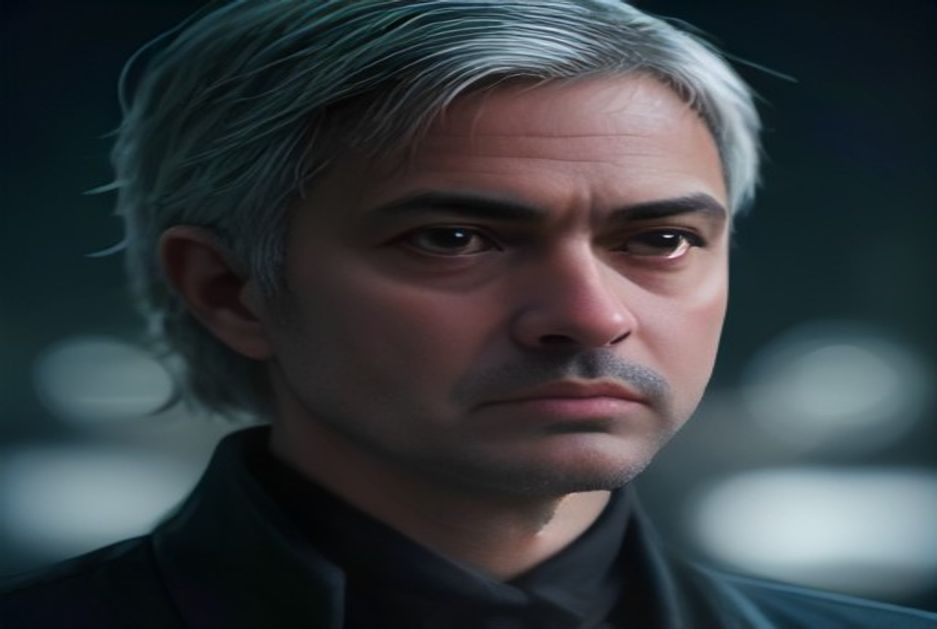

José Mourinho has waded into one of the most persistent debates in European football, publicly defending the broader integrity of Spanish match officials while simultaneously pressing the case that more must be done to shield Real Madrid forward Vinicius Jr from the provocations that have followed him throughout his career.
The Portuguese manager, currently preparing for the new season, used the platform of a recent press appearance to draw a careful distinction. On one hand, he said he retains faith in the standard of refereeing in Spain’s top flight. On the other, he argued that the unique abuse directed at the Brazilian winger has tested that system in ways it was never designed to handle, and that the sport’s authorities can no longer look the other way.
Vinicius Jr has been one of the most discussed players in world football over the past three seasons, not solely for his performances on the pitch but for the recurring pattern of racist and otherwise abusive incidents that have erupted in stadiums across Spain. The issue escalated sharply in 2023, when incidents in Valencia and other cities prompted widespread condemnation, criminal investigations, and a public stand from the Spanish government. La Liga, the Royal Spanish Football Federation (RFEF), and the Spanish Footballers’ Association (AFE) have all launched initiatives aimed at curbing the problem, including stadium closures, partial bans, and educational campaigns. Yet supporters’ groups and anti-discrimination monitors say the cycle of abuse has not been fully broken.
Mourinho, who managed Real Madrid between 2010 and 2013 and remains a frequent commentator on Spanish football, has consistently framed the issue as one that extends beyond a single player. In his remarks, he pointed to what he described as a culture of provocation that has built up around Vinicius, with defenders and sections of opposing support seemingly targeting the player with the explicit aim of destabilizing him. The 62-year-old suggested that referees, while generally capable, are placed in an impossible position when confronted with abuse that is partly verbal, partly gestural, and partly embedded in the choreography of certain fan bases.
His comments arrive at a sensitive moment for Spanish football. The domestic season has been a focal point for UEFA and FIFA, both of which have pressed member associations to strengthen their responses to discriminatory behavior. Spain’s national team recently competed at major tournaments under closer scrutiny than usual, and the federation has been working alongside international bodies on protocols for identifying and punishing offenders. The introduction of facial recognition technology in some La Liga stadiums has been presented as a step forward, although critics argue that prosecutions remain rare and sentences lenient.
Mourinho’s defense of the Spanish officials themselves is notable given his history. During his time at Real Madrid, he was frequently at odds with referees, famously poking the eye of then-Barcelona assistant Tito Vilanova during a touchline confrontation. He has built much of his public persona on friction with authority, and his willingness to back officials now signals how seriously he views the Vinicius situation. By separating the officiating corps from what he sees as a wider cultural problem, Mourinho appears to be redirecting pressure toward the institutions that organize, govern, and police the competitions themselves.
The broader context of the debate is not limited to Spain. Across Europe, players of color continue to report abusive treatment, and several high-profile incidents in Italy, France, and England have revived calls for coordinated action. UEFA’s recent sanctions against clubs whose supporters engaged in racist chanting have been pointed to as evidence that progress is possible, but player advocacy groups including the Fare Network and Kick It Out argue that sanctions are inconsistently applied and that education efforts are chronically underfunded.
For Vinicius Jr personally, the spotlight has rarely dimmed since his arrival at the Santiago Bernabéu. Now entering what many consider the prime years of his career, the Brazilian has remained outspoken, using his platform to call for structural change rather than simply reacting to individual incidents. His stance has earned praise from figures including Brazilian President Luiz Inácio Lula da Silva and global sporting icons, though it has also drawn criticism from those who accuse him of exaggerating the problem.
Mourinho’s intervention adds the weight of one of football’s most recognizable voices to a campaign that has been gathering momentum for years. Whether the Spanish federation, La Liga, and club officials translate that pressure into concrete action remains the next test. As the new season approaches, the spotlight on Vinicius Jr, and on the systems meant to protect him, is unlikely to fade.