
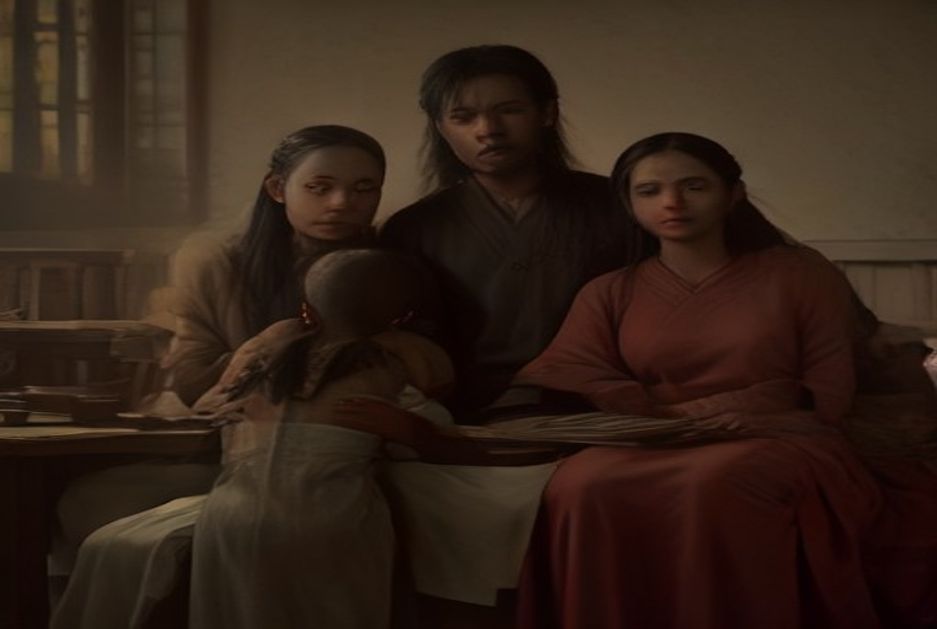

Sue Nyathi, the acclaimed creator of Netflix’s hit series *The Polygamist*, has revealed that the show’s premise is deeply rooted in her own family history, tracing a legacy of polygamy that spans three generations. In an exclusive interview with *The New York Times*, Nyathi shared that her maternal grandmother’s upbringing in a polygamous household—where her great-grandfather took 11 wives—served as the foundation for the show’s exploration of power, faith, and survival. While the series fictionalizes these dynamics, Nyathi emphasized that the emotional core reflects her family’s real-life struggles with secrecy, cultural identity, and the lingering trauma of a practice still present in some communities today.
Born in South Africa and raised in the United States, Nyathi grew up hearing fragmented stories about her mother’s childhood in a rural polygamist enclave. Her great-grandfather, a charismatic religious leader, established a compound in the early 20th century that became a microcosm of patriarchal control. “My grandmother described a world where women were taught to prioritize obedience over autonomy, and men wielded authority under the guise of divine duty,” Nyathi said. “That duality—the spiritual justification and the human cost—is what drew me to tell this story.” The show’s protagonist, a young woman navigating a polygamous marriage, mirrors Nyathi’s grandmother’s resilience, though the creator stressed that no single character represents her relative.
Polygamy remains a polarizing topic globally, often conflated with extremist ideologies or romanticized in media. Nyathi’s work seeks to complicate these narratives, highlighting how systems of power—whether religious, cultural, or economic—shape individual lives. “It’s not about condemning a lifestyle but exposing how imbalance breeds vulnerability,” she explained. The series, filmed in part on location in Utah’s Mormon Corridor, incorporates historical details about 19th-century fundamentalist groups, though Nyathi clarified that her family’s story diverges from mainstream Mormon history. “We’re talking about a tradition that predates and exists outside of organized religion,” she noted, alluding to indigenous and African practices of polygamy that persist in marginalized communities.
For Nyathi, the project was as much a personal journey as a creative one. She described poring over old letters and photographs to reconstruct her family’s narrative, uncovering tensions between generations who either embraced or resisted the practice. “My mother refused to speak of it for years, but after my grandmother’s death, she finally shared fragments of her story,” Nyathi said. “That silence-to-speech arc is central to the show’s theme of reclaiming agency.” The series also addresses modern repercussions, such as how descendants of polygamous families navigate legal systems that criminalize or overlook such unions.
While *The Polygamist* has sparked discussions about representation and historical accuracy, Nyathi insists the show is not a direct autobiography. “I’m not trying to speak for all polygamous communities,” she said. “But I hope it encourages viewers to question how power dynamics operate in their own lives.” The series’ success has also prompted Nyathi to advocate for more nuanced storytelling about underrepresented histories, particularly those intersecting race, gender, and colonialism. “My family’s story is one thread in a larger tapestry,” she said. “By sharing it, I want to open doors for others to tell theirs.”
As debates over the ethics of polygamy continue, Nyathi’s work underscores the importance of context. “Polygamy isn’t inherently good or bad—it’s the structures that enable exploitation that matter,” she said. “My goal is to humanize the people behind the headlines, to show that behind every system of control, there are individuals fighting to survive.” With *The Polygamist* now streaming globally, Nyathi hopes her family’s legacy will inspire broader conversations about freedom, memory, and the stories we choose to tell.