
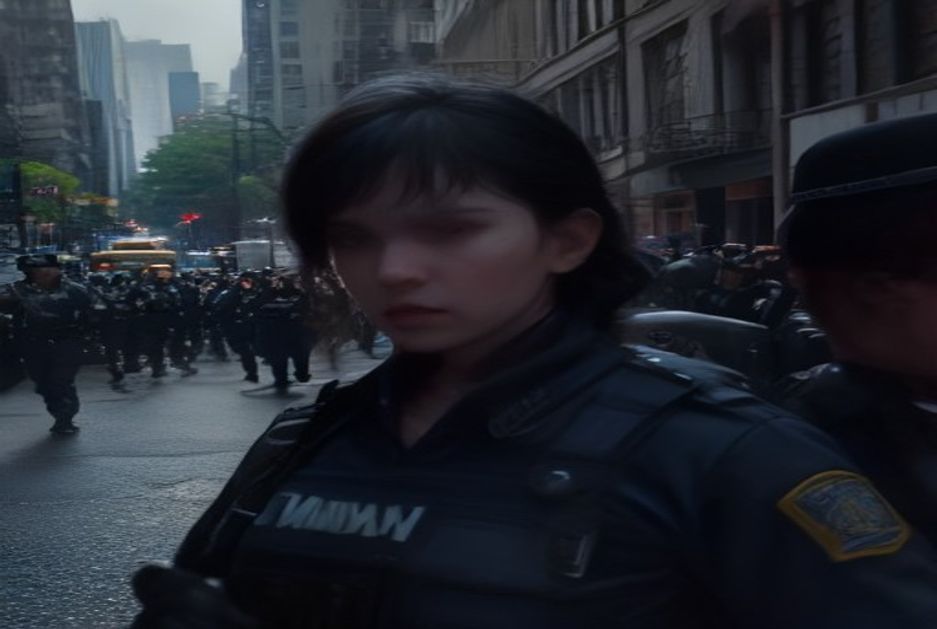

The New York Police Department has announced a surge deployment of roughly 700 officers to the Upper Manhattan area following a chaotic gathering of teenagers that shut down traffic on Dyckman Street over the weekend. The incident, which unfolded on Sunday afternoon, saw a sizable crowd of young people spill onto the roadway, climb atop parked vehicles, and cause property damage, prompting an immediate and sizable law‑enforcement response.
Dyckman Street, a commercial corridor that runs through the Inwood and Washington Heights neighborhoods, has become a recurring flashpoint for what local media have dubbed “teen takeovers.” Similar episodes have been reported in other parts of the city over the past two years, often organized through social‑media platforms that allow rapid mobilization of large groups. While the gatherings are largely non‑violent in intent, they frequently escalate into confrontations with police, traffic disruptions, and vandalism, raising concerns among residents, business owners, and elected officials.
City officials have pointed to a combination of factors driving the trend: limited recreational spaces for adolescents, the influence of viral challenges that encourage public spectacles, and a perceived lack of consequences for low‑level disorder. In response, the NYPD has adopted a strategy that blends targeted patrols, community‑engagement teams, and coordination with the Department of Parks and Recreation to provide alternative venues for youth activities. The latest deployment reflects an effort to prevent a repeat of the weekend’s disorder while also signaling a willingness to allocate significant resources to the area.
Community leaders in Inwood and Washington Heights have expressed mixed reactions. Some welcome the heightened police presence, arguing that it restores a sense of safety for commuters and shopkeepers who have endured repeated blockages. Others caution that a heavy‑handed approach could exacerbate tensions between law enforcement and the predominantly Latino and Black youth who frequent the corridor. Advocacy groups have called for expanded after‑school programs, mentorship initiatives, and investment in safe public spaces as long‑term solutions that address the root causes rather than the symptoms.
The mayor’s office issued a brief statement emphasizing a balanced approach: “We are committed to keeping our streets safe for everyone while also ensuring that young people have constructive outlets for their energy and creativity.” The administration has indicated that it will review the effectiveness of the current deployment after a two‑week period and adjust tactics based on data regarding incidents, arrests, and community feedback.
Legal analysts note that the NYPD’s use of a large, pre‑emptive force raises questions about the proportionality of policing tactics in response to assemblies that, while disruptive, may not meet the threshold for a declared unlawful gathering. The department maintains that the deployment is justified by the scale of the previous event, the potential for escalation, and the need to protect public infrastructure. Civil‑rights organizations have pledged to monitor the situation closely, particularly any use of force or mass‑arrest procedures.
As the city heads into the summer months — a period historically associated with an uptick in youth‑driven street activity — the outcome of this operation will likely inform broader policy discussions about public safety, youth services, and the role of social media in organizing spontaneous gatherings. For now, residents of Upper Manhattan are watching to see whether the heightened police presence translates into calmer streets or simply shifts the dynamics of an ongoing urban challenge.