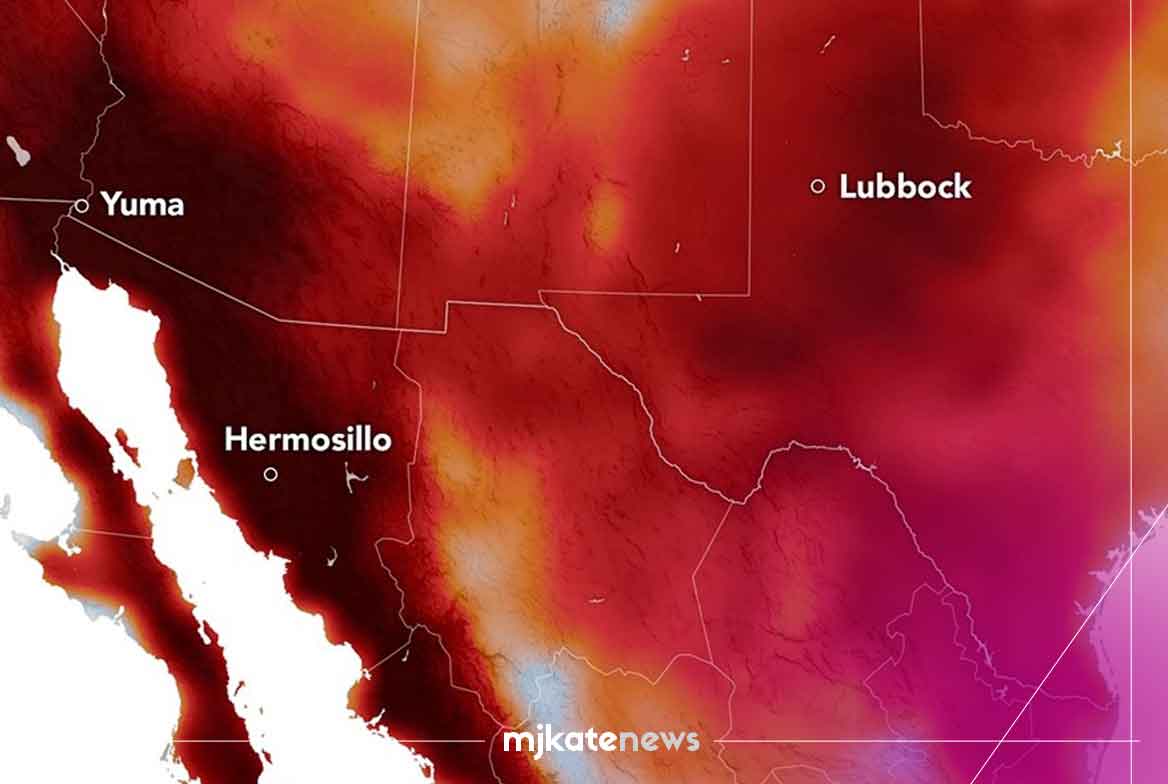

California’s southern region braced for sweltering temperatures exceeding 100°F this week as a persistent heatwave strained infrastructure and heightened fears of wildfires. The National Weather Service issued excessive heat warnings for areas including Los Angeles County, San Diego, and the Coachella Valley, where mercury is projected to hit triple digits for several consecutive days. Thunderstorms expected to sweep through inland valleys and mountain regions later this week could spark new blazes, prompting officials to urge residents to prepare for power outages and evacuations.
Meteorologists attribute the heatwave to a stalled high-pressure system over the Southwestern U.S., which has blocked cooling Pacific winds and drawn scorching air from the desert. “This is a textbook example of a heat dome,” said Dr. Leticia Ramirez, a climatologist at UCLA’s Atmospheric Sciences Department. “The longer it lingers, the more dangerous conditions become for both public health and the environment.” Daytime highs in Palm Springs surpassed 105°F on Sunday, shattering previous records for July. Nighttime temperatures have also remained unnaturally warm, offering little respite for vulnerable populations.
The energy grid operator, the California Independent System Operator (CAISO), reported unprecedented electricity demand Monday as residents cranked air conditioners to combat the heat. At 2:30 p.m., the grid hit a peak load of 48,000 megawatts—the highest in at least a decade—raising concerns about potential rolling blackouts. “We’re operating at the edge of our capacity,” said CAISO spokesperson Emma Torres. “We’re asking customers to conserve energy during peak hours and avoid non-essential use.” Utility companies have activated contingency plans, including importing power from neighboring states and firing up aging natural gas plants, but critics argue the infrastructure remains underprepared for escalating climate extremes.
Health officials warned that prolonged exposure to extreme heat could lead to a surge in heat-related illnesses. The Los Angeles County Department of Public Health reported 15 emergency room visits for heat exhaustion on Sunday alone, a 40% increase from the previous week. Homeless encampments and outdoor workers face heightened risks, with cooling centers and hydration stations set up across the region. “We’re seeing cases of heat stroke in people who’ve never experienced conditions this severe,” said Dr. Maria Gonzalez, an emergency physician at Santa Monica Medical Center. “Even healthy individuals should avoid prolonged outdoor activity.”
Firefighters preemptively deployed crews to high-risk zones as dry vegetation and gusty winds create ideal conditions for wildfires. The National Interagency Fire Center’s National Preparedness Level was raised to 5—the highest possible—indicating national resources are being mobilized. In the San Bernardino National Forest, crews are thinning brush near residential areas, while aerial firefighting planes are on standby. “One spark could ignite a catastrophe,” said Cal Fire spokesperson Daniel Nguyen. “We’re prioritizing prevention, but the threat level remains extreme.”
Meanwhile, climate activists seized on the crisis to renew calls for statewide action on emissions reductions and grid modernization. “This heatwave is a stark reminder of the human cost of inaction,” said environmental organizer Javier Ruiz of the Climate Action Network. “We need long-term investments in renewable energy and community cooling programs, not just temporary fixes.” A recent poll by the Pew Research Center found 72% of Californians support increased state funding for climate adaptation, though legislative gridlock persists over prioritizing renewable projects over fossil fuel subsidies.
As the heatwave intensifies, residents are grappling with both immediate discomfort and long-term anxiety. In the agricultural town of El Centro, farmer Luis Morales described losing crops to irrigation failures and equipment malfunctions caused by power fluctuations. “It’s not just about staying cool—it’s about keeping the lights on and the food growing,” he said. Low-income communities, disproportionately affected by infrastructure gaps, are organizing mutual aid networks to share resources like generators and bottled water.
Looking ahead, the National Weather Service forecasts no immediate relief, with temperatures expected to remain above 95°F through midweek. Climate scientists caution that such extreme events will become more frequent as global temperatures rise. “This is part of a broader pattern,” said Dr. Ramirez. “California must adapt its policies and infrastructure to a new climatic reality—or face even worse consequences in the coming decades.”
For now, communities are rallying to endure the crisis together. In Riverside, a local church opened its doors as a cooling shelter, while social media groups coordinate volunteer efforts to check on elderly neighbors. “We’re in this together,” said Riverside resident Ana Torres. “It’s about looking out for each other when the world feels too hot to handle.”
As the heatwave continues, California’s resilience will be tested not just by the mercury in the sky, but by its ability to respond to a climate crisis that shows no signs of abating.