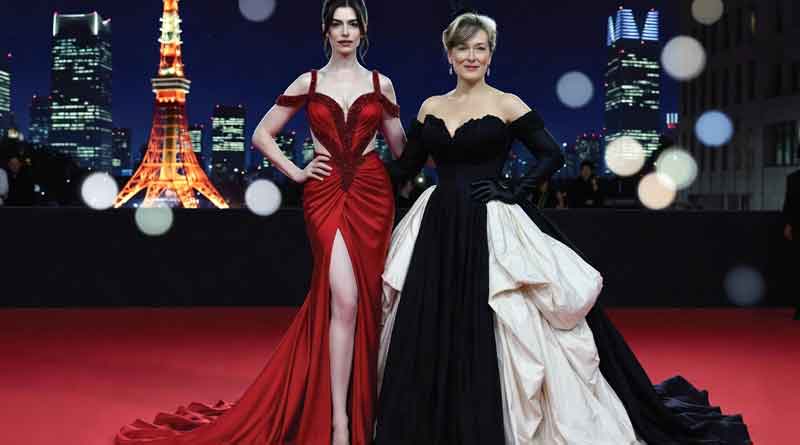

The highly anticipated premiere of “The Devil Wears Prada 2” in Tokyo was a dazzling spectacle, not least for the exquisite luxury outfits worn by Anne Hathaway and Meryl Streep in Tokyo. These sartorial choices, more than mere garments, served as powerful statements, meticulously curated to captivate audiences and underscore the enduring influence of high fashion on and off the silver screen. As the global spotlight converged on Japan, the leading ladies delivered a masterclass in red-carpet elegance, with each ensemble speaking volumes about their characters’ evolutions and their own iconic statuses.
The devil wears prada 2
What was the significance of “The Devil Wears Prada 2” premiere in Tokyo for fashion? The Tokyo premiere of “The Devil Wears Prada 2” was a pivotal moment, marking not just another stop on a global promotional tour, but a significant cultural event where fashion itself took center stage. The original film, released nearly two decades prior, transcended its cinematic roots to become a cultural touchstone, shaping perceptions of the fashion industry and cementing the archetypes of the cutthroat editor and the ambitious assistant.
The return of its beloved cast, particularly Anne Hathaway and Meryl Streep, for a sequel, inherently brought with it immense expectations, especially regarding their red-carpet attire. Fans and fashion critics alike eagerly awaited how their characters, Andy Sachs and Miranda Priestly, would be visually represented through contemporary high fashion. This anticipation transformed the premiere into a global fashion moment, scrutinizing every stitch and accessory for clues about the film’s narrative direction and the characters’ updated styles. It underscored the power of film premieres as platforms for designers to showcase their latest haute couture and for celebrities to solidify their status as style icons, blending storytelling with sartorial artistry.
The announcement of a sequel to “The Devil Wears Prada” sent ripples of excitement through both the cinematic and fashion worlds. The original film wasn’t just a box office hit; it was a cultural phenomenon that pulled back the curtain on the often-intimidating realm of high fashion, making it accessible and endlessly fascinating to millions. Its enduring legacy is a testament to its sharp wit, relatable characters, and, of course, its unforgettable fashion. Therefore, the premiere of “The Devil Wears Prada 2” was destined to be more than just a movie screening; it was an event where the fashion itself would be a central character, a continuation of the narrative that began years ago. The choice of Tokyo as a premiere destination further amplified its global appeal, placing these iconic looks against the backdrop of one of the world’s most dynamic and fashion-forward cities. The synergy between the film’s theme and the red-carpet display was palpable, creating a spectacle where every garment was not just an outfit but a conversation starter, a nod to the past, and a glimpse into the future of fashion.
Anne hathaway’s valentino vision in tokyo: A structural masterpiece
What did Anne Hathaway wear to the “The Devil Wears Prada 2” premiere in Tokyo? For the much-anticipated Tokyo premiere of “The Devil Wears Prada 2,” Anne Hathaway graced the red carpet in a breathtaking design from Valentino Haute Couture Spring 2026. Her choice was a bold and dramatic structural gown, characterized by a striking palette of red, black, and white. The dress’s architectural construction was its defining feature, showcasing sharp lines, voluminous elements, and a silhouette that spoke to both modern sophistication and timeless elegance. This avant-garde piece was meticulously complemented by exquisite jewelry from Bulgari, adding a layer of classic luxury that perfectly balanced the daring nature of the gown.

Anne Hathaway, whose journey as Andy Sachs in the original film saw her transform from a sartorial novice to a polished fashion insider, has, in her real-life career, similarly evolved into a bona fide style icon. Her selection of Valentino Haute Couture for such a high-profile event was a deliberate and impactful statement. Valentino, a house synonymous with unparalleled craftsmanship and romantic grandeur, under its current creative direction, has also embraced a more experimental and architectural approach, pushing the boundaries of traditional couture. Hathaway’s gown was a perfect embodiment of this new direction: a sculptural marvel that defied conventional red-carpet aesthetics. The interplay of red, black, and white was not merely a color choice; it was a graphic statement. Red, often associated with power, passion, and drama, anchored the look. Black provided a sophisticated contrast and depth, while white introduced elements of purity and sharp definition. Together, these colors created a visual rhythm that was both striking and harmonious.
The structural silhouette of the gown was a testament to the meticulous artistry of haute couture. It wasn’t a flowing, ethereal dress; instead, it was a garment that held its form, creating dramatic angles and volumes that commanded attention. This architectural quality could be interpreted as a metaphor for Hathaway’s own career trajectory and her character’s evolution.
Just as Andy Sachs learned to navigate and ultimately thrive within the rigid structures of the fashion world, Hathaway’s dress embraced structure to create something beautiful and powerful. It spoke to a woman who is confident, self-assured, and unafraid to make a bold statement. The choice was a departure from some of her more ethereal or classically elegant past looks, signaling a more daring and fashion-forward sensibility, perfectly suited for the sequel’s narrative where Andy Sachs might have ascended to an even more influential role within the industry.
To complete this visionary ensemble, Hathaway chose jewelry from Bulgari, a brand renowned for its opulent and timeless designs. The Bulgari pieces provided a crucial counterpoint to the avant-garde nature of the Valentino gown. While the dress pushed modern boundaries, the jewelry grounded the look in classic luxury, adding sparkle and a touch of traditional glamour. This combination highlighted Hathaway’s ability to seamlessly blend contemporary edge with enduring sophistication.
The Bulgari elements, perhaps a diamond necklace or intricate earrings, would have caught the light, drawing attention to her face and adding a refined luster without detracting from the gown’s dramatic impact. This thoughtful pairing demonstrated an understanding of balance and the nuanced art of accessorizing, ensuring that every element contributed to a cohesive and unforgettable red-carpet presence. It’s a strategic move, showcasing not just the individual pieces but the masterful curation that goes into creating a truly iconic look for a global stage like the Tokyo premiere.
Meryl streep’s chanel command: Echoes of miranda priestly
What luxury ensemble did Meryl Streep wear to the “The Devil Wears Prada 2” premiere in Tokyo? Meryl Streep, embodying the indelible persona of Miranda Priestly, opted for a sophisticated and coordinated ensemble from Chanel Métiers d’Art 2026 at the Tokyo premiere of “The Devil Wears Prada 2.” Her choice was a direct sartorial dialogue with her iconic character, featuring a refined look dominated by a graphic palette of red, black, and white. This selection evoked an aesthetic that was both sharply elegant and distinctly powerful, perfectly befitting the editor-in-chief of Runway magazine.
Meryl Streep’s portrayal of Miranda Priestly is legendary, a masterclass in understated power and impeccable style. Her choice of Chanel for the Tokyo premiere was nothing short of brilliant, serving as a direct and immediate reference to the character’s unwavering commitment to luxury, precision, and timeless elegance. Chanel, with its rich heritage and instantly recognizable aesthetic, is a brand that Miranda Priestly herself would undoubtedly approve of.
The Métiers d’Art collection, in particular, is a celebration of the artisanal craftsmanship that underpins haute couture, highlighting the intricate details and specialized skills of Chanel’s various workshops. This collection is known for its exquisite embellishments, unique fabrics, and unparalleled attention to detail, making it a fitting choice for a character who demands nothing less than perfection.
The coordinated ensemble, featuring the same powerful red, black, and white color scheme as Hathaway’s gown, created a visual synergy between the two stars, perhaps hinting at a dynamic shift or a continued rivalry within the film’s narrative. However, Streep’s interpretation of these colors through Chanel’s lens was distinctly Miranda. While Hathaway’s look was structural and avant-garde, Streep’s was impeccably tailored, exuding an air of effortless authority. The graphic nature of her outfit, perhaps a precisely cut jacket paired with a complementary skirt or trousers, would have emphasized clean lines and a strong silhouette, characteristic of Miranda’s no-nonsense yet utterly chic style. This wasn’t about ostentation; it was about the subtle power of perfectly executed design, a quiet confidence that speaks volumes.
The choice of Chanel Métiers d’Art also speaks to Miranda Priestly’s deep appreciation for the artistry and heritage of fashion. Miranda is not just about trends; she is about quality, legacy, and the enduring power of classic design. The Métiers d’Art collections are a testament to this, showcasing the extraordinary skills of embroiderers, feather makers, shoemakers, and jewelers who contribute to Chanel’s creations. Streep’s outfit, therefore, was more than just a beautiful set of clothes; it was a tribute to the very essence of high fashion that Miranda Priestly embodies. It projected an image of a woman who is not only at the pinnacle of her profession but also deeply knowledgeable and respectful of the craft that defines her world. The elegance was not just in the fabric or the cut, but in the implicit understanding of fashion as an art form, a narrative that Meryl Streep so masterfully conveyed through her impeccable red-carpet presence.
The art of styling: Crafting a narrative through luxury
How do stylists create a narrative with luxury outfits for high-profile events? Stylists play a crucial role in crafting a compelling narrative for luxury outfits at high-profile events by meticulously selecting garments, accessories, and even hair and makeup that align with the celebrity’s public image, the event’s context, and any underlying messages they wish to convey. For the “The Devil Wears Prada 2” premiere, the stylists for Anne Hathaway and Meryl Streep undoubtedly engaged in extensive research and collaboration with the actresses, designers, and film producers. They considered the historical impact of the original film, the anticipated evolution of their characters (Andy Sachs and Miranda Priestly), and the global stage of the Tokyo premiere.
Every choice, from Hathaway’s architectural Valentino to Streep’s classic Chanel, was a deliberate brushstroke in a larger artistic and marketing endeavor, aiming to generate buzz, reinforce brand identities, and visually tell a story that resonates with both fashion enthusiasts and moviegoers. This involves understanding color psychology, silhouette impact, brand messaging, and the overall cultural zeitgeist to create looks that are not just beautiful but also meaningful and memorable.
The synergy between the chosen fashion houses—Valentino, Chanel, and Bulgari—and the actresses themselves created a powerful visual statement in Tokyo. These aren’t just brands; they are institutions, each carrying decades of history, innovation, and a distinct aesthetic philosophy. Valentino, with its dramatic flair and commitment to haute couture, perfectly encapsulated Hathaway’s dynamic and evolving public persona, as well as the potential for Andy Sachs’s continued ascent in the fashion world. Chanel, the epitome of timeless chic and understated power, was an obvious and brilliant choice for Streep, immediately evoking the formidable presence of Miranda Priestly. The consistent use of red, black, and white across both stars’ ensembles was a masterful stroke of coordinated styling, creating a cohesive visual theme for the premiere that felt both deliberate and impactful. It suggested a shared narrative, perhaps a common challenge or a unified aesthetic vision for the sequel.
This level of sartorial curation goes far beyond simply picking pretty dresses. It is a strategic art form, where stylists act as visual storytellers, translating intangible concepts like character evolution and thematic resonance into tangible, breathtaking outfits. They consider how each piece will photograph, how it will move, and what message it will send to a global audience. The choice of Bulgari for Hathaway’s accessories further enhanced this narrative, adding a layer of classic Hollywood glamour to her modern Valentino statement. It’s about creating a balance, a tension, and ultimately, a harmony that elevates the entire presentation. The red carpet, in this sense, becomes a living, breathing editorial spread, meticulously planned to generate headlines and define trends. The Tokyo premiere was a showcase of this intricate dance between celebrity, fashion, and storytelling, proving that in the world of high-stakes premieres, every detail counts.
Beyond the red carpet: The enduring impact of iconic fashion
Why do luxury outfits at movie premieres have an enduring impact? Luxury outfits showcased at movie premieres, especially for highly anticipated films like “The Devil Wears Prada 2,” have an enduring impact because they transcend mere clothing to become cultural artifacts, embodying the intersection of film, fashion, and celebrity. These ensembles are meticulously curated statements that not only reflect current trends but also often set new ones, influencing designers, stylists, and the general public. They become instantly recognizable and are often referenced for years, contributing to the legacy of the film, the actors, and the fashion houses involved. Furthermore, in an age dominated by social media and digital content, these iconic looks are endlessly analyzed, shared, and reinterpreted, ensuring their continued relevance and cementing their place in fashion history as moments of unparalleled glamour and artistic expression.
The fashion displayed by Anne Hathaway and Meryl Streep in Tokyo will undoubtedly join the pantheon of memorable red-carpet moments, influencing trends and inspiring countless fashion enthusiasts. These appearances are not fleeting; they are etched into the collective memory, becoming part of the broader cultural conversation about style, power, and celebrity. The collaboration between iconic actresses, revered fashion houses, and a film deeply rooted in the fashion industry creates a potent combination that resonates far beyond the premiere night. It reinforces the idea that fashion is not just superficial; it is a powerful form of self-expression, a tool for storytelling, and a significant contributor to the cultural landscape. The impact of such events extends to boosting the profiles of the designers, driving sales for the brands, and even inspiring aspiring fashion professionals. These luxury outfits, therefore, serve as more than just glamorous attire; they are vital components of a global phenomenon, continually shaping our understanding and appreciation of high fashion.
The Tokyo premiere of “The Devil Wears Prada 2” was a masterclass in strategic styling and visual storytelling. The luxury outfits worn by Anne Hathaway and Meryl Streep in Tokyo were not just beautiful garments; they were carefully chosen statements that resonated deeply with the film’s narrative, their characters’ legacies, and their own statuses as global style icons. Hathaway’s architectural Valentino and Streep’s commanding Chanel, both unified by a striking red, black, and white palette, demonstrated the profound power of fashion to communicate, captivate, and create unforgettable moments. As the fashion world continues to evolve, these iconic looks serve as a reminder that true style is timeless, impactful, and always tells a story.