
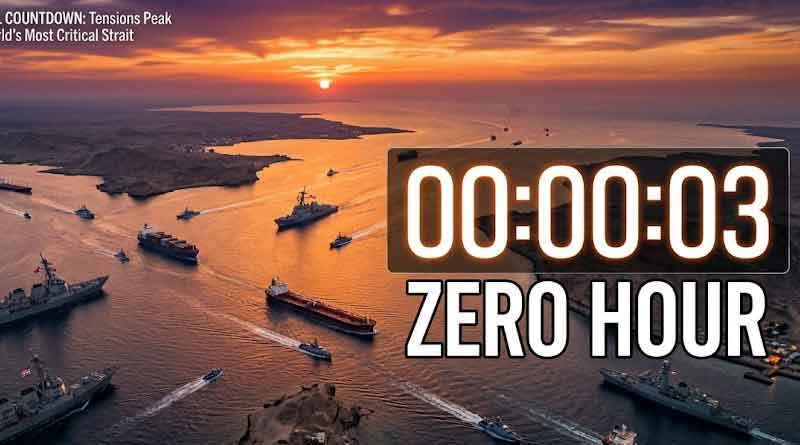

Zero hour has arrived in the Middle East, as the final ultimatum from President Donald Trump to Iran expires today, Tuesday, April 7, 2026. The world watches with bated breath as the region teeters on the precipice of an unprecedented conflict, threatening global stability and the lives of millions. This pivotal moment, often referred to as the zero hour, represents a critical deadline, a point of no return where diplomatic efforts either succeed in averting catastrophe or fail, plunging nations into direct confrontation.
What does “zero hour” signify in this context?
In this geopolitical crisis, the term zero hour denotes the precise moment when a critical deadline passes, and the consequences of inaction or failed negotiations become immediate and potentially catastrophic. It is the culmination of escalating tensions, diplomatic stalemates, and military posturing, marking a definitive shift from a state of sustained threat to active conflict or irreversible change. For the Middle East today, it is the moment the United States’ ultimatum for Iran to reopen the Strait of Hormuz officially lapses, triggering heightened military actions and the gravest fears of a full-scale war.
The concept of zero hour historically refers to the scheduled time for an attack or operation to begin. In a broader sense, it has come to mean any crucial moment when a decision must be made or a critical event will take place. Today, it encapsulates the acute tension surrounding the standoff between the US, Israel, and Iran, where the stakes involve not only regional power dynamics but also global energy security, international law, and human lives. The world is witnessing a real-time manifestation of this concept, where every minute counts as diplomatic channels scramble for a last-ditch resolution.
The Strait of Hormuz: A critical chokepoint at the heart of the crisis
At the core of the current crisis is the Strait of Hormuz, a narrow waterway connecting the Persian Gulf to the open ocean. Its strategic importance cannot be overstated. Approximately one-fifth of the world’s total petroleum consumption, and a significant portion of its liquefied natural gas, passes through this strait daily. Any disruption to this vital artery has immediate and profound global economic repercussions, primarily through soaring oil and gas prices. President Trump’s ultimatum demands that Iran reopens this strait, which has been subject to increased Iranian interference and threats of closure amidst mounting sanctions and regional tensions. This demand serves as the immediate flashpoint for the current zero hour.
For Iran, control or influence over the Strait of Hormuz represents a powerful leverage point against international pressure and sanctions. It is a strategic asset that allows Tehran to project power and potentially disrupt global energy markets, thereby forcing the international community to take its demands seriously. The possibility of Iran closing the strait, or significantly impeding traffic through it, has long been considered a red line by the United States and its allies. The current ultimatum reflects the culmination of years of escalating tensions over this vital chokepoint, pushing the region to its current zero hour.
Escalation on the ground: Military actions and humanitarian warnings
As the zero hour approached, military activities intensified dramatically across the region. Iran reported suffering new attacks, resulting in 18 fatalities, just hours before the ultimatum’s expiry. These attacks underscore the grim reality of the ongoing conflict, which has already claimed over 3,600 lives in Iranian territory, including more than 200 children, according to human rights organizations. The human cost is a stark reminder of the devastating impact of military escalation.
The Israeli Defense Forces (IDF) confirmed a “wave” of aerial assaults targeting strategic Iranian infrastructure. Reports indicated attacks on a petrochemical complex in Shiraz and a ballistic missile site in northwestern Iran, signaling a concerted effort to cripple Tehran’s military and economic capabilities. Concurrently, the Israeli army issued an urgent warning to Iranian citizens, advising them to evacuate the national railway network before 7:00 PM (Colombia time), stating that using trains “endangers their lives.” This unprecedented warning highlights the critical security situation and the potential for widespread disruption and danger to the civilian population as the zero hour looms. Such warnings, while potentially aimed at minimizing civilian casualties, also serve to amplify the psychological pressure on Iran and its populace. The closure of the bridge connecting Saudi Arabia and Bahrain, alongside reports of shootings near the Israeli consulate in Istanbul, further illustrate the pervasive sense of insecurity and the immediate, far-reaching impact of the crisis across the broader Middle East.
Diplomatic efforts and international reactions to the zero hour
Despite the escalating military actions, a frantic race against time has seen diplomatic efforts intensify in a last-minute bid to de-escalate the crisis before the zero hour fully unfolds. Pakistan, Egypt, and Turkey have taken leading roles in mediation, with “last-minute” negotiations reportedly underway in Islamabad. The Iranian ambassador to Pakistan described these talks as approaching a “critical stage,” indicating that while hope remains, the window for a peaceful resolution is rapidly closing.
Iran, for its part, presented a ten-point plan, signaling a potential willingness to negotiate. However, President Trump dismissed these advancements as “insufficient,” reiterating his threat to destroy key Iranian infrastructure and controversially stating that he was “not at all concerned” about accusations of potential war crimes. This uncompromising stance from Washington complicates diplomatic efforts significantly, as it leaves little room for compromise or face-saving measures for Tehran. The international community watches with growing alarm. Japan’s Prime Minister, Sanae Takaichi, announced preparations for a telephone conversation with Iranian President Masud Pezeshkian, with South Korea also seeking contact. These efforts underscore global concerns over the crisis’s potential impact on international stability and energy markets. Simultaneously, the UN Security Council is deliberating a resolution aimed at protecting commercial navigation, highlighting the international community’s focus on mitigating the economic fallout and ensuring the safety of global trade routes amidst this precarious zero hour.
Iran’s response: Red lines and energy threats
As the zero hour ticked away, Iran’s Revolutionary Guard, the nation’s ideological army, issued stern warnings and threats of its own. In a statement broadcast on state television, the Guard threatened actions against infrastructure that would “deprive the United States and its allies of the region’s oil and gas for years.” This threat is a direct counter to the US demand regarding the Strait of Hormuz and highlights Iran’s willingness to leverage its strategic position and energy resources as a deterrent. The statement emphasized that Iran had shown “great restraint in a spirit of good neighborliness” until now, but these “reserves are now lifted.”
The Revolutionary Guard further warned that if the “terrorist American army crosses the red lines, our response will extend beyond the region.” This declaration signifies Iran’s readiness to expand the conflict beyond its immediate borders, potentially targeting US assets or allies in other parts of the world. Such a threat introduces an alarming new dimension to the crisis, suggesting a broader, more destabilizing conflict should the zero hour lead to full-scale military engagement. Meanwhile, Saudi defenses reported intercepting drones and missiles over their energy installations, indicating that Iran’s threats are not merely rhetorical but are backed by ongoing actions against its Gulf neighbors, further intensifying the regional volatility.
The human cost and global implications of a looming zero hour
Beyond the immediate geopolitical maneuvering and military posturing, the most profound and tragic consequence of this impending zero hour is the human cost. With over 3,600 lives already lost in Iran, including more than 200 children, the humanitarian crisis is spiraling. A full-scale conflict would undoubtedly lead to an exponential increase in casualties, displacement, and suffering, creating a refugee crisis of unprecedented scale in the region. Infrastructure damage, disruption of essential services, and the breakdown of social order would exacerbate an already dire situation, leading to long-term instability and human misery.
Globally, the implications are equally severe. A major conflict in the Middle East, particularly one involving key oil-producing nations, would send shockwaves through the global economy. Oil prices would skyrocket, triggering inflation, recessionary pressures, and instability in financial markets worldwide. Supply chains would be disrupted, affecting industries far beyond energy. Furthermore, such a conflict risks drawing in other regional and global powers, potentially escalating into a broader confrontation with unpredictable consequences for international security. The current zero hour is not merely a regional crisis; it is a global inflection point with the potential to reshape the international order and challenge the very fabric of peace and stability.
Historical echoes: When the world faced its own zero hour moments
The concept of a zero hour is not new to human history. Throughout the centuries, nations and leaders have faced moments of critical decision that determined the course of empires, shaped global alliances, and altered the lives of countless individuals. Consider the Cuban Missile Crisis in 1962, often cited as the closest the world has come to nuclear war. For thirteen intense days, the United States and the Soviet Union stood eyeball to eyeball, with the fate of humanity hanging in the balance. The diplomatic channels, backroom negotiations, and public pronouncements all converged on a series of critical deadlines, each representing a potential zero hour for global catastrophe.
Another poignant example is the eve of World War I in July 1914. A complex web of alliances, ultimatums, and mobilizations rapidly transformed a regional assassination into a global conflagration. The final days before declarations of war by various European powers constituted a series of zero hour moments, where leaders made decisions that irrevocably committed their nations to a conflict that would redefine the 20th century. While the specific circumstances differ, the underlying tension, the weight of decisions, and the potential for widespread destruction resonate strongly with the current situation in the Middle East. These historical parallels serve as a somber reminder of the immense responsibility resting on the shoulders of leaders as the world approaches its contemporary zero hour.
Even in more recent history, moments like the 9/11 attacks in 2001 presented a different kind of zero hour – an unexpected, devastating event that instantly shifted global security paradigms and launched the War on Terror. While not a planned deadline, it was an immediate, transformative moment that demanded urgent, critical responses. These examples underscore that a zero hour can be a planned ultimatum or an unforeseen crisis, but its defining characteristic is the sudden, irreversible shift it brings to the global landscape.
Navigating the precipice: Possible scenarios beyond the zero hour
As the zero hour passes, several scenarios could unfold, each with its own set of consequences. The most optimistic, though increasingly unlikely, scenario involves a last-minute diplomatic breakthrough. This would require significant concessions from both sides, perhaps mediated by the international community, leading to a de-escalation of military activities and a return to negotiations. Such an outcome would prioritize stability and prevent further loss of life, but it would require a dramatic shift in the current uncompromising postures.
A more probable scenario is limited conflict. This could involve continued targeted strikes by the US and Israel against Iranian military and strategic infrastructure, met with retaliatory actions from Iran, such as further missile and drone attacks on regional allies or shipping in the Strait of Hormuz. This scenario would avoid a full-scale ground invasion but would perpetuate a dangerous cycle of violence, maintaining high regional tensions and economic instability. The objective for all parties in this scenario would be to inflict damage and pressure without triggering an all-out war, a delicate balance that is incredibly difficult to maintain.
The most catastrophic scenario, and one that all diplomatic efforts aim to prevent, is a full-scale regional war. This would involve widespread military engagement, potentially drawing in multiple nations and leading to devastating human and economic costs. Such a conflict could rapidly spiral out of control, with unpredictable outcomes and potentially reshaping the geopolitical map of the Middle East for generations. The rhetoric from President Trump about potentially “eliminating” Iran in a single night, and Iran’s threats to extend its response “beyond the region,” underscore the terrifying potential for this outcome if the zero hour is mishandled. The international community, therefore, finds itself at a critical juncture, hoping that the urgency of the moment will compel leaders to choose dialogue over destruction.
Understanding the stakes: A reader’s guide to the Middle East zero hour
In moments of such profound global tension, it is crucial for citizens worldwide to move beyond sensational headlines and grasp the intricate complexities at play. Understanding the stakes of this Middle East zero hour requires a multi-faceted approach, engaging with various perspectives and historical contexts.
- Analyze the rhetoric: Pay close attention to the language used by leaders. Are they seeking de-escalation, or are their statements inflammatory? Words like “ultimatum,” “red lines,” and “eliminated” carry significant weight and can either open or close diplomatic doors.
- Follow the energy markets: The Strait of Hormuz’s significance is primarily economic. Monitoring global oil and gas prices provides a real-time indicator of market perception regarding the conflict’s intensity and potential global impact. Spikes in prices suggest increased fear of supply disruption.
- Consider humanitarian impact: Beyond military strategies, remember the human cost. Reports from human rights organizations and international aid agencies offer crucial insights into the suffering of civilians. Understanding this dimension fosters empathy and highlights the true tragedy of conflict.
- Examine historical precedents: Reflect on past geopolitical crises and “zero hour” moments. How were they resolved? What were the long-term consequences? History often provides valuable, albeit imperfect, lessons for navigating current challenges.
- Identify key actors and their motivations: Who are the primary decision-makers, and what are their core interests? For the US, it might be regional stability and energy security; for Iran, it could be sovereignty and resistance to external pressure; for Israel, it’s national security. Understanding these motivations helps in predicting possible actions.
- Support diplomatic efforts: While citizens may feel powerless, advocating for peaceful resolution through informed public discourse and supporting international organizations dedicated to diplomacy can contribute to a climate that favors negotiation over confrontation.
The current zero hour in the Middle East is a stark reminder of the fragility of peace and the profound interconnectedness of our world. As the events unfold, staying informed, thinking critically, and understanding the multifaceted dimensions of this crisis are paramount for all global citizens.
The world holds its breath, hoping that reason and diplomacy will prevail, guiding the region away from the brink of a devastating conflict and towards a future of stability, even as the zero hour tests the limits of international statesmanship.