
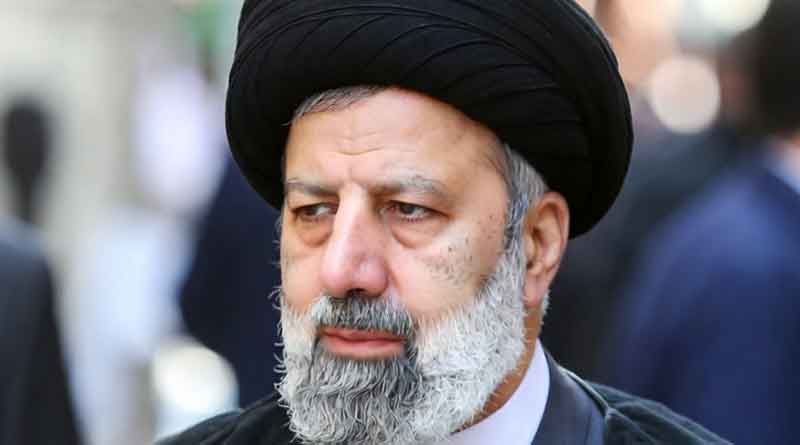

The newly appointed Iran supreme leader, Ayatollah Mojtaba Khamenei, has issued a stark and immediate directive, calling on the Iranian regime to “remove security from its enemies” both internal and external, a pronouncement that signals a dangerous escalation in the ongoing conflict with the United States and Israel. This forceful declaration, delivered via a communiqué to Iranian President Masoud Pezeshkian, underscores the gravity of the current geopolitical climate and the hardline stance of Iran’s fresh leadership, as the nation grapples with the fallout from targeted strikes and intensifies its own retaliatory actions across the Persian Gulf.
Who is Mojtaba Khamenei and what does his appointment as Iran supreme leader signify?
Mojtaba Khamenei, the son of the late Ayatollah Ali Khamenei, has recently ascended to the powerful position of Iran supreme leader, marking a significant and controversial transition in the Islamic Republic’s leadership. Born in 1969, Mojtaba has historically maintained a low public profile, operating largely behind the scenes while accumulating substantial influence within Iran’s deep state, particularly among the clerical establishment and the Islamic Revolutionary Guard Corps (IRGC). His appointment is seen by many analysts as a strategic move to consolidate power within the Khamenei family, reflecting a dynastic succession that is unusual even for Iran’s unique system of velayat-e faqih, or guardianship of the jurist. This shift signifies a continuation, and potentially an intensification, of hardline policies, as Mojtaba is known for his close ties to the IRGC and his conservative ideological leanings. His public silence and lack of visible presence since his appointment, as noted in the original report, only add to the mystique and concern surrounding his leadership, suggesting a leader who prefers to exert influence from the shadows rather than the public eye. The transfer of power occurred after his 86-year-old father, Ayatollah Ali Khamenei, was reportedly killed in an Israeli airstrike on February 28, marking a dramatic and destabilizing event that thrust Mojtaba into the forefront of a nation already at war.
What is the meaning and implication of the directive to “remove security from enemies”?
The directive from the Iran supreme leader, Mojtaba Khamenei, to “remove security from its enemies” is a potent and multifaceted command, signaling a significant shift towards more aggressive and proactive measures by the Iranian regime. In the context of Iranian political rhetoric, “removing security” is not merely a metaphor; it implies a comprehensive strategy to destabilize adversaries, disrupt their operations, and undermine their sense of safety and stability. This can manifest through various means, including intensified intelligence operations, covert actions, cyberattacks, support for proxy groups, and direct military engagements. The phrase explicitly targets both “internal and external enemies.” Internal enemies typically refer to dissidents, protest movements, ethnic minorities perceived as disloyal, and any groups challenging the regime’s authority. For these groups, “removing security” could mean increased surveillance, arrests, suppression of public gatherings, and a crackdown on freedom of expression. External enemies primarily encompass the United States and Israel, as well as regional rivals like Saudi Arabia. Against these actors, the directive suggests a willingness to escalate military confrontations, expand the reach of Iranian influence through proxies, and potentially target assets or interests perceived as vital to these nations’ security. The communiqué’s concluding phrase, “and granted to all compatriots,” juxtaposes this aggressive stance with an assurance of domestic stability, suggesting that the regime aims to consolidate internal support by projecting strength externally and suppressing internal dissent.
How does this directive connect to the ongoing war with the United States and Israel?
This directive from the Iran supreme leader is inextricably linked to the escalating “war” that Iran is currently waging against the United States and Israel, now in its 21st day. The conflict, which dramatically intensified with the reported death of the elder Ayatollah Ali Khamenei in an Israeli airstrike, has pushed the region to the brink. Mojtaba Khamenei’s call to “remove security from enemies” serves as a clear declaration of intent to escalate Iran’s retaliatory actions and defensive posture. The statement comes shortly after the confirmed death of Iran’s Intelligence Minister, Esmail Khatib, in an Israeli bombing, an event that the new supreme leader explicitly lamented and vowed to avenge. This direct targeting of a high-ranking official like Khatib, who played a critical role in Iran’s intelligence apparatus, signifies a deepening of the shadow war between Iran and Israel. Iran’s subsequent actions, including the intensification of attacks on natural gas production facilities and oil refineries in the Persian Gulf, directly align with the supreme leader’s directive. These economic targets are strategic, aiming to disrupt regional energy supplies and exert pressure on nations perceived as supporting the US and Israel. The directive essentially provides ideological justification and strategic guidance for these and future aggressive actions, framing them as necessary measures to counter perceived threats and restore Iran’s sense of security.
What is the significance of the deaths of Esmail Khatib and Ali Mohammad Naini?
The deaths of Esmail Khatib, Iran’s Intelligence Minister, and General Ali Mohammad Naini, a prominent spokesman for the Islamic Revolutionary Guard Corps (IRGC), carry immense significance in the context of the escalating conflict. Esmail Khatib’s death, confirmed by both Israel and Iran as occurring in an Israeli bombing, represents a major blow to Iran’s intelligence and security apparatus. As Intelligence Minister, Khatib was privy to Iran’s most sensitive intelligence operations, covert networks, and strategic planning against its adversaries. His elimination is not only a symbolic victory for Israel but also a practical disruption to Iran’s ability to gather intelligence and execute clandestine operations effectively. The new Iran supreme leader, Mojtaba Khamenei, explicitly lamented Khatib’s death in his communiqué, underscoring the severity of the loss and the regime’s determination for vengeance. This public vow of revenge signals that Iran will likely seek to retaliate against Israeli intelligence targets or interests with heightened intensity. General Ali Mohammad Naini’s death, though not mentioned in Mojtaba Khamenei’s communiqué, is equally significant. As a spokesman for the IRGC, Naini represented the public face of Iran’s most powerful military and ideological force. His death on the same day as the supreme leader’s directive was issued, likely in a separate incident, further highlights the pervasive and high-stakes nature of the ongoing conflict. The loss of such a prominent IRGC figure suggests a sustained campaign by adversaries to degrade Iran’s military and leadership capabilities. Both deaths contribute to a narrative within Iran of being under direct assault, thereby fueling the regime’s resolve for retaliation and solidifying public support for aggressive countermeasures, reinforcing the supreme leader’s call to “remove security from enemies.”
What role does President Masoud Pezeshkian play under the new Iran supreme leader?
President Masoud Pezeshkian, as the head of the executive branch in Iran, holds a distinct but subordinate position to the Iran supreme leader, Mojtaba Khamenei. In Iran’s unique political structure, the supreme leader, as the ultimate authority, sets the country’s overall strategic direction, foreign policy, and major domestic initiatives. The president, while elected by popular vote, is primarily responsible for implementing these policies and managing the day-to-day affairs of the government. The fact that Mojtaba Khamenei’s initial directive was addressed directly to President Pezeshkian underscores this hierarchical relationship. It serves as a clear mandate from the supreme leader, instructing the president and his administration on the immediate priorities and desired course of action, particularly regarding national security and foreign policy. Pezeshkian, who is generally considered a reformist or moderate figure within the Iranian political spectrum, now faces immense pressure to execute the supreme leader’s hardline directives amidst a volatile regional conflict. His role will be to mobilize governmental resources, coordinate intelligence and military efforts, and manage the diplomatic fallout of Iran’s aggressive posture. The supreme leader’s message effectively places the onus on Pezeshkian to ensure that the “absence” of figures like Esmail Khatib is “compensated with redoubled efforts,” thereby demanding unwavering loyalty and efficiency in carrying out the supreme leader’s vision for national security and retribution. This dynamic highlights the supreme leader’s ultimate authority and the president’s function as the primary executor of that authority, especially in times of crisis and war.
How has the war escalated with Iranian counter-attacks in the Persian Gulf?
The conflict has entered a perilous new phase, marked by significant Iranian counter-attacks that directly respond to perceived aggressions from the United States and Israel. Following the deaths of key officials, Iran has intensified its offensive capabilities, particularly targeting critical energy infrastructure in the Persian Gulf. The source text explicitly mentions Iranian bombings of natural gas production facilities, which have now been added to previous attacks on oil refineries. These actions are not arbitrary; they represent a calculated strategy to inflict economic pain and disrupt global energy markets, thereby putting pressure on its adversaries and their allies. The Persian Gulf is a vital artery for global oil and gas shipments, and any disruption there has immediate and far-reaching economic consequences. By targeting these facilities, Iran demonstrates its capability to destabilize a region crucial to international commerce and energy security. Such attacks also serve as a direct response to the Iran supreme leader’s directive to “remove security from enemies,” as they aim to undermine the economic stability and operational security of nations involved in the conflict. The escalation of these attacks transforms the “shadow war” into a more overt and economically impactful confrontation, raising concerns about the potential for broader regional conflict and the involvement of other international actors. These actions signify a departure from more conventional military engagement, instead focusing on asymmetric warfare designed to maximize impact with potentially fewer direct military confrontations, although the risk of miscalculation remains extremely high.
Who are Iran’s “internal and external enemies” and how has the regime historically dealt with them?
Iran’s definition of “enemies” is broad and deeply ingrained in its revolutionary ideology, encompassing both domestic dissent and international adversaries. Internal enemies typically include various groups perceived as threats to the Islamic Republic’s stability and ideological purity. These range from political dissidents and reformists who advocate for greater freedoms, to ethnic and religious minorities (such as Kurds, Balochs, and Baha’is) who may seek greater autonomy or face persecution, and secularists who challenge theocracy. Historically, the Iranian regime has dealt with internal enemies through a combination of severe repression, including arrests, imprisonment, executions, and extensive surveillance by intelligence agencies like the Ministry of Intelligence and Security (MOIS) and the IRGC. Protests, often fueled by economic hardship or social discontent, are frequently met with brutal force, as seen in numerous crackdowns over the decades. The directive from the Iran supreme leader to “remove security” from these internal elements suggests an intensification of these repressive tactics, aimed at quashing any form of opposition and consolidating the regime’s control in a time of external conflict. External enemies are primarily the United States, often referred to as the “Great Satan,” and Israel, the “Little Satan.” Other regional adversaries include Saudi Arabia and other Gulf monarchies, which Iran views as proxies for Western influence. The regime’s historical approach to external enemies involves a multi-pronged strategy: developing a robust ballistic missile program, supporting a network of proxy militias across the Middle East (e.g., Hezbollah in Lebanon, Houthi rebels in Yemen, various Shiite militias in Iraq and Syria), engaging in cyber warfare, and pursuing a nuclear program. These actions are designed to project power, deter aggression, and challenge the regional dominance of the US and its allies. The current directive from Mojtaba Khamenei signals a renewed commitment to these aggressive foreign policy tools, aiming to undermine the security and interests of these external adversaries through both overt and covert means.
What are the broader geopolitical repercussions of this escalation in the Middle East?
The escalation driven by the new Iran supreme leader’s directive carries profound geopolitical repercussions for the entire Middle East and beyond. The intensified conflict threatens to destabilize an already volatile region, with potential spillover effects that could impact global security and economic stability. Firstly, the targeting of energy infrastructure in the Persian Gulf directly endangers global oil and gas supplies. Any significant disruption could lead to a sharp increase in energy prices, triggering economic instability worldwide and potentially pushing fragile economies into recession. Shipping routes through the Strait of Hormuz, a critical chokepoint, become increasingly vulnerable to attacks, raising insurance costs and further complicating international trade. Secondly, the direct engagement between Iran, Israel, and the United States risks drawing in other regional actors. Countries like Saudi Arabia, the UAE, and Qatar, which are deeply integrated into the global economy and often find themselves caught between regional power struggles, face heightened security risks. The source text alludes to how the war has “broken the image of security” in Gulf locations like Dubai and Qatar, impacting investment and tourism. This loss of perceived stability could lead to capital flight and a decline in foreign direct investment, hampering economic development. Thirdly, the conflict exacerbates humanitarian crises in already war-torn areas where Iranian proxies operate, such as Syria, Yemen, and Iraq. Increased tensions could reignite dormant conflicts or intensify existing ones, leading to further displacement, suffering, and a massive refugee crisis. Finally, the escalation complicates international diplomatic efforts to de-escalate tensions and pursue a peaceful resolution. The hardline stance of the new Iranian leadership, coupled with the vowed revenge for fallen officials, reduces the space for negotiation and increases the likelihood of miscalculation, which could trigger a full-scale regional war with devastating consequences for all involved and for global stability.
What can be expected from Iran under the leadership of Mojtaba Khamenei?
Under the leadership of Mojtaba Khamenei, the new Iran supreme leader, the Islamic Republic is widely expected to pursue a path of heightened confrontation and a more assertive foreign policy. His background, marked by strong ties to the hardline factions of the IRGC and his father’s inner circle, suggests a continuation and likely intensification of the conservative ideological line. One can anticipate a more aggressive stance against both internal dissent and external adversaries. Domestically, there may be a further crackdown on civil liberties, increased surveillance, and a more stringent enforcement of religious and social norms, particularly as the regime seeks to consolidate power and suppress any perceived challenges to its authority during a period of war. Economically, Iran will likely continue to rely on its “resistance economy” model, attempting to circumvent international sanctions while focusing on self-sufficiency and strategic alliances with non-Western powers. In foreign policy, Mojtaba Khamenei’s leadership is expected to prioritize regional power projection through its network of proxy forces, further development of its ballistic missile capabilities, and a continued, albeit covert, pursuit of its nuclear program. The explicit vow of revenge for fallen officials and the directive to “remove security from enemies” indicate a proactive and potentially escalatory approach to the ongoing conflict with the US and Israel. This could manifest in more sophisticated cyberattacks, targeted military responses, and increased support for anti-Israel and anti-US groups across the Middle East. Compared to his father, who often balanced hardline rhetoric with pragmatic maneuvering, Mojtaba may adopt a less compromising and more ideologically driven approach, potentially leading to a period of increased instability and direct challenges to the existing regional order. The world should prepare for a potentially more unpredictable and confrontational Iran under its new supreme leader.
How does Iran’s current stance impact global security and energy markets?
Iran’s current aggressive stance, as articulated by the new Iran supreme leader, Mojtaba Khamenei, profoundly impacts global security and energy markets. The explicit directive to “remove security from enemies” and the subsequent intensification of attacks on critical energy infrastructure in the Persian Gulf directly threaten the stability of global energy supplies. The Persian Gulf is the world’s most vital oil transit chokepoint, with a significant portion of the world’s crude oil passing through the Strait of Hormuz. Attacks on natural gas production facilities and oil refineries, as reported, create immediate supply uncertainties, leading to increased volatility in global oil and gas prices. This instability directly translates to higher fuel costs for consumers and businesses worldwide, potentially fueling inflation and hindering global economic recovery. Beyond energy, Iran’s actions exacerbate global security concerns. The risk of a wider regional conflict drawing in multiple international actors increases significantly. Such a conflict could disrupt global trade routes, trigger cyber warfare affecting critical infrastructure beyond the Middle East, and necessitate increased military deployments by major powers, diverting resources from other global challenges. Furthermore, Iran’s continued support for proxy groups and its advanced missile program pose a direct threat to regional allies of the United States and global shipping. The rhetoric of revenge and the readiness to escalate militarily create an environment of unpredictability that undermines international efforts for peace and stability. In essence, the new supreme leader’s directives signal a period where Iran is willing to challenge global norms and risk broader conflict to assert its regional dominance and retaliate against perceived aggressions, with direct and tangible consequences for the global economy and international security landscape.
The message from the new Iran supreme leader, Mojtaba Khamenei, is a chilling testament to the escalating tensions gripping the Middle East. His directive to “remove security from its enemies” is not a mere rhetorical flourish but a clear strategic command, signaling a dangerous new chapter in Iran’s confrontation with the United States and Israel. As the region reels from the deaths of key officials and the intensification of Iranian counter-attacks on vital energy infrastructure, the world watches with bated breath. The implications for global security and economic stability are profound, demanding urgent international attention and a clear-eyed understanding of the hardline path Iran’s new leadership appears set to tread. The coming days and weeks will undoubtedly test the fragile peace of the region, potentially ushering in an era of unprecedented volatility under the shadow of the new supreme leader.