
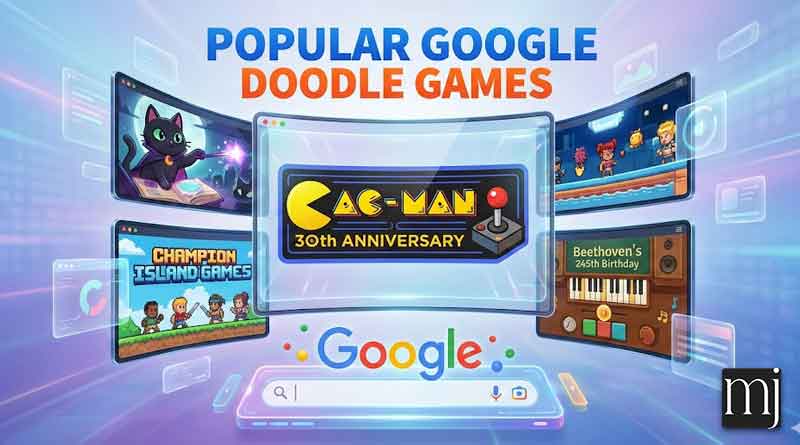
The most popular Google Doodle games

Have you ever visited Google’s homepage only to find the familiar logo transformed into an interactive game? If you have, you’ve experienced one of the internet’s most delightful surprises. Popular Google Doodle games have turned the world’s most-visited search engine into an unexpected global arcade, offering millions of users a moment of joy, nostalgia, and pure entertainment.
These aren’t just clever animations—they’re fully playable experiences that celebrate historical moments, cultural icons, and creative innovation. Whether you’re looking to reminisce about the classics, discover hidden gems you might have missed, or simply find the best games worth your time during a coffee break, this guide will take you through the most beloved and memorable interactive Google Doodles that continue to captivate players around the world.
What makes a Google Doodle game popular?
Not every Google Doodle achieves legendary status. The ones that do share certain unmistakable qualities that elevate them beyond momentary curiosities. Viral appeal at launch plays a crucial role—when millions of people simultaneously discover a game on Google’s homepage, word spreads quickly across social media and office break rooms. But fleeting attention isn’t enough. The truly popular Google Doodle games demonstrate lasting cultural impact, remaining in conversations and search queries years after their debut.
Innovation matters tremendously. Games that introduce unique mechanics, leverage emerging technologies, or reimagine beloved classics tend to resonate more deeply. Replay value separates the memorable from the forgettable—the best Doodles invite you back for just one more round, chasing higher scores or exploring different paths. Finally, accessibility ensures these games reach everyone, with simple controls and universal appeal that transcend language barriers and gaming experience. When a Doodle combines these elements with Google’s characteristic polish and creativity, it becomes something people actively seek out long after it leaves the homepage.
Most played Google Doodle games
Some Google Doodles don’t just entertain—they make history. These are the undisputed champions, the games that defined what interactive Doodles could be and captured the imagination of millions worldwide.
Pac-Man (2010)
The game that started it all. Released to celebrate Pac-Man’s 30th anniversary, this wasn’t just Google’s first playable Doodle—it was a cultural phenomenon that reportedly cost the global economy 4.8 million hours of lost productivity. But what glorious, pellet-munching hours they were. Google recreated the classic maze action with remarkable fidelity, complete with authentic ghost AI patterns and that distinctive wakka-wakka sound. Players could navigate all 256 levels using arrow keys, experiencing the full arcade original right from their browser.
The Pac-Man Doodle demonstrated Google’s willingness to transform their most valuable real estate into pure entertainment. It legitimized interactive Doodles as a serious creative medium and set impossibly high expectations for every game that followed. Today, you can still play this groundbreaking Doodle through Google’s archive, and it remains as addictive as ever—a testament to both Namco’s original design genius and Google’s respectful implementation.
Baseball (2019)
Released for the 2019 Major League Baseball season, this deceptively simple game became one of the most replayable Doodles ever created. The premise couldn’t be more straightforward: you’re a baseball player at bat, and you need to hit pitches thrown by various opponents. The execution, however, is masterfully polished. The two-button timing game (actually just spacebar or mouse click) requires players to judge speed and timing perfectly, creating that addictive “just one more try” feeling.
What makes the Baseball Doodle so compelling is its escalating difficulty and charming art style. As you progress through innings, pitches become faster and trickier, introducing curves and changeups that test your reflexes. The colorful, animated characters and satisfying crack of the bat create genuine moments of triumph when you nail a home run. Competitive players still chase high scores, making this one of the most endlessly replayable entries in Google’s gaming catalog.
Quick, Draw! (2016)
This wasn’t just a game—it was a glimpse into the future of artificial intelligence, wrapped in an entertaining package. Quick, Draw! challenged players to sketch objects in under 20 seconds while a neural network attempted to guess what they were drawing. The experience was simultaneously impressive, hilarious, and occasionally frustrating as the AI made wildly creative (or wildly wrong) interpretations of your artistic efforts.
The genius of Quick, Draw! lay in its dual purpose. Players enjoyed a genuinely fun guessing game with social sharing potential—everyone wanted to show friends how the AI confused their cat for a toaster. Meanwhile, Google collected millions of drawings to train their machine learning algorithms, making this one of the most successful examples of gamified data collection ever created. The game remains accessible as a standalone website and continues to demonstrate how AI-powered Doodles can be both entertaining and educational, showing ordinary users how neural networks “think” in real-time.
Cult classics and hidden gems
Beyond the mega-hits, certain Doodles achieved beloved status within specific communities or for their distinctive charm. These games might not have broken productivity records, but they earned devoted followings and deserve recognition.
Magic Cat Academy (2016)
Halloween has inspired several memorable Google Doodles, but none quite captured hearts like Magic Cat Academy. Players controlled Momo, an adorable cat wizard defending their school from ghosts by drawing magical symbols. The spell-casting mechanic was brilliantly intuitive—swipe or draw the shape hovering above each ghost to banish them. Horizontal lines, vertical lines, lightning bolts, and spirals became your arsenal against increasingly challenging spectral threats.
The game’s hand-drawn art style, underwater sequel setting in 2020, and progressively difficult boss battles made it far more substantial than most holiday Doodles. Magic Cat Academy proved that Google could create genuinely engaging boss-rush gameplay within the Doodle format, complete with power-ups, combo systems, and real stakes. It’s become a Halloween tradition for many players, returning to help Momo save the school year after year.
Celebrating Garden Gnomes (2018)
This delightfully quirky Doodle transformed the humble garden gnome into a physics-based projectile. Inspired by the German tradition of gnome figurines and the international sport of gnome throwing (yes, really), players used a catapult to launch gnomes as far as possible across flowerbeds and gardens. The gameplay drew clear inspiration from Angry Birds, with players adjusting angle and power to maximize distance.
The Garden Gnomes Doodle succeeded through its charming visual style and surprising depth. Different gnome types had unique properties, obstacles required strategic thinking, and achieving maximum distance demanded practice and precision. It perfectly embodied Google’s playful spirit—taking an obscure cultural tradition and transforming it into accessible, physics-based fun that appealed to players worldwide.
Popular Doodles that are more than just games
Some Doodles transcended entertainment, using gameplay to educate, inspire, or create social impact on a massive scale.
Coding for Kids (2017)
Released to celebrate 50 years of kids coding, this Doodle introduced basic programming concepts to millions through an adorable rabbit protagonist. Players arranged blocks of code to help the bunny collect carrots, learning fundamental logic like sequencing, loops, and conditionals without writing a single line of syntax. The Coding for Kids Doodle made computer science accessible and fun, demonstrating that programming is creative problem-solving rather than arcane mathematics.
The educational impact was significant. Teachers worldwide incorporated the Doodle into classroom lessons, parents used it to introduce children to coding concepts, and countless players discovered genuine interest in programming through these six charming levels. By partnering with MIT’s Scratch team and using visual block coding, Google created an entry point that demystified coding and inspired a new generation of potential programmers.
Champion Island Games (2021)
This wasn’t just a Doodle—it was a full-fledged RPG adventure. Created for the Tokyo 2020 Olympics (held in 2021), Champion Island Games featured Lucky the calico cat exploring an enormous island, competing in seven different sports mini-games, and uncovering secrets through exploration. The scope was unprecedented: players could spend hours traversing forests, climbing mountains, and engaging with dozens of characters in beautifully animated pixel art.
Each sport—table tennis, skateboarding, artistic swimming, climbing, archery, rugby, and marathon—offered distinct gameplay mechanics and increasing difficulty. Beyond the competitions, the island invited exploration with hidden collectibles, side quests, and charming details that rewarded curiosity. Players could even choose a team (Blue, Red, Yellow, or Green) and contribute to global leaderboards, creating a sense of community and competition. Champion Island Games represented Google’s most ambitious Doodle ever, proving these mini-games could rival standalone indie titles in quality and content.
How to play any Google Doodle game, anytime
The magic of Google Doodles is they don’t disappear forever. Google maintains an extensive archive at google.com/doodles, where you can browse thousands of past Doodles by date, topic, or location. To find the interactive Google Doodles, use the archive’s filter options—select “Interactive” or specifically search for “Games” to narrow results to playable entries.
The archive is elegantly organized and surprisingly comprehensive. Click any Doodle to see its backstory, creation details, and the date it appeared on Google’s homepage. For games, you’ll typically find a “Play” button that launches the experience directly in your browser, requiring nothing more than a modern web browser. Most classic Doodle games work perfectly years after their release, a testament to Google’s commitment to web standards and preservation.
Additionally, many popular Google Doodle games have inspired fan communities that created mirrors, enhanced versions, or mobile adaptations. A quick search for “[Game Name] Google Doodle” will often reveal these alternatives, though the official archive remains the most reliable and authentic way to experience these games as Google intended.
The legacy of playful Google Doodles
These games created something rare in our fragmented internet age: shared global moments. When a new interactive Doodle appeared, millions of people worldwide simultaneously discovered, played, and discussed the same experience. Office workers compared high scores, students challenged friends during lunch breaks, and social media buzzed with gameplay clips and reactions. Google transformed their homepage from mere utility into cultural event space.
Beyond entertainment, Google Doodles merged art, commemoration, and interactivity in ways no other platform could match. They introduced historical figures to new generations, celebrated cultural traditions across borders, and demonstrated that learning and playing aren’t mutually exclusive. The Doodle team’s creativity showed that even the most utilitarian digital spaces can spark joy and curiosity.
Which Doodle game did you spend the most time on? Was it the original Pac-Man during a slow work afternoon? The maddening perfection chase of Baseball? Or perhaps you’re among the dedicated few who fully completed Champion Island Games? Each player’s favorite reveals something about what we value in games—challenge, nostalgia, innovation, or simply well-crafted fun.
Conclusion
The most popular Google Doodle games endure because they represent the internet at its best: creative, accessible, surprising, and genuinely delightful. These mini-masterpieces prove that meaningful entertainment doesn’t require massive budgets or hundreds of hours of gameplay—sometimes magic happens in six levels of block coding or twenty seconds of frantic sketching. The Doodle archive remains a treasure trove of these moments, waiting for rediscovery.
Take a few minutes today to explore the archive. Revisit an old favorite that brightened a past afternoon, or discover a gem you somehow missed when it first appeared. Try beating your Baseball high score, help Momo defend the academy one more time, or introduce someone younger to the joy of that original Pac-Man Doodle. The search bar isn’t the only fun thing on Google—sometimes the most entertaining discoveries happen before you even start typing.