
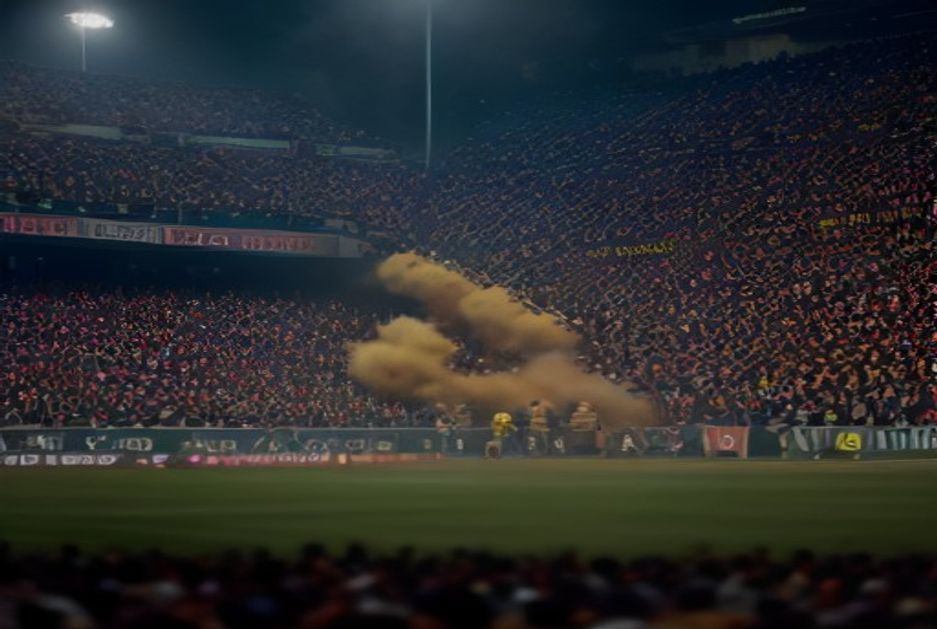

BOGOTÁ — A heated domestic fixture between Deportivo Independiente Santa Fe and Deportivo América de Cali descended into chaos this weekend when rival fan groups stormed the pitch following a violent confrontation in the stands, underscoring the persistent challenge of crowd control in Colombian football.
The incident unfolded late in the second half at a packed stadium, where supporters of América de Cali, known for their fervent barra brava culture, attempted to seize a symbolic cloth item belonging to Santa Fe fans. That act triggered a chain reaction, with members of both sets of ultras clashing in the stands before security forces struggled to contain the unrest.
Video footage circulating on social media shows scenes of disorder as dozens of fans poured onto the playing surface, some hurling objects and others engaging in physical altercations. Players were briefly forced to evacuate the field while stewards worked to restore order. The match, which had remained goalless until the turmoil, was ultimately suspended with no official result recorded.
The Colombian Football Federation (FECOFCOL) swiftly condemned the violence, announcing that disciplinary proceedings will be initiated against both clubs. In a statement released shortly after the match, the governing body emphasized that such behavior has no place in football and that strict sanctions — including potential point deductions and stadium closures — could be imposed pending investigation.
“We deeply regret what happened today,” said a federation spokesperson. “Football is meant to unite communities, not divide them through violence. We will take every necessary measure to ensure accountability.”
The rivalry between Santa Fe and América de Cali is among the fiercest in Colombian football, rooted in decades of competitive tension and regional pride. Matches between the two sides, often referred to as the “Clásico Paisa” in local media, regularly draw passionate crowds who arrive at the stadium adorned in team colors and chanting well into the night.
However, this latest outbreak of violence has reignited longstanding concerns about hooliganism in the country’s top-flight leagues. Human rights organizations have repeatedly called for better coordination between law enforcement and football authorities to prevent fan-on-fan conflicts from escalating beyond verbal provocation.
Local authorities confirmed that several individuals were detained during the incident, though no serious injuries were reported among fans or staff. A handful of minor injuries were treated on-site, primarily consisting of cuts and bruises sustained during the scuffle.
“Our priority remains public safety,” said the director of the national police’s sports security unit. “We are reviewing our protocols to ensure that future high-risk fixtures are managed with adequate personnel and preventive strategies.”
This is not the first time that matches involving these two clubs have been marred by fan unrest. Over the past decade, similar incidents — ranging from flare deployments to pitch invasions — have prompted temporary bans on away supporters and increased surveillance at venues hosting their encounters.
Both clubs released separate statements expressing disappointment over the events. Santa Fe’s management denounced the actions of any individuals who sought to disrupt the game, while América de Cali pledged full cooperation with ongoing investigations. Each club also extended apologies to their respective fan bases, urging calm ahead of upcoming fixtures.
“We understand the passion our supporters have for the club,” said América de Cali’s sporting director. “But when emotion overrides respect, everyone loses. We must learn from today and move forward responsibly.”
Fans themselves appeared divided in the aftermath. While some expressed shame over the conduct of certain sections within their own groups, others defended their actions as retaliation against perceived provocations. Online forums buzzed with debate over whether harsher penalties should be introduced to deter repeat offenses.</p
The suspended fixture was expected to resume within the next two weeks, pending approval from the federation and coordination with venue operators. Organizers are reportedly considering enhanced security measures, including restricted access zones and increased use of surveillance technology.
Analysts suggest that unless systemic changes are implemented across Colombian football, episodes like this may continue to overshadow the sport’s growing popularity. With the domestic league entering its crucial final stretch, maintaining order on and off the pitch remains a delicate balancing act between preserving tradition and protecting the integrity of the game.