
Washington is preparing a $100 million humanitarian package for Cuba, a substantial escalation of American assistance to the island as the communist government continues to grapple with one of the worst economic collapses in its history. Secretary of State Marco Rubio used a high-level meeting at the State Department this week to press officials on how the funds would reach ordinary Cubans without enriching the state, signaling that the Trump administration intends to link the aid to demands for political and economic opening.
The meeting, held behind closed doors, was attended by senior diplomats and humanitarian coordinators overseeing the distribution network that began channeling food, medicine, and other essentials to Cuban families in July. Rubio, who has long advocated for a tougher stance against Havana, has publicly insisted that American taxpayer money must not flow through institutions controlled by the ruling Communist Party. The newly announced package is meant to reinforce that principle.
According to officials familiar with the discussions, the aid will be routed through vetted non-governmental organizations, faith-based charities, and diaspora networks operating inside Cuba. The State Department is reportedly developing a delivery mechanism modeled on programs used in other restricted environments, including Venezuela and parts of the Middle East, where direct government-to-government cooperation is impossible or undesirable.
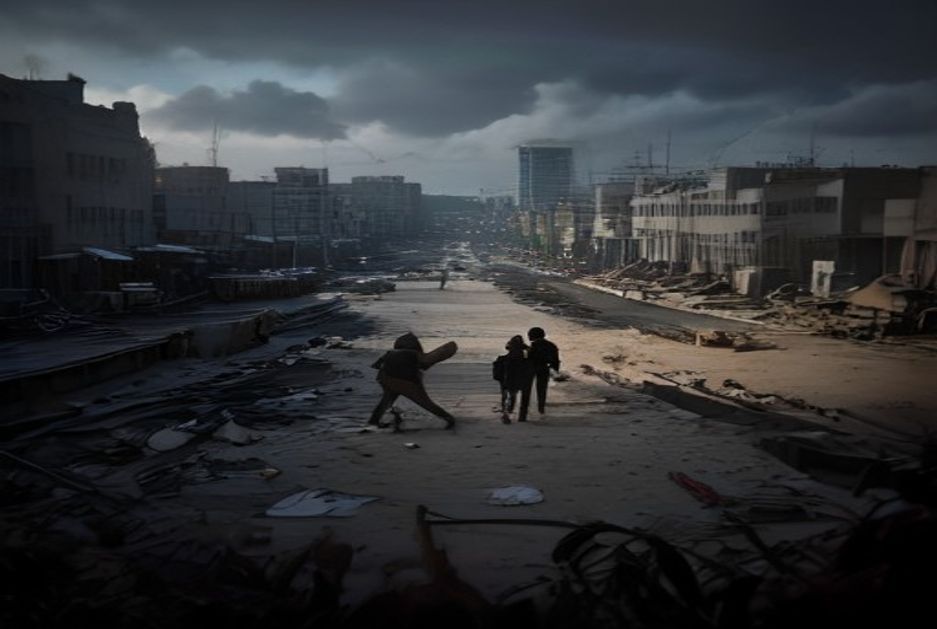
Cuba’s crisis has deepened dramatically over the past three years. A combination of reduced subsidies from key allies, persistent shortages of fuel, currency instability, and the lingering aftermath of Hurricane damage has left many households unable to secure basic staples such as rice, cooking oil, and pharmaceuticals. Reports from inside the island describe long queues, sporadic blackouts, and growing dependence on remittances sent from relatives abroad.
The proposed $100 million figure is a sharp departure from the more cautious posture adopted in earlier administrations, when aid was typically funneled through international agencies or contingent on political reforms. Officials at the State Department have framed the new package as a response to what they describe as a “deteriorating humanitarian emergency” that threatens the well-being of nearly eleven million Cubans.
Rubio’s involvement is particularly notable given his longstanding position on Cuba policy. As a senator representing Florida, he played a central role in crafting sanctions legislation targeting the Castro-aligned government and has consistently argued that engagement without reform simply extends the regime’s longevity. His elevation to Secretary of State has intensified that approach, with senior officials now publicly linking aid to transparency measures, independent monitoring, and credible assurances that supplies will reach those most in need.
During the session, humanitarian coordinators presented an early assessment of the distribution operation that began in July. According to their briefing, the initial phase succeeded in reaching several hundred thousand households across at least four provinces, using a network of trusted local partners. However, officials acknowledged persistent challenges, including difficulty obtaining refrigeration for vaccines and insulin, navigating Cuban customs restrictions, and verifying that goods are not diverted into state-controlled distribution chains.
Independent observers have urged caution. Some humanitarian experts warn that even robust monitoring cannot fully prevent leakage, particularly in a system where the state controls nearly all wholesale distribution. Others stress that the absence of diplomatic normalization between Washington and Havana complicates everything from visa issuance for aid workers to the licensing of financial transactions.
Despite those challenges, momentum behind the aid initiative has grown. Lawmakers from both parties, including members of the Cuban-American caucus and several senators focused on Western Hemisphere affairs, have signaled support for the package. Aides say the proposal is likely to include carve-outs allowing U.S. entities to partner with independent Cuban entrepreneurs and small agricultural cooperatives, a quiet but meaningful expansion of permitted economic activity.
Cuban officials have not publicly welcomed the new package. In past statements, the government in Havana has rejected unilateral American aid initiatives as thinly veiled attempts to undermine the revolution, insisting that any assistance should flow through official channels. That stance has effectively blocked previous offers, including a proposal floated in 2024 that would have provided tens of millions in medical aid in exchange for prisoner releases.
Analysts note that the Cuban economy remains heavily dependent on a small number of revenue streams, including tourism, remittances, and exports of medical services and nickel. The collapse of Venezuelan oil shipments, once a critical lifeline, has compounded chronic inefficiencies and exposed the limits of the centrally planned model. Inflation, officially acknowledged for the first time in decades, has eroded household purchasing power, while a growing black market offers one of the few avenues for ordinary citizens to secure foreign currency.
For the State Department, the immediate challenge is operational. Officials must finalize the list of partner organizations, secure congressional notification where required, and design a verification regime capable of surviving scrutiny. They also face the delicate task of coordinating with regional governments, particularly in Latin America and the Caribbean, where concerns about migration flows from Cuba have grown in step with the economic downturn.
Inside Cuba, ordinary citizens have grown increasingly open about the hardships they face. Social media posts, though heavily policed, depict empty shelves, families rationing meals, and elderly residents unable to obtain prescription drugs. Diaspora groups in Miami have intensified fundraising drives of their own, and several Catholic and Protestant churches on the island have quietly expanded charitable operations, often at the risk of running afoul of state regulations.
The $100 million proposal, if fully executed, would rank among the largest unilateral American humanitarian commitments to Cuba in modern history. Whether it ultimately reaches its intended recipients will depend on a combination of logistical execution, political will in Washington, and the willingness of Cuban authorities — who have not been formally consulted on the plan — to permit it to proceed without interference.