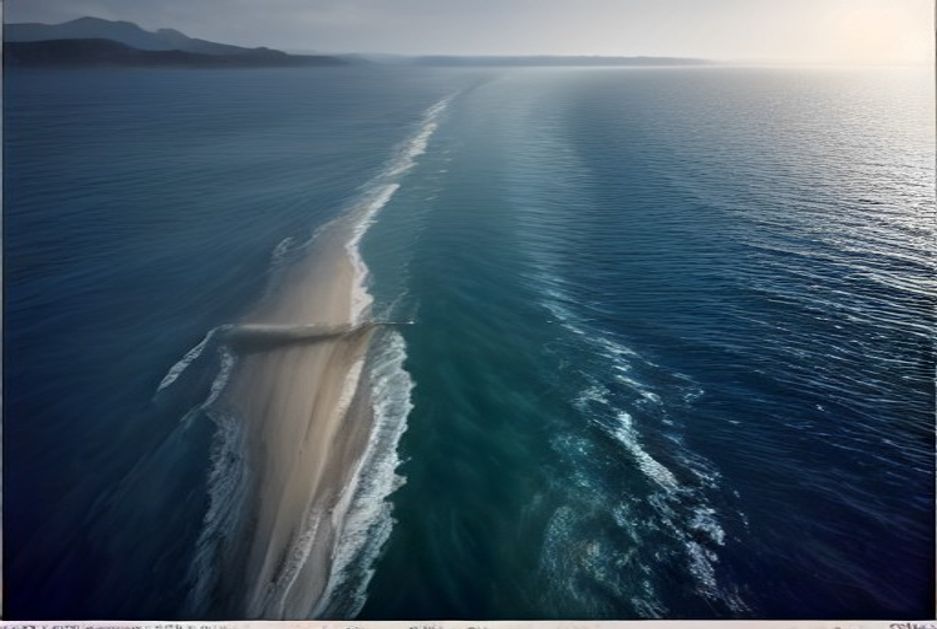

In a defiant statement that signals a potential escalation in already strained relations between Tehran and Washington, Iranian officials declared this week that the strategically vital Strait of Hormuz will remain under Iranian sovereignty regardless of threats emanating from the United States. The remarks came in response to renewed rhetoric from former U.S. President Donald Trump, who has once again suggested military action against Iran, raising concerns among regional analysts about the possibility of renewed conflict in the Persian Gulf.
The Strait of Hormuz, a narrow 21-mile-wide channel connecting the Persian Gulf to the Arabian Sea, serves as one of the world’s most critical maritime chokepoints. Approximately one-fifth of the globe’s petroleum liquids pass through its waters daily, making any disruption a matter of significant economic consequence. Iran’s assertion that the waterway “has been, is, and will remain Iranian” underscores the country’s strategic leverage over global energy markets and its willingness to use that leverage in diplomatic confrontations.
While the specific spokesperson who delivered the statement was not named in initial reports, Iranian state media quoted senior officials emphasizing that Tehran would not be intimidated by what they described as “hostile policies” from the administration of U.S. President Joe Biden, despite Trump’s continued influence in American political discourse. The reference to Trump appears to acknowledge the former president’s ongoing role in shaping Republican foreign policy, particularly as he remains a dominant figure ahead of the 2024 U.S. presidential election.
Iranian leaders have periodically threatened to close the strait during past crises, most notably during the 1980s tanker war and again in 2011 amid sanctions-related tensions. Such threats are typically viewed as rhetorical posturing designed to deter military action, though they carry real consequences given Iran’s capability to disrupt shipping through mines, missile fire, or naval blockades. The Islamic Revolutionary Guard Corps Navy has conducted numerous exercises in recent years simulating operations within the strait, reinforcing Tehran’s ability to enforce its claims if necessary.
The latest exchange reflects broader deterioration in U.S.-Iran relations following the collapse of negotiations over Tehran’s nuclear program. Efforts to revive the 2015 Joint Comprehensive Plan of Action have stalled, with both sides accusing the other of bad faith. Meanwhile, Iran has enriched uranium to near-weapons-grade levels and restricted access for international inspectors, prompting concern from the International Atomic Energy Agency and renewed calls in Washington for stronger sanctions or even preemptive strikes.</p
Regional security experts caution that inflammatory rhetoric increases the risk of miscalculation. “When political leaders make grandiose territorial claims about international waterways, it raises the stakes for everyone involved,” said Dr. Leila Serhan, a Middle East analyst at Georgetown University’s Edmund A. Walsh School of Foreign Service. “The Strait of Hormuz is governed by international law, specifically the United Nations Convention on the Law of the Sea. No single nation can unilaterally claim control over such a passage.”
Nevertheless, Iran maintains that its territorial waters extend across much of the strait under customary maritime boundaries, a position contested by several Gulf Cooperation Council states and the United States, which operates a Fifth Fleet headquarters in Bahrain to ensure freedom of navigation. Annual U.S. naval deployments to the region serve as a show of force intended to reassure allies and deter Iranian aggression.
Economically, markets reacted cautiously to the renewed tension. Crude oil prices ticked upward modestly in early trading, though analysts noted that current supply disruptions have not yet materialized. The Organization of the Petroleum Exporting Countries and its allies, including Russia, have maintained spare production capacity sufficient to offset short-term shocks, providing some insulation against sudden price spikes.
For Iran, however, economic pressures persist due to longstanding sanctions limiting its oil exports and freezing overseas assets. In this context, asserting dominance over the strait may serve dual purposes: projecting strength domestically while pressuring adversaries abroad. Critics argue that such tactics invite further isolation and reduce incentives for diplomatic engagement.
As Washington deliberates its next steps—whether through diplomatic channels, economic measures, or military preparedness—Iran’s message remains clear: it views the strait as integral to national security and will defend what it perceives as its sovereign rights. Whether this stance leads to renewed confrontation or opens space for negotiation depends largely on how both sides calibrate their responses in the coming weeks.
With midterm elections approaching in the United States and domestic unrest simmering in Iran, neither government appears eager for open conflict. Yet the interplay of pride, power, and resource security makes the Persian Gulf a volatile arena where small incidents can spiral into larger crises. International observers continue monitoring developments closely, aware that stability in this region affects not only energy markets but also the delicate balance of power across Eurasia.