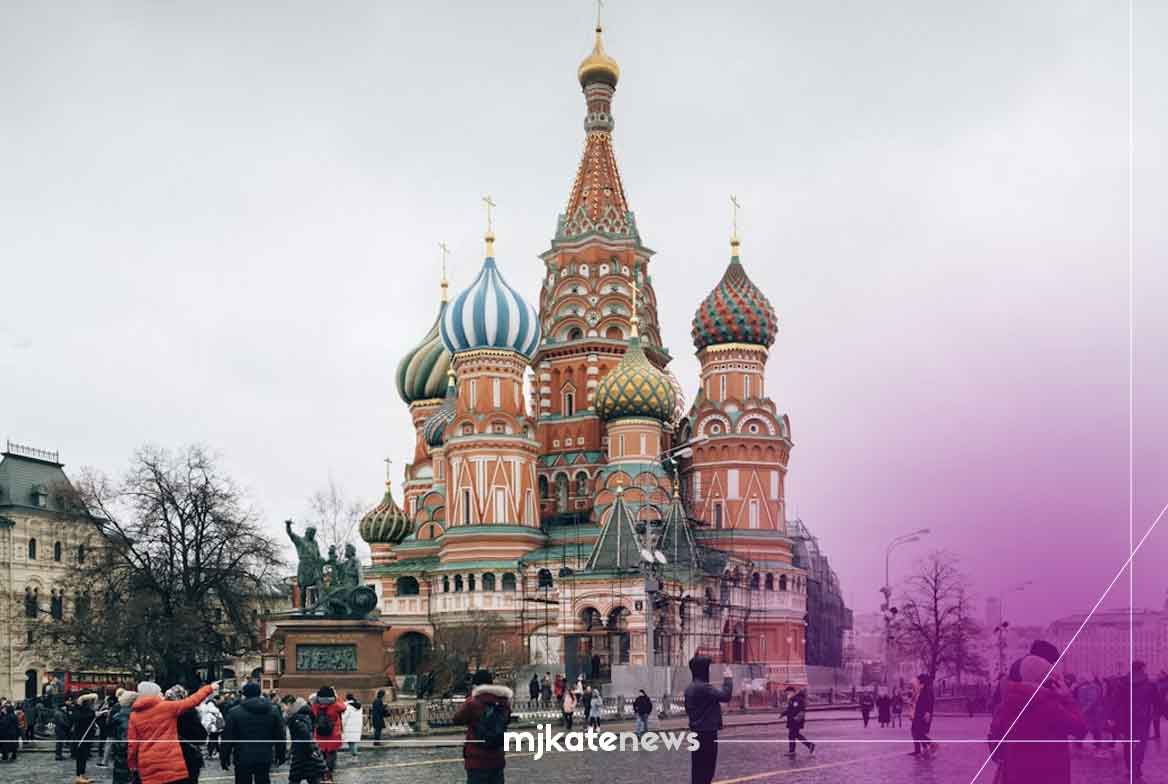

For a growing number of Westerners, Russia represents an unexpected destination in pursuit of what they perceive as lost values back home. From traditional family structures to community solidarity, these expatriates are discovering that their romanticized vision of Russian society often clashes dramatically with lived reality.
The BBC recently spoke with several Westerners who made the journey from Europe and North America to Russia, drawn by a longing for what they describe as more authentic, community-oriented living. Their accounts reveal a mix of nostalgia, disillusionment, and surprising adaptation as they navigate daily life in a country that defies easy categorization.
Sarah Martinez, a former marketing executive from Germany, relocated to Yaroslavl in 2023. She explains that her decision stemmed from witnessing what she calls “the erosion of genuine community in Western society.” “I was tired of individualism, of people being so disconnected from each other and from tradition,” she says. “In Germany, everyone seems to be constantly upgrading, consuming, moving on. Russia felt like coming home to something more stable.”
The reality she encountered was far more nuanced than her expectations. While she found warmth in neighbors who helped her navigate bureaucratic processes and invited her to traditional dinners, she also discovered significant challenges. “Everything moves differently here. Patience isn’t just a virtue—it’s a necessity. When I first complained about delays, people looked at me like I’d suggested something impossible. Slowly, I learned to adapt my expectations.”
Similar stories emerge from expatriates in cities like Kazan, St. Petersburg, and even smaller provincial towns. Many are drawn by images of Russia on social media—grandfather clocks in market squares, multigenerational households, and what appears to be a society anchored in deep traditions. What they often find instead is a complex tapestry where Soviet-era practicalities coexist uneasily with traditional values, creating daily friction for newcomers.
James Thompson, an English teacher from Manchester, settled in Novgorod after falling in love with the city during a backpacking trip. “I wanted to teach English and experience a culture that seemed to value learning and craftsmanship over instant gratification,” he recounts. “But I quickly realized that ‘traditional values’ here aren’t necessarily progressive or even consistently applied.”
Thompson describes how his students’ families expect him to reinforce their conservative views on gender roles and career paths, while simultaneously expecting him to prepare them for a globalized economy. “There’s this tension between preserving what they see as authentic Russian identity and participating in a world that doesn’t always cooperate with their timeline.”
Financial realities also challenge initial assumptions. Many Westerners expect Russia to offer affordable living that stretches their savings, but currency fluctuations and economic sanctions have created unexpected barriers. Maria Santos, who moved from Portugal to Moscow, found that while rent was indeed cheaper, imported goods and international services carried premium prices that caught her off guard.
The bureaucratic maze presents another hurdle. Despite speaking Russian, expatriates frequently encounter procedures that seem designed to test patience rather than efficiency. “I had Danish friends who moved here because they heard about the ‘orderly’ Russian system,” laughs Anna Petrova, a Ukrainian-born cultural consultant who works with Western expats. “They arrive expecting efficiency and discover that ‘orderly’ here means ‘follow the exact sequence, regardless of logic.'”
Language barriers compound these challenges. Even fluent speakers find themselves navigating layers of cultural nuance that native speakers absorb from childhood. Expatriates report spending significant time learning not just vocabulary but the unspoken rules of interaction—the difference between directness and rudeness, the proper way to express disagreement, and when to read between the lines.
Yet many who have embraced the complexity report personal growth they didn’t anticipate. The slower pace forces reflection; the community connections require vulnerability; the cultural differences demand continuous learning. Martinez notes that she’s become “less afraid of conflict and more comfortable with uncertainty” since her move.
The phenomenon reflects broader questions about globalization and identity. As Western societies grapple with rapid social change, some seek refuge in perceived stability elsewhere. Russia offers the appeal of tradition without always providing its substance. Expatriates discover that values aren’t simply inherited—they’re negotiated daily, adapted to changing circumstances, and sometimes redefined entirely.
Looking ahead, these Western settlers seem less interested in finding perfect replicas of their idealized Russia and more focused on creating hybrid lives that honor both their origins and their current home. Their journey suggests that traditional values, wherever they’re found, require active cultivation rather than passive assumption.
Whether this represents genuine cultural exchange or another form of selective interpretation remains debatable. What’s clear is that for these expatriates, the gap between expectation and reality has become a space for unexpected growth—and perhaps, ultimately, a more honest engagement with both their own culture and theirs adopted one.