
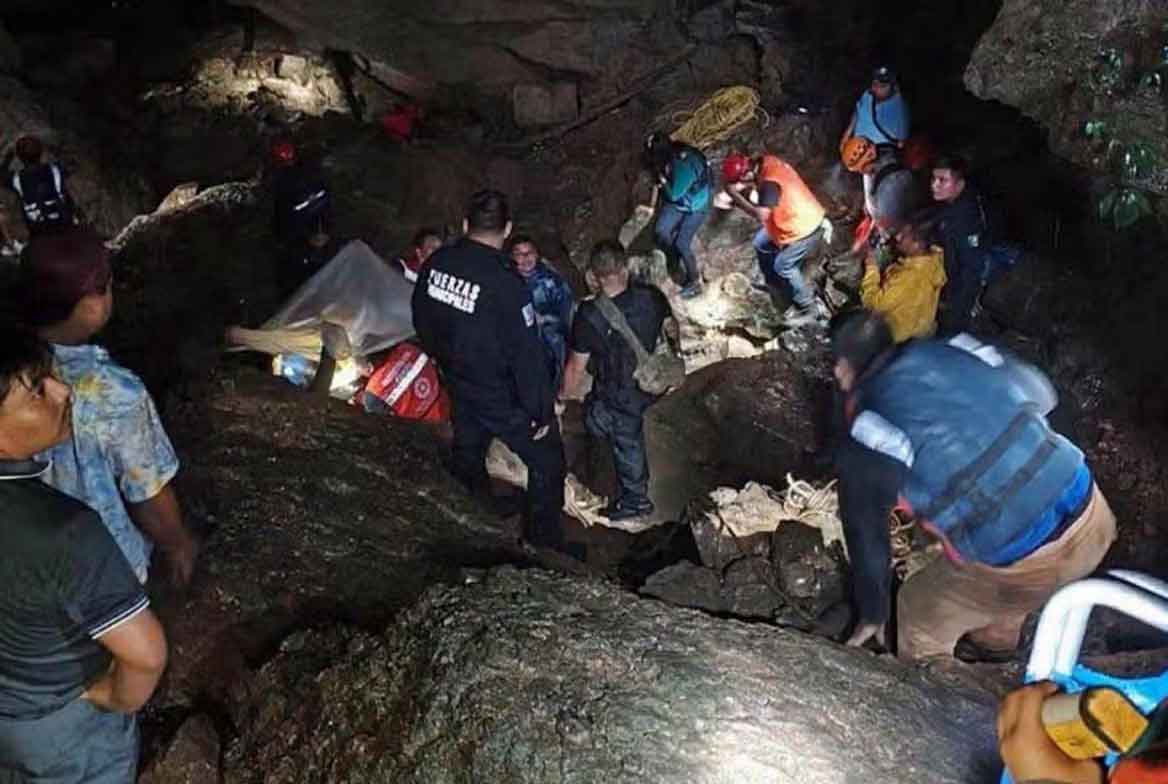

In a tragic turn of events, four people lost their lives on Sunday when a sudden surge in an underground river flooded the Chichicazapan caves in Cuetzalan, Puebla. The incident, which occurred during a family birthday celebration, has shocked the local community and raised concerns about the safety of spelunking sites in the region.
The Chichicazapan caves, located approximately 30 kilometers southeast of Puebla City, are a popular destination for both locals and tourists seeking to explore the area’s unique karst landscapes. The caves are known for their stalactite formations, crystal-clear underground pools, and the subterranean river that meanders through the caverns. Over the past decade, the site has been promoted by the state tourism board as a safe and accessible adventure for families, though it requires guided tours and basic spelunking equipment.
According to witnesses, the family had been enjoying a modest gathering inside the caves, celebrating the birthday of one of the children. The group, which included parents, a sibling, and a cousin, had been exploring one of the lower chambers when the water level began to rise rapidly. The underground river, normally a calm trickle, swelled as rainwater from the surrounding hills entered the limestone system, creating a torrent that swept the group downstream.
Emergency services were alerted within minutes, and the Puebla State Fire Department dispatched a rescue team equipped with rope and climbing gear. Despite their efforts, the team was unable to reach all the victims in time. The four deceased were identified as the family’s mother, father, a 12-year-old brother, and a 9-year-old sister. The remaining family members were rescued unharmed, though they were left traumatized by the sudden loss of their loved ones.
Officials have stated that the incident underscores the unpredictable nature of karst systems. “The rapid rise in water levels can happen without warning, especially during heavy rains,” said a spokesperson from the Puebla State Environmental Agency. “We are reviewing the current safety protocols and considering additional measures to prevent future tragedies.”
Since the early 2000s, the Chichicazapan caves have seen a steady increase in visitors, partly due to the region’s growing reputation as a destination for ecotourism. The caves are part of the larger Cuetzalan geological reserve, which also includes hiking trails, bird-watching spots, and cultural sites that showcase the history of the Otomi people, the indigenous group native to the area.
Local authorities have already begun to assess the structural integrity of the caves. The state’s tourism board has temporarily closed the site to the public while a comprehensive safety audit is conducted. In addition, the board plans to implement stricter visitor limits and require that all tours be conducted by certified guides who are trained in emergency response procedures.
The tragedy has also prompted a broader discussion about the regulation of adventure tourism in Mexico. While the country has long been a hotspot for caving enthusiasts, the lack of standardized safety guidelines has been a persistent concern. In 2018, Mexico’s National Institute of Tourism (Instituto Nacional de Turismo) issued provisional guidelines for caving operations, but enforcement has varied widely across states.
Experts in speleology emphasize that underground rivers in karst landscapes can have sudden and dramatic changes in flow. “Even a small amount of surface rain can trigger a significant rise in water levels underground,” explained Dr. Ana Hernández, a professor of geology at the National Autonomous University of Mexico. “The key is to have real-time monitoring systems and clear evacuation protocols.”
In response to the incident, the Puebla State Government has pledged to allocate additional funds for the development of an early-warning system that could detect changes in underground water levels. The plan includes installing pressure sensors and deploying drones to monitor the cave entrance for signs of flooding.
Meanwhile, the local community has organized a memorial service for the victims, held at the nearby Church of San Juan Bautista. The service drew hundreds of mourners, many of whom have known the family for generations. The mayor of Cuetzalan, María del Carmen Rojas, expressed her condolences and pledged to support the grieving family financially and emotionally.
In the days following the tragedy, the state’s tourism department released a statement urging visitors to exercise caution when exploring natural sites. “We encourage all tourists to respect the guidelines set by local authorities and to remain within designated areas,” the statement read. “The safety of visitors is our top priority.”
As investigations continue, families affected by the incident have requested that the government provide clearer information on the risks associated with cave exploration. Advocacy groups for adventure tourism safety have called for nationwide legislation that would standardize safety protocols across all caving sites in Mexico.
While the Chichicazapan caves remain closed, the incident serves as a stark reminder of the delicate balance between human curiosity and the unpredictable forces of nature. The state’s response, both in terms of immediate rescue efforts and long-term safety reforms, will likely shape the future of adventure tourism in Puebla and beyond.