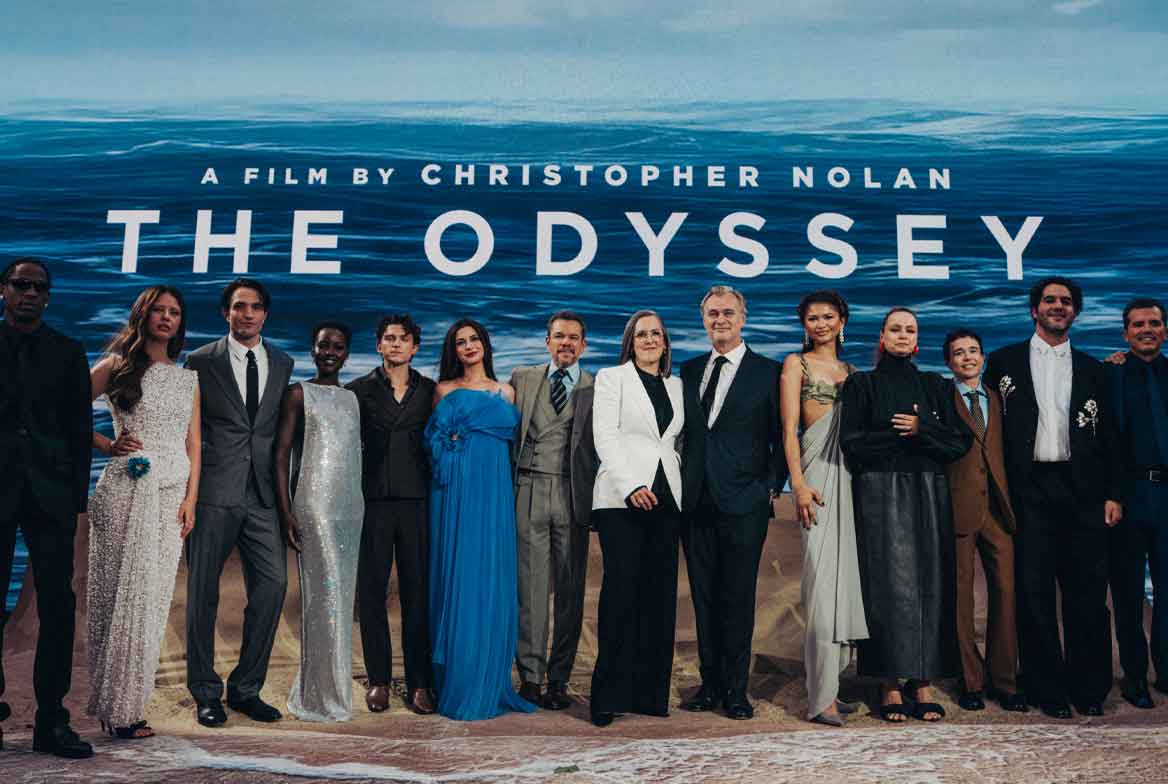

When the first whispers of a new cinematic adventure begin to ripple through the industry, the inevitable storm of reviews can feel like a looming thundercloud. Yet for director Christopher Nolan, the upcoming release of his latest epic, The Odyssey, is less about external judgments and more about the internal dialogue that fuels storytelling. In a recent interview with the Spanish-language outlet El Diario NY, Nolan emphasized that criticism is simply a natural component of the narrative process, a perspective that underscores his long-standing belief that art is an evolving conversation rather than a finished product.
Since his debut with Following in 1983, Nolan has cultivated a reputation for crafting intricately layered films that challenge audiences on intellectual and emotional levels. From the time-bending corridors of Inception to the world-shattering stakes of the Dark Knight trilogy, he has repeatedly demonstrated a willingness to push boundaries while remaining deeply invested in the craft of narrative design. This approach is nowhere more evident than in his latest venture, an ambitious retelling of Homer’s timeless epic that promises to blend mythic grandeur with contemporary sensibilities.
In the interview, Nolan acknowledged that the pre‑release buzz surrounding The Odyssey is intense, with critics already dissecting everything from its sweeping visual style to its ambitious attempt to reinterpret classical storytelling for a modern audience. Rather than reacting defensively, he chose to frame criticism as both a catalyst and a checkpoint—a way to refine the film’s final shape. “Critique is part of the process,” he stated. “When we work on a story as expansive as this, every comment is an opportunity to reassess, to re‑balance, to ensure that the core message remains intact.”
This sentiment echoes Nolan’s own creative methodology. Known for his meticulous planning and exhaustive research, he often spends years crafting scripts and storyboards before a single frame is shot. His films routinely feature complex narratives that demand viewers to engage actively, and he has publicly admitted that debates over his work can be both frustrating and enlightening. By acknowledging that criticism is inevitable, Nolan signals a mature acceptance that the audience’s voice is integral to the filmmaking ecosystem.
Industry insiders suggest that Nolan’s perspective is especially relevant in the context of modern media consumption. With the rapid expansion of streaming platforms and the 24‑hour cycle of online reviews, filmmakers now face a significantly larger audience that can critique their work in real time. This new reality has forced directors to become more adept at navigating feedback without compromising their artistic vision. Nolan’s stance—treating criticism as a constructive tool rather than a threat—could serve as a blueprint for emerging filmmakers grappling with the same challenges.
Beyond the philosophical, the practical implications of Nolan’s comments are worth noting. Early test screenings of The Odyssey have reportedly highlighted pacing concerns and a few narrative inconsistencies that could be addressed before the film’s wide release. By openly acknowledging these issues, Nolan demonstrates a willingness to iterate, a trait that has proven beneficial in his previous works. For instance, the feedback loop that led to the final cut of Dunkirk was instrumental in refining its tense, non‑linear structure, ultimately contributing to its critical acclaim.
Moreover, the director’s comments shed light on his relationship with the press and the broader critical community. While some filmmakers shun the spotlight, Nolan has historically engaged with reviewers, often inviting them to behind‑the‑scenes tours and Q&A sessions. His recent remarks suggest a continued commitment to this dialogue, reinforcing the idea that the film industry thrives on a healthy exchange of ideas.
Audience reactions to Nolan’s approach are already forming on social media. Fans on Twitter and Reddit have echoed his sentiment, praising his humility and readiness to listen. Some have pointed out that this openness may translate into a more polished final product, while others argue that a director’s vision should remain untarnished by external opinions. Regardless, the debate itself is a testament to the film’s growing anticipation.
From a commercial standpoint, the timing of Nolan’s remarks could also be strategic. The film’s release window—scheduled for early in the fall to capitalize on award‑season buzz—places it in direct competition with other high‑profile releases. By framing criticism as part of the creative process, Nolan may be attempting to shift the narrative from potential pitfalls to the excitement of a film in flux, thereby maintaining audience interest throughout the marketing cycle.
In addition to the film’s narrative ambitions, The Odyssey is notable for its technological innovations. Nolan has always been a pioneer in embracing cutting‑edge filmmaking techniques, from his use of IMAX cameras in Interstellar to the practical effects that bring Tenet’s temporal dislocations to life. Early reports suggest that The Odyssey will feature a blend of state‑of‑the‑art visual effects and meticulously crafted practical sets, a combination that has previously earned Nolan critical and commercial success. Critics will undoubtedly scrutinize how effectively these tools serve the story, but Nolan’s readiness to engage with such scrutiny may ultimately enhance the film’s resonance.
Ultimately, Nolan’s message resonates with a broader truth about filmmaking: stories are not static; they evolve through the interplay of creator intent, collaborative input, and audience reception. By positioning criticism as an integral part of this evolutionary process, he reaffirms his belief that the best art is born from constant dialogue. Whether The Odyssey will stand the test of time remains to be seen, but the director’s openness to critique may well be its biggest asset.
As the premiere approaches, the film world watches not only for its visual spectacle but also for how it will embody Nolan’s philosophy of creative humility. In an era where the line between creator and audience is increasingly blurred, his stance offers a refreshing reminder that the journey of storytelling is as much about listening as it is about speaking.