Physical Address
304 North Cardinal St.
Dorchester Center, MA 02124
Physical Address
304 North Cardinal St.
Dorchester Center, MA 02124

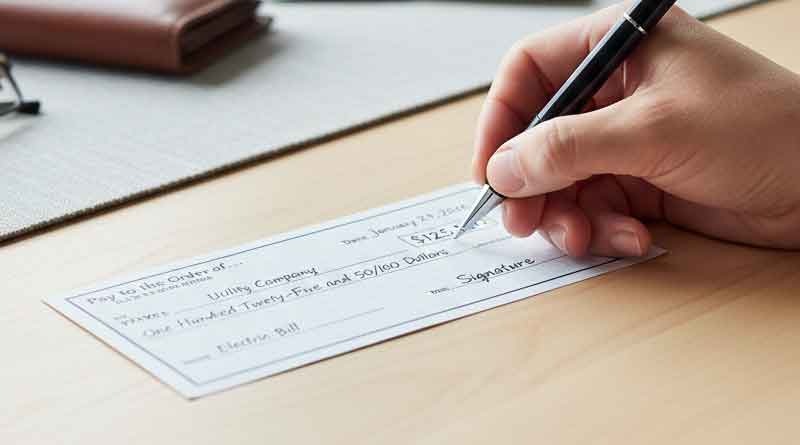
Your new landlord just told you they only accept checks for the security deposit. Your hands hover over the checkbook, and suddenly you’re not quite sure where to start. Should the amount go in the box first? Do you really need to spell out those numbers? And what’s that memo line actually for?
How to write out a check might seem like a relic from your parents’ generation, but this traditional payment method remains surprisingly essential in our tap-and-swipe world. Whether you’re paying rent, covering a wedding gift, settling professional services, or handling government fees, knowing how to properly fill out a check is a fundamental financial skill that protects your money and prepares you for any situation. This complete guide will walk you through the simple six-step process, reveal crucial security tips that prevent fraud, and show you exactly what to do if you make a mistake.
Despite the dominance of Venmo, Zelle, and contactless payments, paper checks continue to play an important role in specific transactions. Many landlords prefer checks for rent payments because they create a clear paper trail. Small business owners and independent contractors often request checks to avoid processing fees. Wedding gifts sent by mail traditionally arrive as checks, and certain government offices still require them for fees and applications.
Here’s something critical that makes check accuracy non-negotiable: the written long-hand amount is legally binding over the numerical amount if there’s a discrepancy. If you write “$50.00” in the number box but spell out “Five hundred dollars and 00/100” on the line below, the bank will process the check for five hundred dollars. This legal precedent underscores why understanding every field on that small slip of paper matters so much.
Before you can write a check confidently, you need to understand what you’re working with. A standard personal check contains several distinct fields, each serving a specific purpose in the payment process.
At the top, you’ll find your personal information pre-printed by the bank, including your name, address, and sometimes phone number. The check number appears in the upper right corner, providing a sequential tracking system for your records. The date line sits just below this, waiting for you to fill in when the check was written.
The “Pay to the Order of” line is where you’ll write the recipient’s name, making it clear who can cash or deposit this payment. Next to this sits a small box with a dollar sign, designated for the numerical amount. Below that stretches a longer line where you’ll write the check amount in words, the legally binding version of your payment.
The memo line in the lower left corner gives you space to note what the payment covers, while the signature line on the right side is where you’ll authorize the transaction. At the bottom of the check, you’ll see a series of numbers: these are your routing number, account number, and check number in machine-readable format, used when banks process your payment electronically.
Now that you understand the landscape, let’s walk through the exact sequence for filling out a check without errors.
Start by writing the current date in the date field using the standard MM/DD/YYYY format. Today’s date ensures accurate record-keeping for both you and the recipient. Here’s a crucial warning many people don’t know: post-dating a check by writing a future date is not a reliable way to delay payment. While you might think writing “03/15/2026” on a check dated today will prevent it from being cashed until March, most banks can and will process checks immediately regardless of the date written. Never rely on post-dating as a cash flow management strategy.
On the “Pay to the Order of” line, write the recipient’s full, official name exactly as it appears on their identification or business documents. For individuals, use their complete legal name. For businesses, use the exact business name, including designations like “Inc.” or “LLC” if that’s how they’re registered.
If you’re paying two people, the words you choose matter legally. Writing “John Smith and Jane Doe” means both people must endorse the check before it can be cashed. Writing “John Smith or Jane Doe” allows either person to deposit it independently. Choose based on your intention.
Here’s strong advice worth following: avoid writing checks to “Cash” at all costs. A check made out to “Cash” can be cashed by literally anyone who possesses it, creating an extreme security vulnerability if it’s lost or stolen.
In the small dollar amount box, write the payment amount clearly using numbers. Include the cents as a decimal, even if the amount is a whole number. For example, write “150.00” rather than just “150.”
Apply this pro security tip: start writing at the far left edge of the box, placing your first digit as close to the dollar sign as possible. This prevents someone from adding digits before your number. Without this precaution, a dishonest person could potentially change your “50.00” into “1,050.00” by squeezing in additional numbers.
This step is the most important for accuracy and legal protection. On the long line below the payee name, spell out the dollar amount in words, then express the cents as a fraction over 100. For example, $150.75 becomes “One hundred fifty and 75/100.” For a whole dollar amount like $200.00, write “Two hundred and 00/100.”
Capitalize the first word but keep the rest lowercase unless it’s a proper noun. Be meticulous here, ensuring this written amount matches the numerical amount exactly. Remember, this version holds legal weight if there’s any discrepancy.
Another pro security tip: after writing out the amount, draw a solid line through any remaining empty space on that line. This simple action prevents anyone from adding additional words to inflate the payment amount.
The memo line is technically optional, but treating it as essential serves your interests well. Use this space to note what the payment covers: “April 2026 Rent,” “Invoice #456,” or “Emma’s graduation gift.” These notations help you tremendously when reviewing your budget later, reconciling statements, or resolving any disputes about whether a payment was made for a specific purpose.
Your signature on the signature line is what authorizes the bank to release funds from your account. An unsigned check is completely invalid and cannot be processed. Sign using the same signature on file with your bank.
Follow this golden rule without exception: never, ever sign a blank check. Always fill in the date, payee, and amount fields before adding your signature. Handing someone a signed blank check gives them unlimited access to write any amount and make themselves the payee, an invitation for financial disaster.
Beyond the basic steps, several best practices elevate your check writing from adequate to airtight.
Understanding checks extends beyond writing them. When you receive a check, you’ll need to endorse it by signing the back within the designated endorsement area before depositing it. For mobile deposits, you’ll also write “For mobile deposit only” along with your account number.
Modern banking offers alternatives that provide check-like benefits with digital convenience. Bank bill pay services allow you to schedule payments through your online banking, and the bank often sends a paper check to the recipient on your behalf. Peer-to-peer payment apps like Venmo and Zelle work beautifully for friends and many small businesses. Consider how to write a check as one valuable tool in your broader financial toolkit, deployed when the situation calls for it specifically.
Mastering this traditional skill takes perhaps ten minutes to learn and a lifetime of confident transactions to enjoy. Each field on that check serves a purpose, and understanding the why behind each step transforms the process from intimidating to straightforward. The security measures we’ve covered, from starting dollar amounts at the left edge to voiding mistakes completely, protect you from fraud and costly errors.
In a world of digital taps and swipes, the humble check remains a powerful tool for situations where modern payment methods fall short. Now you know exactly how to use it. The next time someone asks for a check, you won’t hesitate. You’ll pull out your checkbook, fill in each field with precision and confidence, and handle the transaction like the financially literate adult you are.